
Short Answer
Overview
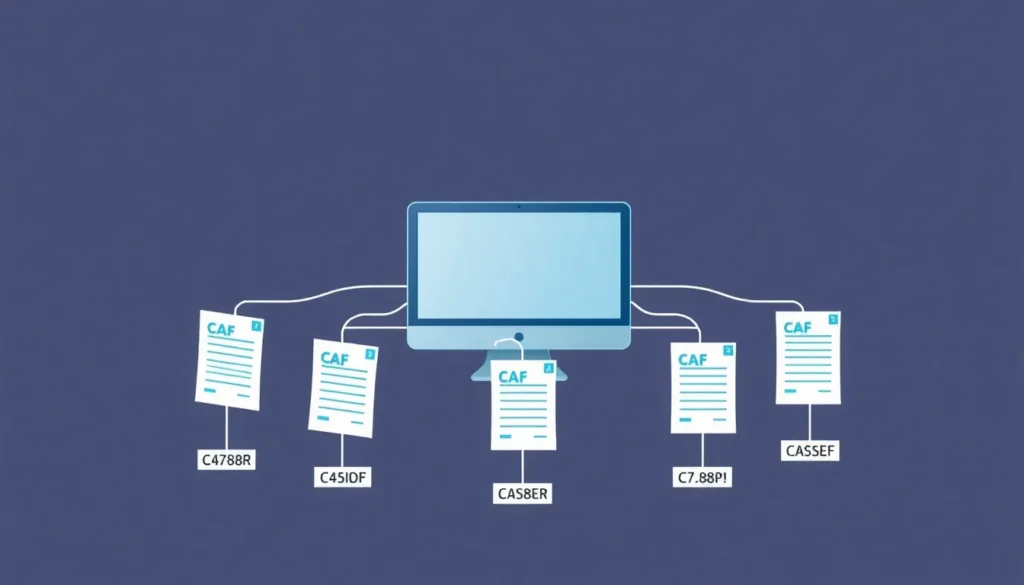
A CAF Number refers to a unique identifier assigned by a Centralized Admission Facility or a similar administrative body. It is primarily used to facilitate the management of applications, admissions, or registrations within educational institutions, government services, or other organizational systems. The CAF Number helps streamline data processing and ensures that each applicant or participant can be distinctly identified throughout an administrative procedure.
Detailed Explanation
The term CAF Number is most commonly associated with centralized admission systems, such as those found in school admissions or public service applications. Centralized Admission Facilities are organizations or departments tasked with collecting, organizing, and processing applications from candidates to ensure a fair and transparent distribution of limited resources or seats.
The CAF Number acts as a reference number that applicants receive upon submission of their application. This number is used throughout the admission process for tracking, communication, and verification purposes. It allows both applicants and administrators to efficiently navigate the system without confusion or duplication.
How It Works
When an applicant submits an application through a centralized system, the CAF assigns a unique numeric or alphanumeric code—the CAF Number. This number is recorded along with the applicant’s details in a centralized database.
Administrators use the CAF Number to retrieve application details quickly, monitor the progress of the admission process, and communicate updates. Applicants may also use their CAF Number to check the status of their application online or via other communication channels.
The system reduces errors caused by manual handling and ensures that all applicants are treated consistently under the admission criteria.
Examples
- School Admissions: In some countries, students applying for admission to public schools receive a CAF Number when they register their preferences. This number helps the education board allocate seats based on merit, proximity, or other criteria.
- Government Services: Certain government programs use CAF Numbers to track citizen applications for housing, social services, or subsidies, ensuring a streamlined process.
- University Applications: Some higher education institutions or centralized portals assign CAF Numbers to applicants, which aid in admission processing and communication.
Why It Matters
The CAF Number is essential because it simplifies complex administrative processes involving large numbers of applicants. It provides a clear, unambiguous identifier that helps prevent errors such as duplicate applications or misplaced records. By enabling efficient tracking and communication, the CAF Number helps ensure transparency and fairness in admissions and other selection processes.
Common Misconceptions
Misconception: A CAF Number is a personal identification number unique to an individual.
Correction: The CAF Number is specific to an application or admission process and not a permanent personal identifier like a social security number.
Misconception: The CAF Number alone guarantees admission.
Correction: The CAF Number is merely a tracking identifier and does not influence admission decisions or outcomes.
Pros and Cons
Pros:
- Enhances efficiency in managing applications.
- Reduces errors and confusion.
- Facilitates transparent communication between applicants and administrators.
Cons:
- May be confusing for applicants unfamiliar with the system.
- Loss of the CAF Number can complicate status tracking.
- Relies on centralized digital infrastructure which may be vulnerable to outages or data breaches.
Comparison Table
| Aspect | CAF Number | Application Number |
|---|---|---|
| Meaning | Unique identifier assigned by Centralized Admission Facility for tracking applications. | Generic reference number assigned to an application, not necessarily centralized. |
| Scope | Used within centralized systems for admissions or service allocation. | Used in various contexts by individual organizations or institutions. |
| Function | Streamlines and standardizes applicant management across multiple entities. | Primarily identifies a single application’s record. |
Decision Checklist
What is the easiest way to understand a CAF Number?
The easiest way to understand a CAF Number is to think of it as a unique application ID assigned by a central authority to keep track of your application in a large system, similar to a ticket number in a queue that helps manage and monitor your position easily and fairly.
FAQ
Who assigns the CAF Number?
The CAF Number is assigned by the Centralized Admission Facility or the organization managing the centralized application process.
Is the CAF Number the same as a personal ID?
No, the CAF Number is specific to an application or admission process and does not serve as a personal identification number.
What should I do if I lose my CAF Number?
You should contact the administering organization or facility to retrieve your number, as it is essential for tracking your application status.






Leave a Reply