
Short Answer
Overview
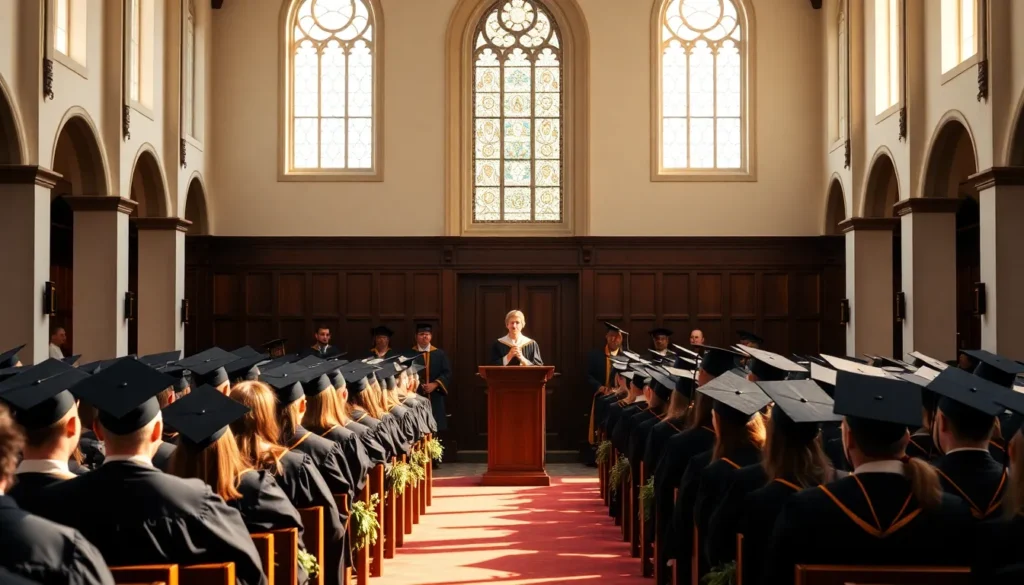
A baccalaureate service is a ceremonial event traditionally held to honor students who are graduating from high school, college, or university. The service usually occurs shortly before or in conjunction with the formal commencement or graduation ceremony. It often consists of prayers, reflections, speeches, and musical performances, emphasizing spiritual or moral themes. While historically rooted in Christian traditions, baccalaureate services have evolved in many institutions to accommodate a broad range of faiths or secular perspectives.
Detailed Explanation
The baccalaureate service originated as a religious rite within Christian academic institutions, intended to provide a moment of contemplation and gratitude before the official graduation ceremonies. It typically involves clergy or spiritual leaders, faculty members, and student speakers. The format of the service may include scripture readings, inspirational messages, hymns or other music, and blessings for the graduates’ future endeavors. In many modern settings, these services are inclusive, aiming to respect diverse religious beliefs or to offer a universal message of encouragement and reflection.
How It Works
Generally scheduled in the days leading up to the graduation ceremony, the baccalaureate service is often held in a chapel, auditorium, or other gathering space associated with the educational institution. Attendance may be voluntary or encouraged by the school. The program is planned by faculty, student committees, or chaplaincy offices and may feature guest speakers such as religious leaders, alumni, or community figures. The service emphasizes the transition from student life to new personal and professional stages, providing graduates with a moment of solemnity and inspiration.
Examples
- At many American universities, the baccalaureate service is a formal event held on the evening before commencement, including sermons by invited clergy and musical performances by choirs.
- Some high schools host baccalaureate services as non-denominational celebrations that include student reflections and community prayers or meditations.
- In some institutions, the service has expanded to include interfaith elements, recognizing the religious diversity of the graduating class.
Why It Matters
The baccalaureate service provides graduates and their families a moment to reflect on the significance of the academic journey and the values that will guide their future lives. It serves as a spiritual or moral complement to the more formal and secular graduation ceremony, fostering a sense of community and continuity. For many, it is an opportunity to acknowledge personal growth, express gratitude, and seek encouragement as they transition to new phases of life.
Common Misconceptions
Misconception: A baccalaureate service is the same as the graduation ceremony.
Correction: The baccalaureate service is a separate event, often with a religious or reflective focus, held before the official graduation ceremony.
Misconception: Baccalaureate services are only for Christian students.
Correction: While historically Christian, many modern baccalaureate services are inclusive, accommodating multiple faiths or secular viewpoints.
Pros and Cons
Pros:
- Provides a reflective and meaningful experience for graduates.
- Offers a sense of community and spiritual encouragement.
- Can be inclusive of diverse beliefs and values.
Cons:
- May not appeal to all students, particularly those uninterested in religious or spiritual content.
- Can be perceived as exclusionary if not adequately inclusive.
- Additional event may add to the commitments and costs for graduates and families.
Comparison Table
| Aspect | Baccalaureate Service | Graduation Ceremony |
|---|---|---|
| Meaning | A reflective, often spiritual ceremony honoring graduates before commencement. | A formal event conferring degrees or diplomas to graduates. |
| Focus | Prayer, reflection, moral encouragement. | Presentation of academic achievements and awards. |
| Participants | Graduates, clergy or speakers, families. | Graduates, faculty, administration, families. |
| Setting | Chapel, auditorium, or similar venue. | Stadium, auditorium, or large hall. |
| Frequency | Typically held once, before graduation. | Held annually or at the completion of study. |
Decision Checklist
What is the easiest way to understand a Baccalaureate Service?
Think of a baccalaureate service as a special ceremony held before graduation that allows graduates to pause, reflect, and receive encouragement, often through spiritual or inspirational messages. It complements the formal graduation by focusing on personal growth and community values.
FAQ
Is attendance at a baccalaureate service mandatory?
Attendance varies by institution; some schools encourage attendance but do not require it, while others may have it as an optional event.
Are baccalaureate services religious?
Traditionally, they have a religious focus, often Christian, but many institutions have adapted the service to be inclusive of various faiths or secular perspectives.
Can families attend the baccalaureate service?
Yes, family members and friends are typically welcome to attend the baccalaureate service alongside the graduates.






Leave a Reply