
Short Answer
Overview
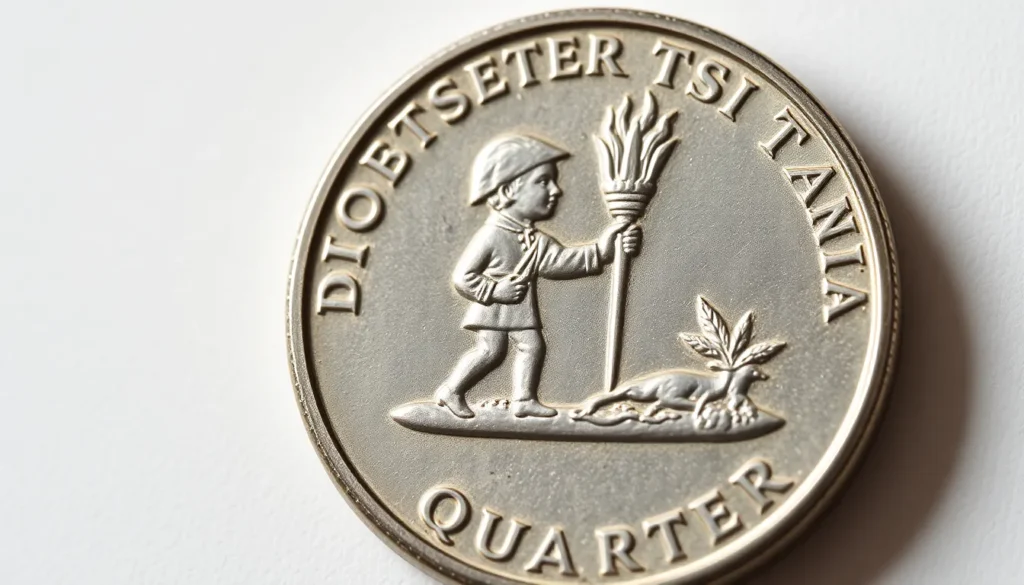
The Bicentennial quarter is a special commemorative coin issued by the United States Mint in 1975 and 1976 to celebrate the 200th anniversary of the Declaration of Independence. It features a distinctive reverse design depicting a colonial drummer and a victory torch encircled by 13 stars, replacing the traditional eagle motif. While these quarters were mass-produced for general circulation, their value can vary depending on condition, mint mark, and special editions.
Detailed Explanation
The Bicentennial quarter was released in large quantities, making it relatively common among coin collectors and the general public. Most circulated Bicentennial quarters are worth their face value of 25 cents. However, uncirculated coins, proof editions, or those struck on special planchets may carry a premium. Factors influencing value include coin grade (condition), mint mark (Philadelphia, Denver, or San Francisco), and rarity of specific variants such as silver-clad proof versions.
How It Works
The value of a Bicentennial quarter depends primarily on its condition and minting characteristics. Circulated coins have minor wear and are usually worth face value. Uncirculated coins, which have no wear, can be worth a few dollars or more depending on grading by professional services. Silver-clad proof coins, minted for collectors with special finishes and containing 40% silver, have a higher intrinsic metal value and collector demand, thus are generally more valuable. Additionally, errors or unusual minting variations may increase a coin’s worth.
Examples
- Common circulated Bicentennial quarters typically trade at 25 cents.
- An uncirculated Bicentennial quarter from the Denver or Philadelphia mint may be valued between $1 and $5 depending on condition.
- The silver-clad proof Bicentennial quarters from the San Francisco Mint often range from $7 to upwards of $20 or more, influenced by silver prices and collector interest.
- Coins with mint errors, such as double dies or off-center strikes, may command substantially higher prices depending on rarity and demand.
Pros and Cons
- Pros: Widely available; affordable collectible; commemorates a significant historical event; silver-clad versions offer intrinsic metal value.
- Cons: Most coins hold little premium above face value; commonality limits high collector value; requires knowledge to identify valuable variants or errors.
Comparison Table
| Aspect | Bicentennial Quarter | Regular Quarter (Pre-1975 and Post-1976) |
|---|---|---|
| Meaning | Commemorates U.S. 200th Independence Anniversary | Standard circulation coin without commemorative design |
| Design | Colonial drummer and victory torch reverse | Traditional eagle reverse (prior to 1999) |
| Material | Mostly copper-nickel clad; some silver-clad proofs | Typically copper-nickel clad |
| Collector Value | Generally low; higher for proof and silver-clad versions | Varies widely; some older or rare coins more valuable |
Decision Checklist
- Use this if: You want to collect a piece of U.S. history with modest investment.
- Avoid this if: You seek high-value rare coins or significant investment-grade numismatic pieces.
- Check this first: Verify the coin’s condition, mint mark, and whether it is a silver-clad proof before estimating value.
What is the easiest way to understand What Is a Bicentennial Quarter Worth?
The simplest approach is to recognize that most Bicentennial quarters are common and worth face value unless they are uncirculated, proofs, or silver versions. Checking the coin’s condition and type will quickly indicate if it holds any premium beyond 25 cents.
FAQ
Are Bicentennial quarters rare?
No, Bicentennial quarters were minted in very large quantities and are generally common, especially in circulated condition.
What makes a Bicentennial quarter valuable?
Uncirculated condition, proof status, silver-clad composition, and certain mint errors can increase a Bicentennial quarter's value beyond face value.
Can I sell a Bicentennial quarter for more than 25 cents?
Only if the coin is uncirculated, a silver proof, or has a rare error; otherwise, it is typically worth its face value.



Leave a Reply