
Short Answer
Overview
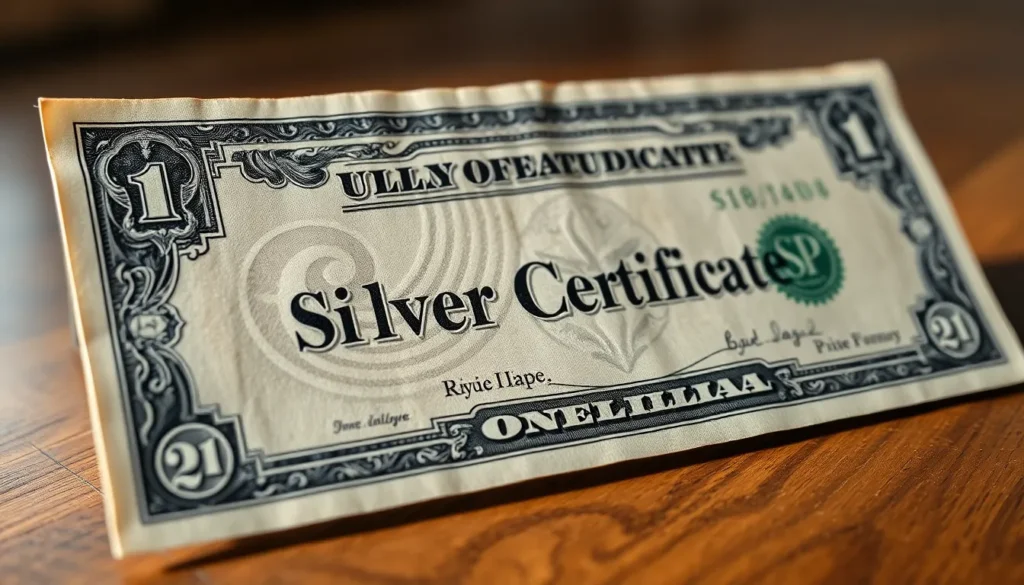
A $1 Silver Certificate is a type of United States paper currency initially issued between 1878 and 1964. These certificates were redeemable for their face value in silver dollars or silver bullion. Although no longer redeemable for silver, they remain legal tender. The value of a $1 Silver Certificate today depends on factors such as its issue series, condition, rarity, and collector interest.
Detailed Explanation
Silver Certificates were introduced as part of the U.S. government’s efforts to stabilize currency and back paper money with precious metals. Each $1 Silver Certificate was backed by one dollar’s worth of silver held by the U.S. Treasury. Over time, multiple series of the $1 note were produced, including well-known designs such as the Series 1935 and Series 1957 notes.
The intrinsic silver content is no longer present as the certificates themselves are paper and do not contain silver. Their value is therefore primarily numismatic, reflecting collector demand, condition (graded from poor to uncirculated), and the specific series or unique features such as star notes or errors.
How It Works
Collectors and investors assess a $1 Silver Certificate’s worth by examining the note’s physical condition, rarity, and historical significance. The grading scale ranges from circulated (showing wear) to uncirculated (pristine condition). Notes with less wear and unique serial numbers generally command higher prices.
Market prices fluctuate based on supply and demand in the numismatic community. A common circulated $1 Silver Certificate may sell for slightly above face value, while rarer or uncirculated examples can fetch significantly higher premiums.
Examples
- Series 1935 $1 Silver Certificates in circulated condition typically range from $1.50 to $4.
- Uncirculated Series 1957 $1 Silver Certificates often sell for $5 to $15 depending on grading.
- Star notes or misprinted certificates can reach higher values among specialized collectors.
Pros and Cons
- Pros: Historical significance, collectible value, legal tender status, and affordability for entry-level collectors.
- Cons: Value dependent on condition and rarity, no intrinsic silver content, and prices can fluctuate with collector interest.
Comparison Table
| Aspect | $1 Silver Certificate | Federal Reserve Note |
|---|---|---|
| Meaning | Paper currency once redeemable for silver | Standard U.S. currency backed by government credit |
| Metal Backing | Originally backed by silver | Not backed by precious metals |
| Legal Tender Status | Still legal tender | Legal tender |
| Collector Value | Varies, often above face value | Generally face value unless rare |
Decision Checklist
- Use this if: You are interested in historical U.S. currency or starting a numismatic collection.
- Avoid this if: You seek intrinsic precious metal value or investment-grade silver bullion.
- Check this first: The note’s condition, series, and any special attributes such as star notes or errors.
What is the easiest way to understand a $1 Silver Certificate’s value?
The simplest approach is to compare your note to recent sales of similar certificates in comparable condition through reputable auction sites, coin dealers, or numismatic price guides. This will provide a current market perspective on its worth beyond the $1 face value.
FAQ
Are $1 Silver Certificates still legal tender?
Yes, $1 Silver Certificates remain legal tender and can be used for transactions at face value, although they are primarily collected rather than spent.
Do $1 Silver Certificates contain actual silver?
No, the certificates are made of paper and do not contain silver. They were originally redeemable for silver coins or bullion but are no longer exchangeable for silver.
How can I determine the value of my $1 Silver Certificate?
The value depends on the note’s series, condition, rarity, and special features. Consulting numismatic price guides, professional grading services, or recent auction results can help determine its market value.

Leave a Reply