
Short Answer
Overview
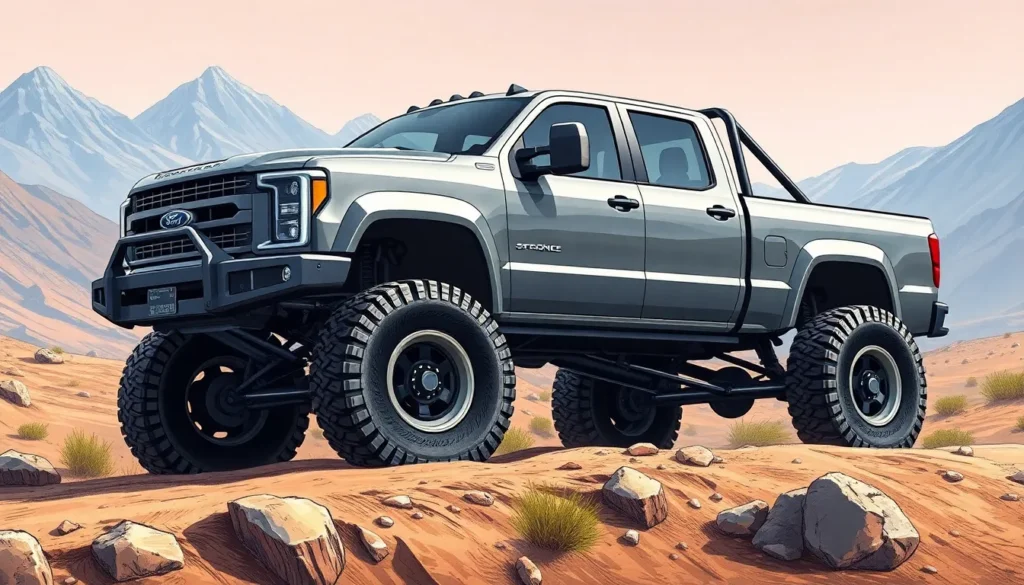
A lifted truck is a pickup truck or similar vehicle that has been modified to increase its ride height above the original factory specifications. This modification is typically achieved by raising the suspension system or the body of the vehicle, allowing for greater ground clearance. Lifted trucks are popular among off-road enthusiasts, individuals requiring enhanced performance in rough terrain, and those seeking a distinctive aesthetic. The extent of the lift can vary from a few inches to significantly higher elevations, depending on the purpose and desired look.
Detailed Explanation
Lifted trucks involve altering the vehicle’s suspension components or body mounts to raise the chassis or truck bed higher off the ground. There are two primary types of lifts: suspension lifts and body lifts. Suspension lifts involve replacing or modifying suspension parts such as springs, shocks, and control arms to physically raise the truck’s frame and improve wheel travel and off-road handling. Body lifts, on the other hand, involve raising the truck’s body away from the frame by installing spacers or blocks, increasing height without affecting suspension geometry.
These modifications often allow for the installation of larger tires, which further increases ground clearance and improves traction and performance on uneven terrain. Lifted trucks may also incorporate upgraded drivetrains, reinforced axles, and enhanced steering components to accommodate the changes and maintain vehicle safety and performance.
How It Works
The process of lifting a truck begins with selecting the desired lift type and height. Suspension lifts replace or modify key suspension components to raise the frame and improve wheel articulation. This can include installing taller coil springs or leaf springs, longer shock absorbers, and sometimes new control arms or steering linkages to maintain proper alignment and handling.
Body lifts involve installing blocks or spacers between the body and the frame, effectively raising the body without altering the suspension or drivetrain. This is generally a less expensive and simpler modification but provides less improvement in off-road performance compared to suspension lifts.
Once lifted, the truck’s geometry changes, which can affect handling, braking, and driveline angles. Therefore, additional adjustments such as realigning the wheels, upgrading driveshafts, or modifying brake lines may be necessary. Larger tires often accompany lifted trucks, providing increased traction and clearance but potentially affecting speedometer accuracy and fuel economy.
Examples
- Suspension Lifted Ford F-150: A common example where enthusiasts install a 4 to 6-inch suspension lift kit to accommodate larger tires and improve off-road capability.
- Body Lifted Chevrolet Silverado: A truck with a 2 to 3-inch body lift to enhance appearance and allow for slightly larger tires without significant suspension modification.
- Extreme Lifted Dodge Ram: A heavily modified truck with an 8-inch or higher suspension lift, large off-road tires, reinforced axles, and upgraded drivetrain components for serious off-road use.
Why It Matters
Lifting a truck can significantly impact its utility, performance, and visual appeal. Increased ground clearance allows the vehicle to traverse rough terrain, obstacles, and deep water more effectively, making it valuable for off-road enthusiasts, construction workers, and rural users. Additionally, lifted trucks have become a cultural icon within certain communities, symbolizing ruggedness and individuality.
However, lifting a truck also affects safety, handling, fuel efficiency, and legal compliance. Proper installation and understanding of the modifications are essential to maintain vehicle integrity and ensure road safety.
Common Misconceptions
Misconception: Lifted trucks are only for off-road use.
Correction: While lifted trucks enhance off-road performance, many owners use them primarily for aesthetic reasons or everyday driving.
Misconception: Any truck can be lifted without affecting safety.
Correction: Improper lifting without necessary adjustments can compromise handling, braking, and vehicle stability, posing safety risks.
Pros and Cons
Pros:
- Improved ground clearance for off-road driving.
- Ability to fit larger tires for better traction.
- Enhanced vehicle appearance and customization.
- Potentially better approach and departure angles for obstacles.
Cons:
- Increased center of gravity can reduce stability and increase rollover risk.
- Possible negative effects on fuel economy due to larger tires and altered aerodynamics.
- Higher cost for parts, installation, and maintenance.
- Potential legal restrictions and insurance implications.
Comparison Table
| Aspect | Lifted Truck | Stock Truck |
|---|---|---|
| Meaning | Truck modified to increase ground clearance via suspension or body lift. | Truck with manufacturer-standard suspension and body height. |
| Performance | Enhanced off-road capability and obstacle clearance. | Designed for balanced on-road and light off-road use. |
| Handling | Altered handling characteristics; may require adjustments. | Optimized for stability and safety in factory condition. |
| Cost | Additional expense for lift kits, installation, and maintenance. | Lower initial and maintenance costs. |
| Legal | May be subject to regulations regarding lift height and modifications. | Complies with standard vehicle regulations. |
Decision Checklist
What is the easiest way to understand Lifted Trucks?
The simplest way to understand a lifted truck is to view it as a vehicle that has been raised higher off the ground than its original design, usually by modifying the suspension or raising the body. This change improves its ability to handle rough terrain and gives it a distinctive, rugged look but requires careful consideration of how it affects driving dynamics and safety.
FAQ
What is the difference between a suspension lift and a body lift?
A suspension lift raises the vehicle's frame by modifying suspension components, which improves off-road performance and increases wheel travel. A body lift raises only the truck's body from the frame using spacers, primarily for aesthetic purposes and to fit larger tires, without enhancing suspension performance.
Are lifted trucks legal to drive on public roads?
Legality depends on local and state regulations, which often specify maximum allowable lift heights and safety requirements. It is important to check relevant laws before modifying a truck to ensure compliance.
Does lifting a truck affect its fuel efficiency?
Yes, lifting a truck typically reduces fuel efficiency due to increased aerodynamic drag, heavier and larger tires, and altered drivetrain dynamics.






Leave a Reply