
Short Answer
Overview
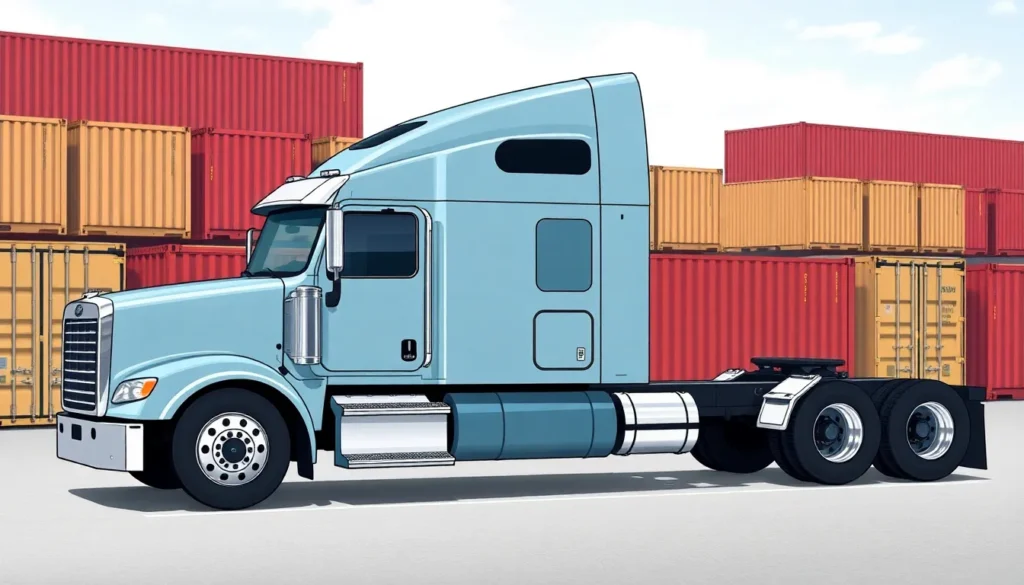
A bobtail truck refers to a tractor unit that is operating without a trailer attached. In the context of trucking and logistics, the term typically denotes a semi-truck or tractor that is either traveling empty or repositioning without hauling cargo. Bobtail trucks are common in scenarios where the driver is returning to a terminal, moving between jobs, or repositioning equipment. The term can also apply to certain types of light trucks with shortened rear sections, but its predominant use is in the heavy trucking industry.
Detailed Explanation
The concept of a bobtail truck is primarily associated with tractor-trailers, where the tractor is designed to pull a semi-trailer. When the trailer is detached, the tractor alone is often referred to as bobtailing. This condition affects the vehicle’s handling, weight distribution, and legal classification in some jurisdictions. Because the tractor is not carrying the additional weight of the trailer and cargo, its dynamics in terms of braking and stability differ from when it is fully loaded.
In some contexts, the term bobtail truck can also describe a pickup or delivery truck that has had its rear bed or box removed or shortened, but this usage is less common and more specialized.

How It Works
When a tractor operates as a bobtail truck, it functions independently, without the additional mass and drag of a trailer. This allows for greater maneuverability in tight spaces such as loading docks or terminals. However, it also means the truck has less traction and weight on the rear axle, which can impact braking performance and stability.
Bobtail operations are typical during deadhead runs, where the driver moves from one location to another without freight, often to pick up a new load or return to base. Drivers must be trained to adjust their driving techniques to accommodate the different handling characteristics of bobtailing.
Examples
- A semi-truck leaving a distribution center without a trailer attached, heading to pick up a new load.
- A tractor repositioning within a freight yard or terminal to connect with a different trailer.
- A bobtail pickup truck used in municipal services that has a shortened rear bed for specific utility functions.
Pros and Cons
Pros:
- Increased maneuverability due to lighter weight and shorter length.
- Reduced fuel consumption when traveling without a trailer.
- Flexibility for repositioning and operational efficiency.
Cons:
- Reduced stability and traction, especially in adverse weather conditions.
- Potentially increased risk of accidents due to altered handling characteristics.
- May require specific insurance and regulatory considerations.
Comparison Table
| Aspect | Bobtail Truck | Full Tractor-Trailer |
|---|---|---|
| Meaning | Tractor unit operating without a trailer attached | Tractor unit connected to a trailer carrying cargo |
| Weight Distribution | Concentrated on tractor axles, lighter overall | Distributed between tractor and trailer, heavier total load |
| Handling | More maneuverable but less stable | Less maneuverable but more stable when loaded |
| Use Case | Repositioning, deadhead runs, local maneuvering | Transporting freight over distance |
Decision Checklist
- Use this if you need to move a tractor unit without a load or trailer to a new location.
- Avoid this if you require maximum stability and traction for heavy freight transport.
- Check this first when determining insurance coverage and legal requirements for operating without a trailer.
What is the easiest way to understand a Bobtail Truck?
The easiest way to understand a bobtail truck is to think of it as a semi-truck cab driving alone—without the trailer it normally hauls—often moving empty between jobs or bases. It’s essentially the “tractor” part of a tractor-trailer rig operating solo.
FAQ
Is a bobtail truck the same as a semi-truck?
A bobtail truck refers specifically to the tractor unit of a semi-truck operating without a trailer attached. A semi-truck generally includes both the tractor and the trailer together.
Why do truckers bobtail?
Truckers bobtail when they need to reposition their tractor unit without hauling cargo, such as traveling to pick up a new load or returning to their base.
Are bobtail trucks harder to drive?
Bobtail trucks can be more challenging to drive due to reduced rear axle weight, which affects traction and braking, requiring adjusted driving techniques.






Leave a Reply