
Short Answer
Overview
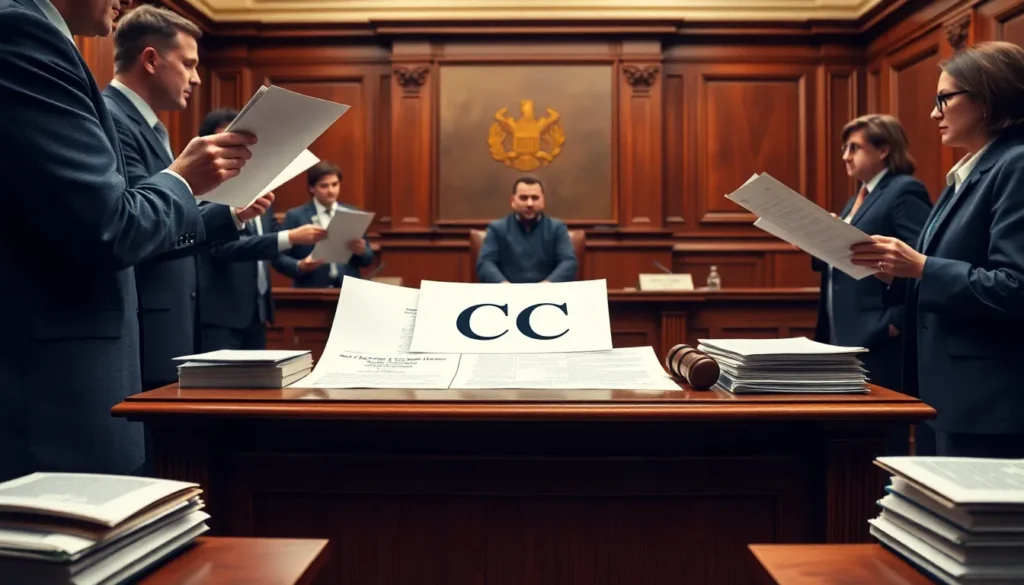
In legal settings, the abbreviation “CC” can have multiple meanings depending on the jurisdiction, type of court, or context in which it appears. Common interpretations include “Carbon Copy,” often used in legal correspondence, and “Criminal Code,” referring to statutes governing criminal law. Additionally, “CC” may be an abbreviation for various procedural terms or court documents in different legal systems. Understanding what “CC” signifies in a specific legal context is essential for accurate interpretation and application.
Detailed Explanation
The term “CC” is not universally defined within law courts and can vary widely. One prevalent use is as an abbreviation for “Carbon Copy,” a term originating from typewritten correspondence where a copy of a document is sent to additional parties. In modern legal communication, “CC” is commonly used in emails to indicate recipients who receive a copy of the message, ensuring transparency and record-keeping within legal processes.
In statutory contexts, particularly in common law countries such as Canada and India, “CC” often refers to the “Criminal Code,” which is a comprehensive set of laws defining criminal offences and procedures. For example, legal citations may reference sections of the “CC” to denote specific statutory provisions.
Other meanings of “CC” in court documents might include “Civil Court,” identifying the jurisdiction or type of court handling the matter, or “Case Comment,” a notation summarizing or commenting on a legal case. The exact interpretation depends substantially on the procedural rules and conventions of the jurisdiction in question.
How It Works
When “CC” is used in legal correspondence, it functions as a method of disseminating information to multiple parties simultaneously. For example, lawyers may send a letter or email to a primary recipient and “CC” other involved parties such as opposing counsel, clients, or court officials to ensure everyone is informed.
If “CC” is used as shorthand for “Criminal Code,” it typically appears in legal documents and court opinions to reference statutory provisions. Legal professionals cite the “CC” when arguing points of law, charging individuals, or interpreting criminal statutes.
In court filings, “CC” might also appear as an abbreviation on forms or dockets indicating the court’s division or specific procedural steps, though these uses are less standardized and vary by jurisdiction.
Examples
- Legal Correspondence: An attorney sends an email to the judge and “CCs” the opposing counsel to keep all parties updated on case developments.
- Statutory Reference: A criminal charge is filed under Section 420 of the “CC,” referring to the Criminal Code section dealing with fraud.
- Court Documentation: A case docket lists “CC” to indicate the civil court handling a particular lawsuit.
Pros and Cons
Pros:
- Facilitates clear communication among multiple parties in legal proceedings.
- Helps in precise referencing of criminal statutes through shorthand notation.
- Ensures transparency and proper record-keeping in legal correspondence.
Cons:
- Ambiguity can arise due to multiple meanings depending on context and jurisdiction.
- Misinterpretation may occur if the abbreviation is used without clear explanation.
- Not standardized globally, leading to potential confusion in international or comparative legal matters.
Comparison Table
| Aspect | CC in Law Court | Alternative/Related Term |
|---|---|---|
| Meaning | Abbreviation for “Carbon Copy,” “Criminal Code,” or other court-related terms depending on context. | “CCO” (Chief Compliance Officer), “CCC” (Court of Criminal Appeals) |
| Use | Communication, statutory citation, court document notation. | Specific legal titles or document types. |
| Context Dependency | Highly context-dependent; varies by jurisdiction and document type. | More standardized within specific legal systems. |
Decision Checklist
- Use this if you are sending legal communication and want to include additional recipients transparently.
- Avoid this if the abbreviation “CC” might cause confusion without clear context or explanation.
- Check this first by confirming the local court rules or legal practice manuals to understand the accepted meanings of “CC” in your jurisdiction.
What is the easiest way to understand CC in law court?
The easiest way to understand “CC” in a law court setting is to first determine the context in which it appears—whether in correspondence, legal citations, or court documents—and then consult the relevant jurisdiction’s legal glossary or procedural guidelines. In most cases, “CC” as “Carbon Copy” in communication or as a reference to the “Criminal Code” in statutory law will be the primary meanings. Clarifying with legal professionals or official documentation can eliminate ambiguity.
FAQ
What does CC mean in legal emails?
In legal emails, CC stands for 'Carbon Copy,' meaning that the message is sent to additional recipients for their information.
Is CC always related to the Criminal Code?
No, CC can mean different things depending on context; while it often refers to the 'Criminal Code' in statutory law, it can also mean 'Carbon Copy' or other terms in legal practice.
How can I determine the meaning of CC in my court documents?
You should check the jurisdiction's legal glossary, court rules, or consult a legal professional to understand the specific use of 'CC' in your documents.





Leave a Reply