
Short Answer
Overview
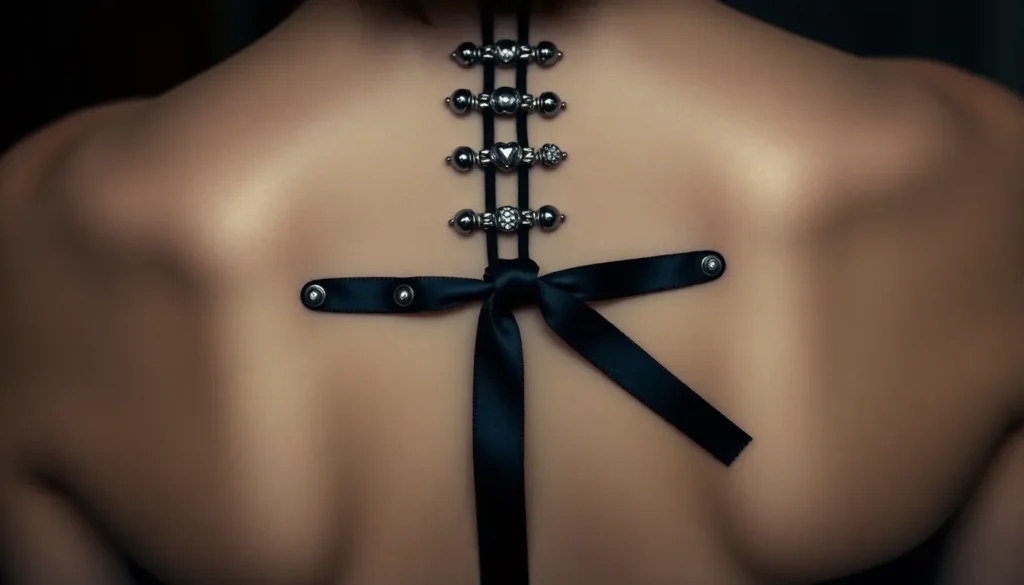
A corset piercing is a form of body modification involving multiple piercings placed in two parallel rows, typically on the skin of the back, to create the visual effect of lacing similar to that of a corset garment. This style of piercing is often used as a decorative or aesthetic enhancement rather than for functional or symbolic purposes. Due to the nature of the placement and the number of piercings involved, corset piercings are considered advanced and typically temporary in most cases.
Detailed Explanation
Corset piercings consist of a series of paired piercings arranged symmetrically on either side of a central area of skin, such as the upper or lower back. After the piercings are made, a ribbon, cord, or similar material is threaded through the jewelry to mimic the look of a corset’s lacing. The jewelry used in corset piercings is often surface bars or captive bead rings, which are selected to reduce stress on the skin and promote healing.
This piercing style is usually performed by experienced piercers due to its complexity and the risk of complications such as rejection, migration, or infection. Additionally, because the piercing passes through surface tissue rather than through thicker cartilage or muscle, healing can be prolonged and problematic.
How It Works
The process begins with the piercer marking pairs of spots along the skin where the piercings will be placed. Using sterilized needles, the piercer then creates multiple surface piercings in parallel rows. Jewelry is inserted immediately, and a cord or ribbon may be threaded through to create the visual effect of corset lacing.
Healing requires meticulous aftercare, including cleaning, avoiding irritation or pressure on the pierced area, and monitoring for signs of infection. Because surface piercings are prone to rejection, many individuals wear corset piercings temporarily for fashion or events, removing them after a short period. In some cases, the piercings may heal sufficiently to remain longer, but this varies widely.
Examples
- Back Corset Piercing: The most common form, with multiple piercings on either side of the spine, laced with ribbon or leather cord.
- Arm or Leg Corset Piercing: Less common but similar in concept, with parallel piercings arranged along the limb.
- Temporary Corset Piercing: Often worn for special occasions or photo shoots, where piercings are done shortly before and removed soon after.
Pros and Cons
- Pros:
- Highly distinctive and visually striking form of body art.
- Customizable appearance with different ribbons, cords, and jewelry.
- Temporary option for fashion or artistic expression without long-term commitment.
- Cons:
- High risk of rejection and migration due to surface piercing nature.
- Requires extensive aftercare and hygiene to prevent infection.
- Can be painful and prone to complications during healing.
- Typically not a permanent piercing, limiting long-term wear.
Comparison Table
| Aspect | Corset Piercing | Standard Single Surface Piercing |
|---|---|---|
| Meaning | Primarily decorative, mimicking corset lacing. | Varies; often symbolic or purely aesthetic. |
| Placement | Multiple paired piercings in parallel rows, usually back or limbs. | Single piercing at a specific site (e.g., neck, wrist). |
| Healing Complexity | High; prone to rejection and requires careful care. | Moderate; depends on piercing location. |
| Longevity | Often temporary. | Can be permanent. |
| Visual Impact | Highly dramatic and unique. | Less complex, varies by jewelry. |
Decision Checklist
- Use this if … you desire a unique, visually striking temporary body modification and are prepared for the intensive care and potential discomfort.
- Avoid this if … you want a long-term piercing with minimal risk, or have sensitive skin prone to rejection or infection.
- Check this first … consult with an experienced professional piercer to understand risks, care requirements, and suitability for your anatomy.
What is the easiest way to understand Corset Piercing?
The easiest way to understand a corset piercing is to visualize it as a series of paired skin piercings arranged like the eyelets of a corset, with ribbon or cord laced through to create a decorative effect similar to the lacing on a traditional corset garment. It is a complex, mostly aesthetic piercing that requires skilled application and attentive care.
FAQ
Is a corset piercing permanent?
Corset piercings are generally considered temporary because they are surface piercings prone to rejection and migration, often requiring removal after a short period.
How painful is a corset piercing?
Pain levels vary by individual and placement, but due to multiple surface piercings, the procedure can be moderately to highly painful.
What aftercare is required for a corset piercing?
Aftercare typically includes regular cleaning with saline solution, avoiding friction or pressure on the area, monitoring for infection, and following the piercer's specific instructions carefully.






Leave a Reply