
Short Answer
Overview
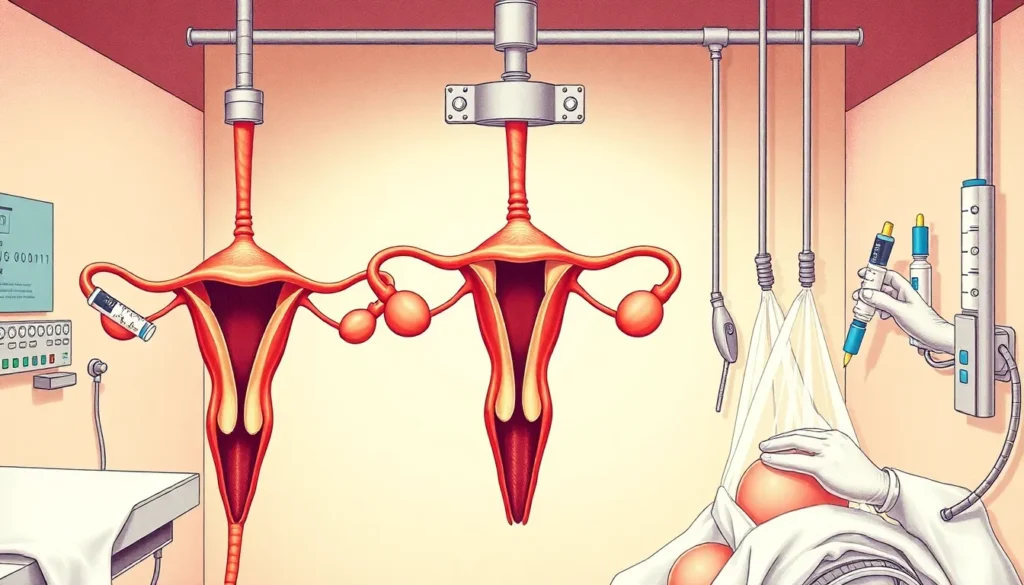
A human egg farm is a term used to describe a facility or practice where human oocytes (eggs) are harvested in large quantities from women, often donors, for medical or research purposes. These eggs may be used in assisted reproductive technologies such as in vitro fertilization (IVF), egg donation programs, or for scientific research including stem cell studies. The phrase “human egg farm” is not a formal or medical term but rather a colloquial expression that highlights the commercial or industrial scale of egg collection processes in certain contexts.
Detailed Explanation
Human egg farms operate by recruiting women who are willing or sometimes financially incentivized to undergo ovarian stimulation to produce multiple eggs in one cycle. The process generally involves hormone injections to stimulate the ovaries, followed by a surgical procedure known as egg retrieval to collect the mature eggs. The collected eggs can then be fertilized, frozen, sold for donation, or used in research.
Ethical concerns arise due to the intensive medical interventions required, the health risks to donors, and the commodification of human reproductive material. Regulatory frameworks vary widely by country, with some jurisdictions imposing strict guidelines on egg donation and commercialization, while others have less oversight. The term “egg farm” may be used pejoratively to critique practices perceived as exploitative or lacking transparency.
How It Works
The process of operating a human egg farm typically involves several stages:
- Recruitment: Women, usually within a specific age range and health criteria, are recruited to donate eggs. Recruitment can be through fertility clinics, advertisements, or agencies.
- Ovarian Stimulation: Donors receive hormone injections, such as follicle-stimulating hormone (FSH), to stimulate the development of multiple follicles simultaneously, increasing the number of eggs available for retrieval.
- Monitoring: Donors are closely monitored via ultrasound and blood tests to track follicle growth and hormone levels.
- Egg Retrieval: When follicles reach maturity, a minor surgical procedure called transvaginal ultrasound aspiration is performed to collect the eggs.
- Processing and Use: Retrieved eggs are either fertilized for IVF, frozen for future use, donated to other individuals or couples, or used in scientific research.
Examples
- Fertility Clinics: Many fertility clinics worldwide collect eggs from donors to provide to patients who cannot conceive with their own eggs.
- Egg Donation Agencies: Organizations that facilitate egg donation by coordinating donors and recipients, sometimes operating on a larger scale with multiple donors.
- Research Institutions: Laboratories that collect eggs for stem cell research or to study human reproduction, often under strict ethical guidelines.
Pros and Cons
Pros:
- Provides eggs for individuals or couples facing infertility.
- Supports scientific advancements in reproductive medicine and biology.
- Offers financial compensation to donors in some regions.
Cons:
- Potential health risks to donors, including ovarian hyperstimulation syndrome.
- Ethical concerns around commodification and exploitation.
- Legal and regulatory inconsistencies between regions.
Comparison Table
| Aspect | Human Egg Farm | Egg Donation Program |
|---|---|---|
| Meaning | Facility or practice involving mass collection of human eggs | Organized program matching donors with recipients for egg donation |
| Scale | Often larger, industrial or commercial scale implied | Typically smaller, patient-centered scale |
| Connotation | Sometimes negative or controversial | Generally neutral or positive |
Decision Checklist
- Use this if: You are seeking detailed information on large-scale egg collection practices and their implications.
- Avoid this if: You are looking solely for standard, regulated egg donation procedures without the implication of industrial-scale operations.
- Check this first: Local laws and ethical guidelines regarding egg donation and commercialization in your region.
What is the easiest way to understand Human Egg Farms?
Think of a human egg farm as a large-scale egg donation operation where women undergo medical treatment to produce many eggs, which are then collected for fertility treatments or research. The term emphasizes the volume and commercial aspects, but it is not a formal medical term and carries ethical considerations.
FAQ
What is a human egg farm?
A human egg farm is a colloquial term for facilities or practices that collect large quantities of human eggs from donors for fertility treatments or research.
Is it safe to donate eggs?
Egg donation involves medical procedures and hormone treatments that carry some risks, including ovarian hyperstimulation syndrome and complications from egg retrieval, but it is generally considered safe when conducted under medical supervision.
Are human egg farms legal?
The legality and regulation of large-scale egg collection vary by country and region, with some places having strict regulations and others having minimal oversight.






Leave a Reply