
Short Answer
Overview
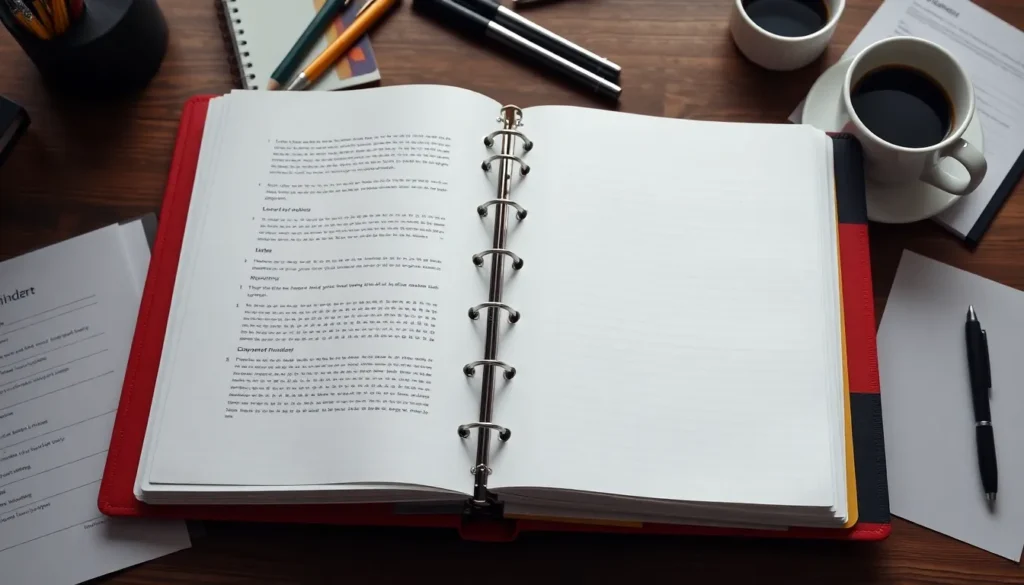
A loose leaf book is a collection of individual sheets of paper that are held together within a binder or folder, typically using rings or other mechanical fasteners. Unlike traditional bound books where the pages are permanently attached, loose leaf books allow users to add, remove, or rearrange pages with ease. This format is popular in educational settings, offices, and for personal organization because it provides adaptability and convenience.
Detailed Explanation
Loose leaf books consist of pre-punched sheets designed to fit specific binders or folder systems. These sheets can be plain, lined, graph, or specialized paper types depending on the intended use. The core feature is the ability to customize the content by inserting new pages, removing outdated material, or reorganizing the order without damaging the pages. Loose leaf books may also include dividers, pockets, or tabs to enhance organization.
How It Works
The loose leaf system operates through a mechanical binding method, most commonly using ring binders. These binders have metal or plastic rings that open and close, allowing sheets to be easily inserted or removed through punched holes along the edge of the paper. The number and size of rings vary, with common configurations including two, three, or four rings. The loose leaf pages must be punched with holes matching the binder’s ring configuration to ensure compatibility.
Examples
- Educational Notebooks: Students often use three-ring loose leaf binders to organize notes, homework, and handouts. This system helps them keep materials for different subjects separate and accessible.
- Recipe Collections: Home cooks might use loose leaf binders to compile recipes, allowing easy addition or removal as preferences change.
- Professional Documents: In offices, loose leaf binders are used to organize manuals, reports, or project documents that require frequent updates or reordering.
Why It Matters
The loose leaf book format is significant because it addresses the limitations of traditional bound books by offering flexibility and modularity. This adaptability supports dynamic environments where information changes frequently, such as education and business. It also fosters personalized organization, allowing users to tailor their collections to specific needs without replacing entire volumes.
Common Misconceptions
Misconception: Loose leaf books are less durable than bound books.
Correction: While loose leaf pages may be more susceptible to damage if handled improperly, the durability depends on the quality of the binder and paper. High-quality binders and reinforced punched holes can provide substantial longevity.
Misconception: Loose leaf books are only for students.
Correction: Loose leaf systems are used in many professional and personal contexts beyond education, including business documentation, recipe organization, and creative projects.
Pros and Cons
Pros: Flexibility to add, remove, or rearrange pages; customization options with dividers and pockets; reusability of binders and pages; facilitates organization.
Cons: Potential for pages to become lost if not secured properly; less compact than some bound books; requires compatible hole-punched pages and binders.
Comparison Table
| Aspect | Loose Leaf Book | Bound Book |
|---|---|---|
| Meaning | A collection of unbound pages held in a binder allowing flexibility. | Pages permanently bound together in a fixed order. |
| Flexibility | High – pages can be added, removed, or reordered. | Low – pages are fixed and cannot be changed without damage. |
| Durability | Variable – depends on binder quality and handling. | Generally higher due to fixed binding. |
| Portability | Less compact, bulkier due to binder rings. | More compact and streamlined. |
Decision Checklist
What is the easiest way to understand a Loose Leaf Book?
Think of a loose leaf book as a folder with rings that hold individual sheets of paper. Unlike a traditional book where pages are glued or sewn together, a loose leaf book lets you open the rings and rearrange or replace pages anytime you want, much like organizing documents in a binder.
FAQ
Can I use any paper in a loose leaf binder?
You can use any paper as long as it is punched with the correct hole configuration to fit the binder rings.
Are loose leaf books more expensive than traditional notebooks?
Costs vary depending on binder quality and paper, but loose leaf systems may have higher initial costs due to the binder and accessories.
Is a loose leaf book suitable for long-term document storage?
Loose leaf books can be suitable if high-quality materials are used and the documents are handled carefully, but traditional bound books generally offer better long-term durability.


Leave a Reply