
Short Answer
Overview
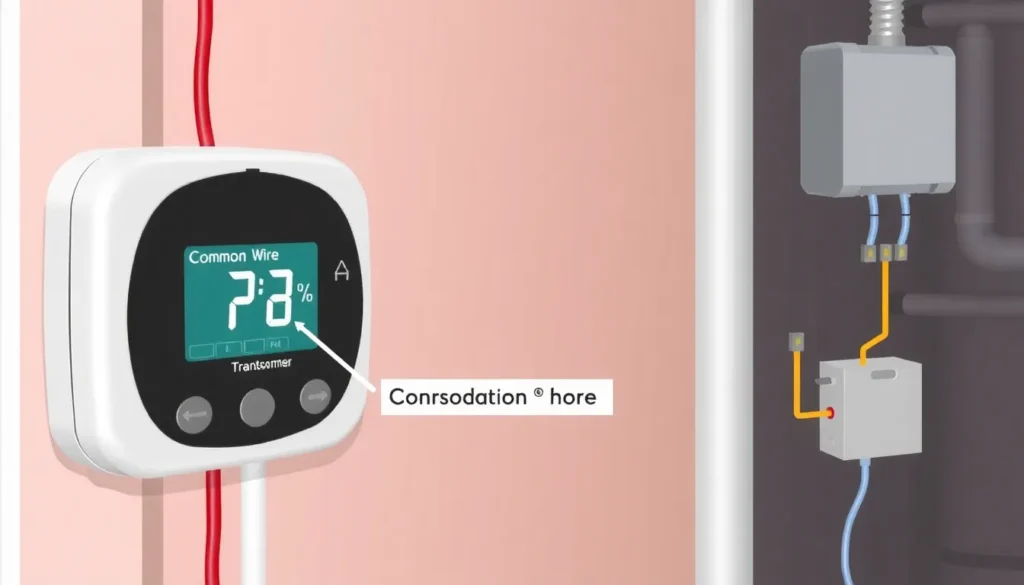
A common wire, frequently called the “C wire,” is a wire used in electrical systems to provide a continuous return path for electrical current. It is most commonly associated with HVAC thermostat wiring, where it serves as a necessary connection to deliver a constant 24-volt power supply to the thermostat. Unlike other wires that carry signals or switch power on and off, the common wire ensures the device remains powered without relying solely on batteries.
Detailed Explanation
In many residential and commercial electrical systems, devices like thermostats require a steady source of power to operate features such as digital displays, Wi-Fi connectivity, and other smart functions. The common wire serves this purpose by completing the electrical circuit back to the transformer, which supplies low-voltage power. Without a common wire, some devices may only operate intermittently or require batteries.
The common wire is typically connected to the “C” terminal on thermostats and the transformer’s common side. It is distinct from the “R” (power) wire, which delivers voltage, and other control wires like “W” (heat), “Y” (cooling), and “G” (fan).
How It Works
The common wire functions as the return path for the 24-volt AC power supplied by the HVAC system’s transformer. When the thermostat calls for heating, cooling, or fan operation, it uses other wires to send signals to the HVAC equipment. The common wire completes the circuit by providing a neutral line, allowing electricity to flow through the device continuously.
In systems without a common wire, thermostats may rely on power-stealing methods or batteries to operate, which can limit functionality or lifespan. Installing a common wire ensures reliable power delivery for advanced thermostat features.
Examples
- Standard HVAC Thermostat Wiring: A typical thermostat may have wires labeled R, C, W, Y, and G. The C wire connects the thermostat to the transformer’s common terminal, providing continuous power.
- Smart Thermostats: Many modern smart thermostats require a common wire for uninterrupted power to support Wi-Fi, touchscreens, and other enhanced features.
- Older Systems: In some older HVAC systems, a common wire may not be present, requiring alternative solutions such as adding a new wire or using a power adapter.
Pros and Cons
Pros:
- Provides continuous power to devices, enabling advanced features.
- Reduces reliance on batteries.
- Ensures stable and reliable operation of thermostats and other low-voltage devices.
Cons:
- May require additional wiring in older systems that lack a common wire.
- Installation can be complex for those unfamiliar with electrical systems.
- Incorrect wiring can lead to malfunction or damage to the HVAC system.
Comparison Table
| Aspect | Common Wire (C Wire) | Alternative/Related Topic (No C Wire or Power-Stealing Thermostats) |
|---|---|---|
| Meaning | Provides a continuous return path for 24V power in HVAC wiring. | Thermostats that operate without a dedicated common wire, often using battery power or power stealing. |
| Power Supply | Continuous, stable power from transformer. | Intermittent or battery-powered; may lack constant power. |
| Installation | Requires dedicated wiring. | Simpler wiring but may limit device features. |
| Device Compatibility | Supports advanced smart thermostats. | Limited to basic or battery-operated thermostats. |
Decision Checklist
- Use this if: You want to install a smart thermostat or any device requiring continuous power.
- Avoid this if: Your existing system does not have a common wire and you prefer not to add wiring or adapters.
- Check this first: Verify if your HVAC system already has a C wire available at the thermostat junction box.
What is the easiest way to understand a Common Wire?
The easiest way to understand a common wire is to think of it as the “neutral” line in an HVAC control circuit that completes the electrical loop, allowing devices like thermostats to receive continuous power without interruption. It works behind the scenes to keep your thermostat powered at all times, enabling advanced features and reliable operation.
FAQ
What does a common wire do in a thermostat?
The common wire provides a continuous return path for 24-volt power from the HVAC system's transformer, allowing the thermostat to receive constant power for operation.
Can I install a smart thermostat without a common wire?
Some smart thermostats can operate without a common wire using batteries or power-stealing technology, but this may limit functionality or require additional adapters.
How can I tell if my HVAC system has a common wire?
You can check your thermostat wiring for a wire labeled 'C' or consult your HVAC system's wiring diagram. If unsure, a professional technician can verify the presence of a common wire.






Leave a Reply