
Short Answer
Overview
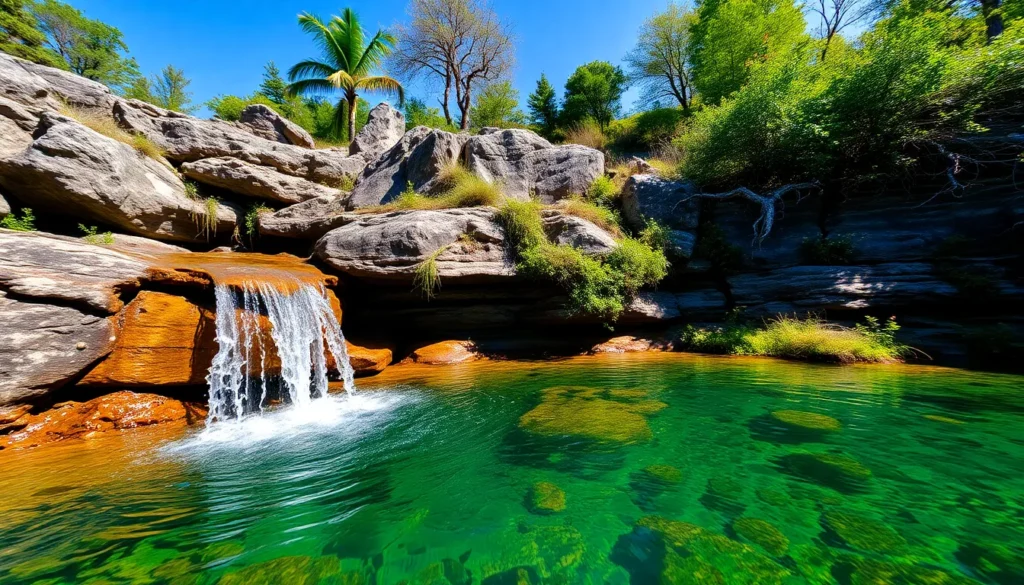
A natural water spring is a location where groundwater flows naturally from an aquifer to the Earth’s surface. Springs serve as natural outlets through which water stored underground emerges, often forming streams, ponds, or wetlands. They are important sources of fresh water and have been utilized by humans and wildlife for centuries.
Detailed Explanation
Springs occur when the water table intersects the ground surface or when geological conditions, such as faults or permeable rock layers, allow water to escape from underground reservoirs. The water in springs is typically derived from precipitation that infiltrates the soil, percolates through porous rock or sediment, and accumulates in aquifers. Due to gravity and pressure differences, this groundwater can flow outward naturally, creating a spring.
How It Works
The formation of a natural water spring depends on the local geology and hydrology. Water from rain or snow seeps into the ground and is filtered through soil and rock layers, collecting in aquifers. If the aquifer is confined and under pressure, or if the water table rises to the surface due to the terrain, the water will emerge at a spring. Springs can be classified by their flow mechanism, such as gravity springs or artesian springs, depending on whether the water flow is driven by gravity or hydrostatic pressure.
Examples
- Silver Springs, Florida, USA: One of the largest artesian springs in the world, known for its clear water and ecological significance.
- Gihon Spring, Jerusalem: An ancient spring historically vital to the city’s water supply.
- Blue Spring, New Zealand: Famous for its exceptionally clear and pure water, originating from underground limestone aquifers.
Why It Matters
Natural water springs play a crucial role in ecosystems by providing habitats and fresh water to plants, animals, and humans. They contribute to the recharge of rivers and wetlands and are often vital sources of potable water in many regions. Springs can also have cultural and historical importance and influence local economies through tourism and agriculture.
Common Misconceptions
Misconception: All springs produce potable water.
Correction: While many springs provide fresh water, some may contain minerals or contaminants that require treatment before safe consumption.
Misconception: Springs only form in mountainous areas.
Correction: Springs can form in diverse terrains, including plains, valleys, and karst landscapes, wherever geological conditions permit groundwater emergence.
Pros and Cons
Pros: Natural, renewable source of fresh water; supports biodiversity; often provides clean, filtered water; important cultural and ecological sites.
Cons: Flow can be seasonal or variable; may be susceptible to contamination from surface pollutants; limited accessibility in some regions.
Comparison Table
| Aspect | Natural Water Spring | Well |
|---|---|---|
| Meaning | Natural emergence of groundwater at the surface | Man-made excavation to access groundwater |
| Water Source | Groundwater flowing naturally | Groundwater extracted mechanically |
| Flow Control | Uncontrolled natural flow | Controlled pumping |
| Dependence on Location | Dependent on geological conditions | Can be located with drilling |
Decision Checklist
What is the easiest way to understand a Natural Water Spring?
The simplest way to understand a natural water spring is to think of it as a natural faucet where groundwater—water stored underground—finds a path to flow out onto the Earth’s surface, often creating a small pool or stream without any human intervention.
FAQ
What causes a natural spring to form?
Natural springs form when groundwater finds a path to the surface, often where the water table meets the land surface or where geological structures allow water to flow out under pressure.
Are all spring waters safe to drink?
Not necessarily. While many springs provide fresh water, some may contain contaminants or harmful minerals. Water testing is recommended before consumption.
How are springs different from wells?
Springs are natural outlets where water flows to the surface without human intervention, whereas wells are man-made structures drilled or dug to extract groundwater.
Leave a Reply