
Short Answer
Overview
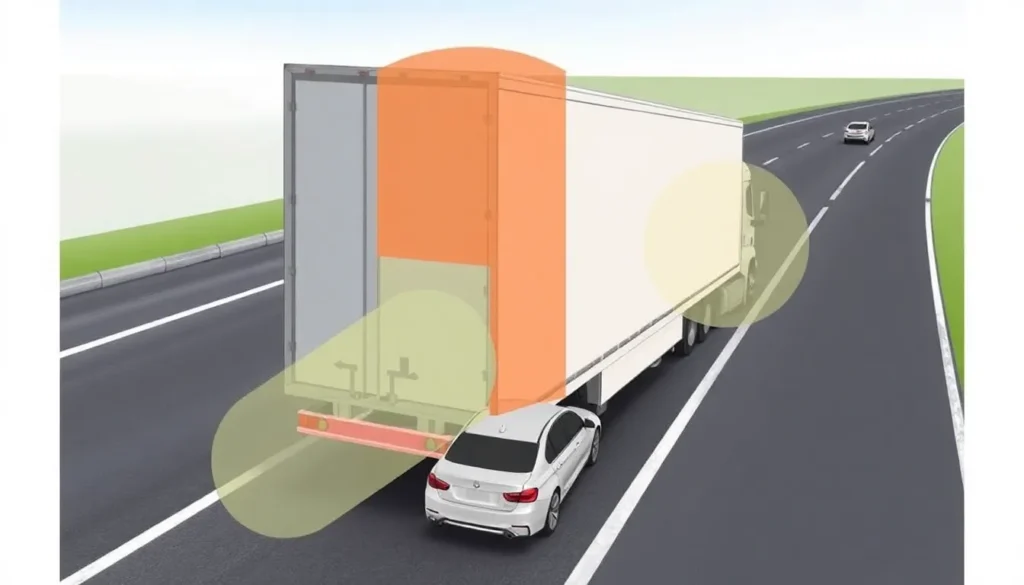
A No Zone refers to specific areas around large commercial vehicles, such as trucks and buses, where the driver’s ability to see other road users is significantly reduced or entirely blocked. These blind spots can pose serious dangers to drivers, motorcyclists, bicyclists, and pedestrians who may unknowingly enter these zones. Understanding what No Zones are and how to identify them is essential for promoting road safety and preventing collisions involving large vehicles.
Detailed Explanation
No Zones are commonly associated with large trucks and buses because of their size and design, which create extensive blind spots around the vehicle. Unlike passenger cars, which have relatively smaller blind spots, these heavy vehicles have larger areas where the driver cannot see other road users. The four primary No Zones are generally located directly in front, directly behind, and along both sides of the vehicle, especially on the right side.
These zones are not only caused by vehicle structure but also by the positioning of mirrors and the driver’s seating height. The size and shape of the vehicle, as well as road conditions and weather, can further influence the extent of the blind spots. Because of these limitations, drivers of large vehicles rely heavily on mirrors and sometimes sensors or cameras to detect other vehicles, but these aids cannot eliminate all No Zones.
How It Works
When a vehicle enters a No Zone, the driver of the large vehicle may be unaware of its presence due to limited or no visibility. For example, if a car is positioned too closely behind a truck in the rear No Zone, the truck driver cannot see the car in their rearview mirrors. Similarly, a vehicle traveling alongside the truck in the right-side No Zone might be hidden from the driver’s view, increasing the risk of side collisions during lane changes or turns.
Safe driving practices involve avoiding these No Zones whenever possible. Drivers should maintain adequate distance, avoid lingering in blind spots, and pass large vehicles quickly and safely. Large vehicle drivers are trained to be aware of these zones to minimize accidents by using proper signaling, checking mirrors thoroughly, and employing technology such as side and rear cameras.
Examples
- Rear No Zone: A passenger car tailgating a semi-truck may be invisible to the truck driver because the truck’s mirrors do not cover the area directly behind it.
- Right-Side No Zone: A vehicle driving alongside the right side of a bus may remain unseen by the bus driver, particularly when the bus intends to make a right turn.
- Front No Zone: A vehicle cutting too closely in front of a large truck may be hidden from the truck driver’s view and risk a collision if the truck stops suddenly.
- Left-Side No Zone: Although generally smaller than the right-side No Zone, the area immediately to the left of the vehicle can also be a blind spot, especially if the driver leans to one side or if the mirrors are improperly adjusted.
Pros and Cons
Pros:
- Awareness of No Zones promotes safer driving behavior around large vehicles.
- Understanding No Zones helps reduce accidents and fatalities on roads.
- Encourages the use of advanced driver-assistance systems in commercial vehicles.
Cons:
- No Zones are inherent to large vehicle design and cannot be completely eliminated.
- Misunderstanding or ignoring No Zones can lead to severe accidents.
- Drivers unfamiliar with No Zones may inadvertently place themselves in danger.
Comparison Table
| Aspect | No Zone | Blind Spot (General Vehicle) |
|---|---|---|
| Meaning | Specific areas around large vehicles where driver visibility is limited or blocked. | Areas around any vehicle where the driver’s view is obstructed, typically smaller in passenger vehicles. |
| Size | Large and extensive due to vehicle size and mirror configuration. | Generally smaller, varies by vehicle design. |
| Risk | High risk of accidents due to limited visibility and vehicle size. | Moderate risk, but less severe than No Zones in large vehicles. |
| Mitigation | Use of mirrors, cameras, driver training, and awareness by other road users. | Use of mirrors, blind spot detection systems, and proper mirror adjustment. |
Decision Checklist
- Use this if you are driving near large trucks or buses and want to maintain safe positioning.
- Avoid this if you are unfamiliar with the concept of No Zones or unsure how to identify them safely.
- Check this first when planning to pass or drive alongside a large commercial vehicle to ensure you stay out of its blind spots.
What is the easiest way to understand No Zones?
The easiest way to understand No Zones is to visualize or imagine the areas around a large truck or bus where the driver cannot see other vehicles. These blind spots are typically directly behind, directly in front, and along the sides of the vehicle, especially on the right side. Recognizing these zones helps drivers avoid dangerous positioning and enhances road safety for everyone.
FAQ
What are No Zones on large trucks?
No Zones are the blind spots around large trucks and buses where the driver’s visibility is limited or nonexistent, making it unsafe for other vehicles to be in these areas.
Why are No Zones dangerous?
Because drivers of large vehicles cannot see other vehicles in these zones, there is a higher risk of collisions, especially during lane changes, turns, or sudden stops.
How can I stay safe around No Zones?
To stay safe, avoid lingering in the blind spots of large vehicles, pass quickly when overtaking, maintain a safe following distance, and be aware of the vehicle’s signals and movements.





Leave a Reply