
Short Answer
Overview
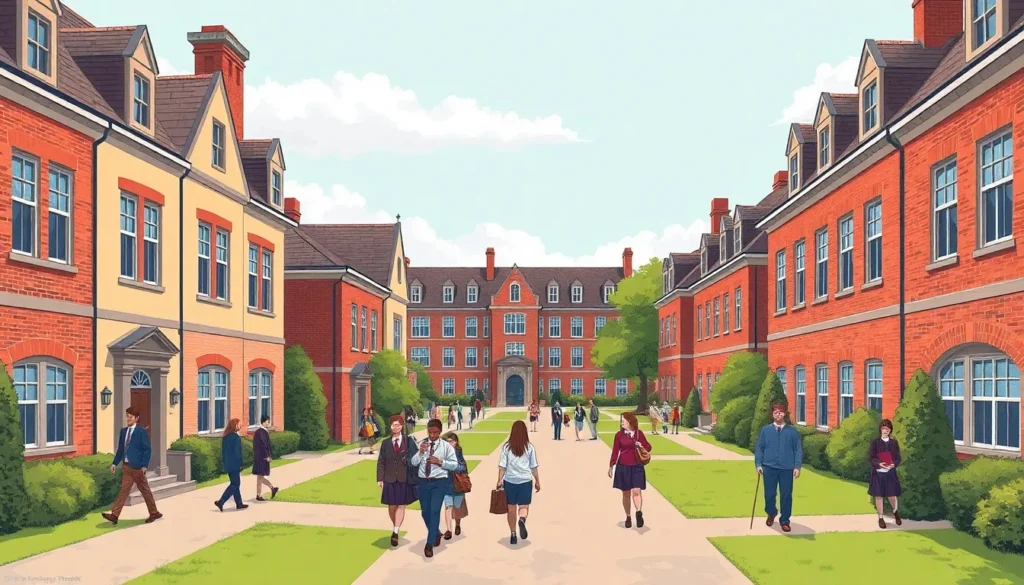
A prep school, short for preparatory school, is an educational institution primarily focused on preparing students for higher education, especially college or university. These schools emphasize academic rigor, often combined with extracurricular activities, to develop well-rounded students. Prep schools may be private or independent and can serve various age groups, commonly ranging from middle school to high school levels.
Detailed Explanation
Prep schools are designed to provide a curriculum that goes beyond standard education requirements, aiming to enhance students’ readiness for college admissions and academic success. They often offer advanced coursework, including honors and Advanced Placement (AP) classes, along with opportunities for leadership, athletics, arts, and community service. Historically, prep schools have been associated with elite education, sometimes linked to specific geographical regions or social classes, but their characteristics vary widely depending on country and institution.
How It Works
Students typically enroll in prep schools through an application process that may consider academic records, entrance exams, interviews, and recommendations. Once admitted, the school provides a structured environment with a challenging curriculum, college counseling, and extracurricular programs. Faculty often have specialized training, and class sizes tend to be smaller than in public schools to allow personalized attention. The goal is to prepare students not only academically but also socially and emotionally for the demands of post-secondary education.
Examples
- United States: Many private secondary schools, such as Phillips Exeter Academy and Andover, are well-known prep schools with a long history of preparing students for Ivy League and other universities.
- United Kingdom: In the UK, prep schools usually refer to private primary schools that prepare students for entrance exams to secondary independent schools, commonly up to age 13.
- Other countries: Various countries have institutions that serve similar preparatory functions, though naming conventions and educational systems differ.
Pros and Cons
Pros: Prep schools can offer rigorous academics, smaller class sizes, extensive extracurricular opportunities, experienced faculty, and strong college counseling services.
Cons: They may have high tuition costs, limited diversity, and pressures associated with academic competition. Additionally, prep schools might not be accessible or suitable for all students.
Comparison Table
| Aspect | Prep School | Public School |
|---|---|---|
| Meaning | A private or independent school preparing students for college | Government-funded school offering general education |
| Curriculum | Often rigorous with advanced courses | Standardized curriculum defined by education authorities |
| Cost | Usually requires tuition fees | Free of charge |
| Class Size | Typically smaller for personalized attention | Larger and more diverse |
| Extracurriculars | Varied and extensive | Varies widely depending on resources |
Decision Checklist
- Use this if: You seek a focused academic environment with college preparation and can afford tuition fees.
- Avoid this if: Cost is a major barrier or you prefer a more diverse, community-based educational setting.
- Check this first: Accreditation status, curriculum offerings, faculty qualifications, and college placement records.
What is the easiest way to understand a Prep School?
The easiest way to understand a prep school is to view it as a specialized educational institution that aims to prepare students academically and socially for successful admission to and performance in higher education, often through a more rigorous and structured environment than standard schools.
FAQ
What age group do prep schools usually serve?
Prep schools commonly serve students from approximately ages 11 to 18, covering middle and high school levels, though this can vary by country.
Are prep schools only for wealthy families?
While many prep schools charge tuition fees that can be high, some offer scholarships and financial aid to increase accessibility. However, they are often associated with more affluent demographics.
Do prep schools guarantee college admission?
Prep schools do not guarantee college admission but aim to prepare students with strong academics and extracurricular experiences to improve their chances.





Leave a Reply