
Short Answer
Overview
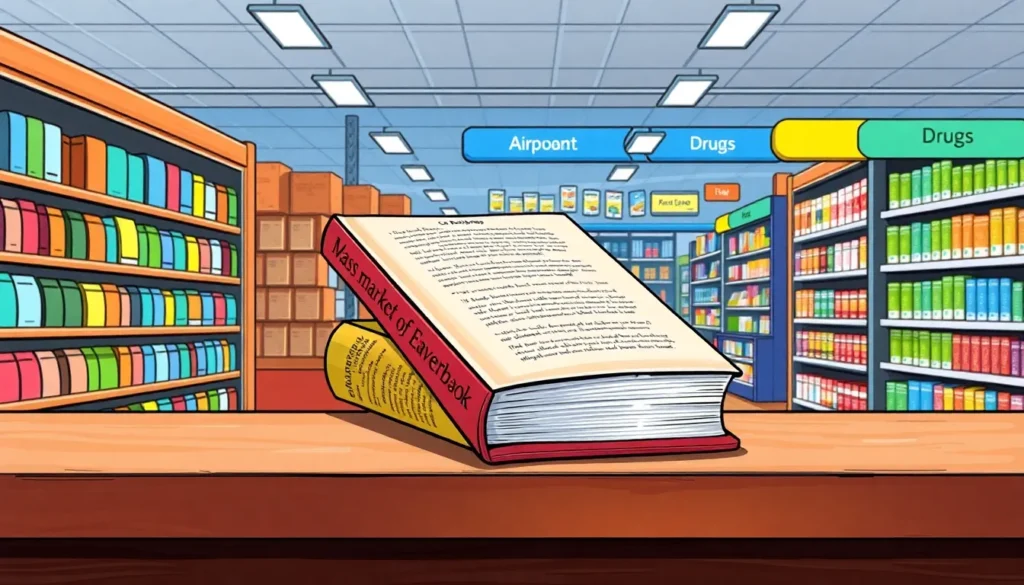
A mass market paperback book is a type of paperback book that is produced in large quantities and sold at a relatively low price. Unlike trade paperbacks, mass market paperbacks tend to be smaller in size, printed on lower-quality paper, and designed for broad distribution in venues such as supermarkets, drugstores, airports, and other non-specialist retail outlets. They are typically used to make literature and popular fiction more accessible and affordable to a wide audience.
Detailed Explanation
Mass market paperbacks usually have dimensions around 4.25 by 7 inches (approximately 11 by 18 cm), making them smaller and more portable than standard trade paperback editions. The paper quality is generally inferior to that of trade paperbacks, contributing to a lower retail price. The print runs are often very large to maximize economies of scale, which allows publishers to reduce the cost per unit.
These editions frequently serve as the primary format for genre fiction such as romance, science fiction, mystery, and thriller novels. They may appear after a hardcover release or directly as the first edition, depending on the publisher’s strategy. The cover design often features bold, eye-catching artwork or typography intended to attract impulse buyers.

How It Works
Publishers produce mass market paperbacks by printing on inexpensive pulp or paper stock and binding with glue rather than stitching. The smaller size reduces paper costs and shipping expenses. The books are then distributed widely to maximize sales volume, including locations not traditionally associated with book retailing.
The affordability and portability of mass market paperbacks make them popular choices for casual readers and travelers. Retail pricing is often subsidized by the high volume of sales, and publishers may use this format to promote authors and titles that rely on broad market appeal.
Examples
- Popular genre titles such as those from authors like Stephen King, Nora Roberts, or Agatha Christie are often released as mass market paperbacks.
- Classic novels, including many by authors such as Jane Austen or Arthur Conan Doyle, are frequently reissued in mass market paperback editions for accessibility.
- Series like the “Harry Potter” books and other young adult fiction have been made available in mass market paperback formats, especially in international markets.
Pros and Cons
Pros: Mass market paperbacks are affordable, portable, and widely available. They enable readers to access a broad range of literature at lower prices and encourage impulse purchases due to their visibility in diverse retail environments.
Cons: The lower paper quality results in less durability and shorter lifespan. The smaller print and size can be less comfortable to read for some individuals. Additionally, the design and layout are often simplified compared to trade editions.
Comparison Table
| Aspect | Mass Market Paperback | Trade Paperback |
|---|---|---|
| Meaning | Small, inexpensive paperback book produced for wide distribution in non-specialist retail outlets. | Larger, higher-quality paperback book sold mainly in bookstores and specialty shops. |
| Size | Approximately 4.25 x 7 inches (11 x 18 cm) | Typically 5.5 x 8.5 inches or larger |
| Paper Quality | Lower-quality, thin paper | Higher-quality, thicker paper |
| Price | Lower retail price | Higher retail price |
| Distribution | Wide, including supermarkets, airports, drugstores | Bookstores and specialty retailers |
Decision Checklist
- Use this if you want an affordable, portable book for casual reading or travel.
- Avoid this if you prefer higher print quality or a larger format for easier reading.
- Check this first if the edition includes all desired content and if durability is a concern.
What is the easiest way to understand Mass Market Paperback Books?
Think of mass market paperbacks as the “pocket-sized” version of books designed for easy access and affordability, often found in places like grocery stores or airports, distinct from the larger and more durable trade paperback books found in bookstores.
FAQ
What distinguishes a mass market paperback from other paperback formats?
Mass market paperbacks are smaller, less expensive, and printed on lower-quality paper compared to trade paperbacks, and they are distributed widely in non-traditional book retail outlets.
Are mass market paperbacks less durable than other books?
Yes, due to their lower-quality paper and glue binding, mass market paperbacks tend to be less durable and may deteriorate faster than trade paperbacks or hardcovers.
Why do publishers produce mass market paperbacks?
Publishers produce mass market paperbacks to reach a broader audience with affordable, portable books, often encouraging impulse purchases and wider accessibility.





Leave a Reply