
Short Answer
Overview
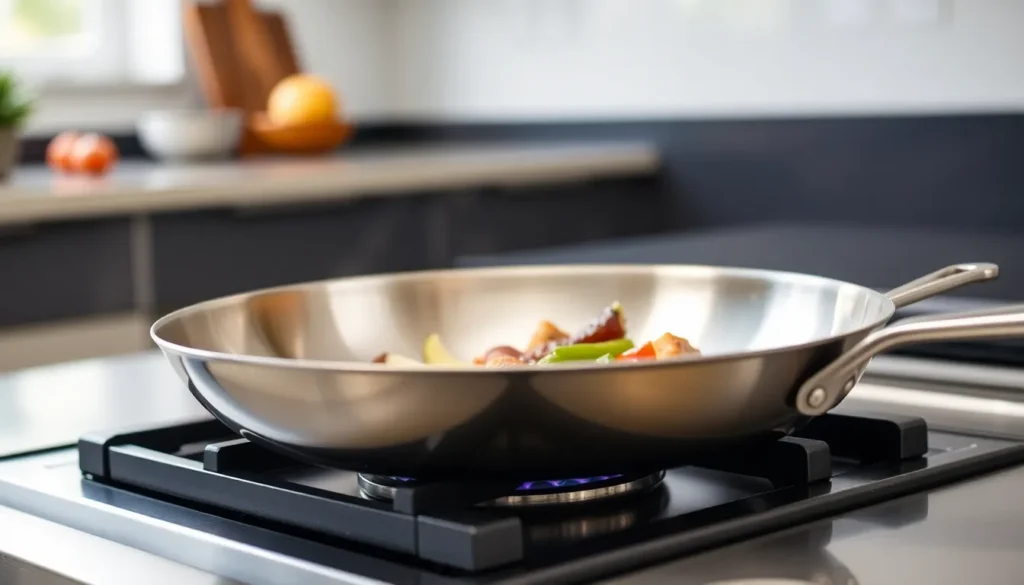
A sauté pan is a specialized piece of kitchen cookware designed primarily for sautéing, frying, and searing food. It features a wide, flat bottom with relatively tall, straight sides and usually includes a long handle. This design distinguishes it from frying pans or skillets, which typically have sloped sides. The sauté pan’s structure allows for better heat retention and the ability to cook larger volumes of food while minimizing spillage during stirring or tossing.
Detailed Explanation
The sauté pan is constructed to facilitate cooking methods that require quick, high-heat application, such as sautéing, searing, braising, and pan-frying. The straight sides help contain liquids and ingredients better than pans with sloped sides, making it suitable for recipes that involve sauces or deglazing. Materials used for sauté pans vary and may include stainless steel, aluminum, copper, or non-stick coatings, each influencing heat conduction and maintenance requirements.
How It Works
Heat is distributed evenly across the flat bottom of a sauté pan, allowing food to cook rapidly and uniformly. The straight sides assist in retaining moisture and heat, which is beneficial for cooking dishes that require the addition of liquids or frequent stirring. The long handle provides leverage and control, enabling the cook to toss ingredients effectively without spilling. Additionally, some sauté pans feature a lid, expanding their versatility to include simmering or braising.
Examples
- Stainless Steel Sauté Pan: Durable and resistant to corrosion, suitable for high-heat cooking and browning.
- Non-stick Sauté Pan: Ideal for cooking delicate foods like eggs or fish with less oil and easy cleanup.
- Copper Sauté Pan: Offers superior heat conductivity, preferred in professional kitchens for precise temperature control.
Pros and Cons
- Pros: Versatile for multiple cooking methods, retains heat well, contains liquids effectively, and allows for easy stirring and tossing.
- Cons: Typically heavier than frying pans, can be more expensive depending on materials, and non-stick coatings may degrade over time.
Comparison Table
| Aspect | Sauté Pan | Frying Pan (Skillet) |
|---|---|---|
| Meaning | Cookware with flat bottom and straight sides for sautéing and braising. | Cookware with flat bottom and sloped sides for frying and flipping. |
| Design | Straight, tall sides to hold liquids and food. | Sloped sides to facilitate flipping and turning food. |
| Typical Uses | Sautéing, searing, braising, pan-frying with sauces. | Frying, searing, browning, flipping foods like pancakes or eggs. |
Decision Checklist
- Use this if: You need a pan for sautéing, searing with liquids, or cooking dishes that require stirring or tossing.
- Avoid this if: You primarily need a pan for flipping foods like pancakes or omelets, where sloped sides are better.
- Check this first: Consider the material and size to match your cooking style and heat source.
What is the easiest way to understand a Sauté Pan?
The easiest way to understand a sauté pan is to compare it to a frying pan: imagine a frying pan but with taller, straight sides instead of sloped ones. This design difference allows the sauté pan to hold liquids and ingredients securely while still providing a large cooking surface for quick, high-heat cooking.
FAQ
What distinguishes a sauté pan from a frying pan?
A sauté pan has straight, tall sides and a flat bottom, which allows it to hold liquids and food better during cooking. In contrast, a frying pan has sloped sides designed to facilitate flipping and turning food easily.
Can I use a sauté pan for frying?
Yes, sauté pans can be used for frying, especially when you want to contain liquids or cook larger quantities. However, for foods that require easy flipping, a frying pan may be more suitable.
Are sauté pans suitable for all heat sources?
Most sauté pans are designed for use on a variety of heat sources, including gas, electric, and induction stovetops. However, the material of the pan affects compatibility, so it is important to check the manufacturer's specifications.




Leave a Reply