
Short Answer
Overview
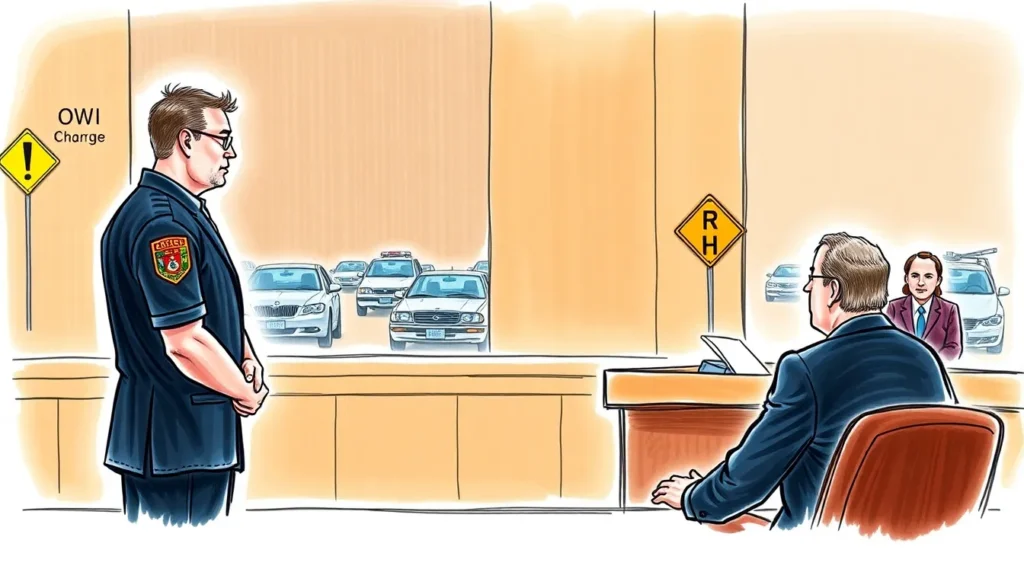
An OWI charge, standing for Operating While Intoxicated, is a legal term used primarily in certain U.S. states to describe the offense of operating a motor vehicle while impaired by alcohol or other substances. It is similar to what is often called Driving Under the Influence (DUI) or Driving While Intoxicated (DWI) in other jurisdictions. The charge is typically applied when law enforcement determines that a driver is impaired to a degree that renders driving unsafe.
Detailed Explanation
An OWI charge arises when a law enforcement officer suspects that a person is driving under the influence of alcohol or drugs. The suspicion may be based on observed driving behavior, results from field sobriety tests, or chemical tests such as breath, blood, or urine tests. The legal threshold for intoxication varies by state but often includes a blood alcohol concentration (BAC) limit, commonly 0.08% for individuals over the legal drinking age.
OWI charges can carry various penalties depending on factors such as prior offenses, the level of intoxication, and whether the incident resulted in injury or property damage. Penalties may include fines, license suspension, probation, mandatory alcohol education programs, and even jail time.
How It Works
The process typically begins with a traffic stop or accident investigation. If the officer suspects intoxication, the driver is asked to perform field sobriety tests and may be subjected to chemical testing. Refusal to submit to testing can lead to additional charges or penalties.
If the tests indicate intoxication above the legal limit, the driver is arrested and formally charged with OWI. The case then proceeds through the legal system, where the accused may enter a plea, negotiate plea bargains, or go to trial. Conviction results in sentencing according to state laws.
Examples
- A driver pulled over for erratic driving fails a breathalyzer test with a BAC of 0.10%, resulting in an OWI charge.
- An individual involved in a minor traffic accident is found to have consumed drugs that impair driving ability and is charged with OWI.
- A repeat offender caught driving with a BAC twice the legal limit faces enhanced penalties under OWI laws.
Pros and Cons
- Pros: OWI laws promote road safety by deterring impaired driving and reducing accidents caused by intoxication.
- Cons: The charges can have significant personal and financial consequences, and sometimes enforcement may raise concerns regarding accuracy or fairness.
Comparison Table
| Aspect | OWI Charge | Alternative/Related Topic (DUI) |
|---|---|---|
| Meaning | Operating While Intoxicated – charged for impaired vehicle operation | Driving Under the Influence – similar charge with interchangeable usage in many states |
| Terminology Usage | Common in states like Wisconsin and Michigan | More widely used across various jurisdictions |
| Legal Limits | Varies by state but generally BAC 0.08% or higher | Similar BAC limits, may include drug impairment |
Decision Checklist
- Use this if: You are seeking information on charges related to impaired driving in states that use the OWI terminology.
- Avoid this if: You want general impaired driving information without jurisdiction-specific terms.
- Check this first: Verify your state’s terminology and legal thresholds for impaired driving offenses.
What is the easiest way to understand OWI?
The easiest way to understand an OWI charge is to think of it as a specific legal term for being caught driving while impaired by alcohol or drugs. It is essentially the same as a DUI or DWI but used in certain states with particular legal nuances and penalties.
FAQ
What does OWI stand for?
OWI stands for Operating While Intoxicated, referring to the act of operating a vehicle under the influence of alcohol or drugs.
Is an OWI the same as a DUI?
Yes, OWI and DUI generally refer to the same offense, although terminology and specific laws vary by state.
What are the typical penalties for an OWI charge?
Penalties can include fines, license suspension, mandatory education programs, probation, and possible jail time, depending on the severity and jurisdiction.





Leave a Reply