
Short Answer
Overview
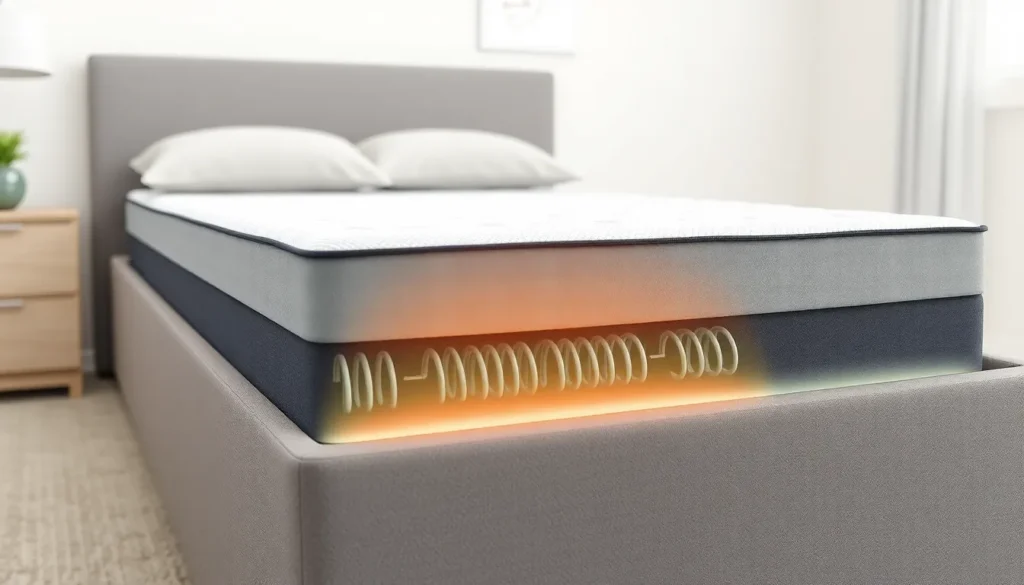
A box spring is a type of bed base typically consisting of a sturdy wooden frame covered in fabric and containing springs or metal coils. It is designed to provide foundational support for a mattress, elevating it off the floor and absorbing shock, which helps preserve the mattress’s integrity over time. Box springs are commonly used in conjunction with innerspring mattresses but can also be paired with other mattress types depending on design and manufacturer recommendations.
Detailed Explanation
The primary function of a box spring is to offer a resilient and stable platform for a mattress, distributing weight evenly and reducing wear on the mattress materials. The spring system within the box spring absorbs impact and movement, which can enhance overall comfort by minimizing mattress sagging and providing additional bounce. Furthermore, the elevation created by placing a mattress on a box spring improves airflow beneath the mattress, which can aid in temperature regulation and reduce moisture buildup, potentially extending the mattress’s lifespan.
How It Works
A box spring works by combining a strong frame with a network of springs or metal coils that flex under pressure. When a person lies on the mattress, the box spring compresses slightly to absorb the force, reducing the direct strain on the mattress itself. This mechanism helps maintain mattress shape and support levels. Additionally, the raised height provided by the box spring makes getting in and out of bed easier for many users.
Examples
- Traditional Box Spring: Constructed with wooden frames and metal springs, covered in fabric, designed for innerspring mattresses.
- Low-Profile Box Spring: A thinner version that provides the same support but with less height, suitable for modern bed frames.
- Foundation Box Spring: A solid, spring-free base typically made from wood or metal, intended for use with memory foam or latex mattresses that require firm support.
Why It Matters
Using a box spring can significantly affect sleep quality and mattress durability. By providing shock absorption and proper support, it helps maintain mattress shape and comfort levels over time. Moreover, the improved ventilation reduces moisture buildup, which can prevent mold and mildew growth inside the mattress. This not only extends the functional life of the mattress but also contributes to a healthier sleep environment.
Common Misconceptions
Misconception: A box spring is always necessary for every mattress.
Correction: Some modern mattresses, such as memory foam or latex, often require solid foundations rather than box springs, and using a box spring can sometimes void warranties.
Misconception: Box springs are only for comfort.
Correction: While box springs can enhance comfort, their primary role is structural support and shock absorption to preserve mattress longevity.
Pros and Cons
Pros: Provides shock absorption, extends mattress life, improves ventilation, elevates mattress height for ease of access, compatible with many mattress types.
Cons: Adds bulk and weight to the bed setup, may not be compatible with all mattress types, can be costly, and may require replacement over time.
Comparison Table
| Aspect | Box Spring | Platform Bed |
|---|---|---|
| Meaning | Supportive base with springs to absorb shock and elevate mattress | Solid or slatted base providing flat, firm support without springs |
| Commonly Used With | Innerspring mattresses | Foam, latex, hybrid mattresses |
| Height Added | Typically 5-9 inches | Varies, usually lower profile |
| Ventilation | Improves airflow under mattress | Depends on slat spacing; can be good airflow |
| Shock Absorption | Yes, due to spring system | No, rigid support |
Decision Checklist
What is the easiest way to understand a Box Spring?
Think of a box spring as a shock-absorbing bed base that both supports and elevates your mattress, helping it last longer and feel more comfortable by absorbing the impact of your body weight and improving airflow underneath.
FAQ
Is a box spring necessary for every mattress?
No, box springs are primarily designed for innerspring mattresses. Foam, latex, and hybrid mattresses often require solid foundations or platform beds instead.
Can I use a box spring with a memory foam mattress?
Generally, it is not recommended to use a traditional box spring with memory foam mattresses as they require firmer and more uniform support to maintain their structure.
How does a box spring improve mattress comfort?
A box spring absorbs shock and reduces the impact on the mattress, which helps prevent sagging and enhances overall comfort by providing a slight bounce and stable support.






Leave a Reply