
Short Answer
Overview
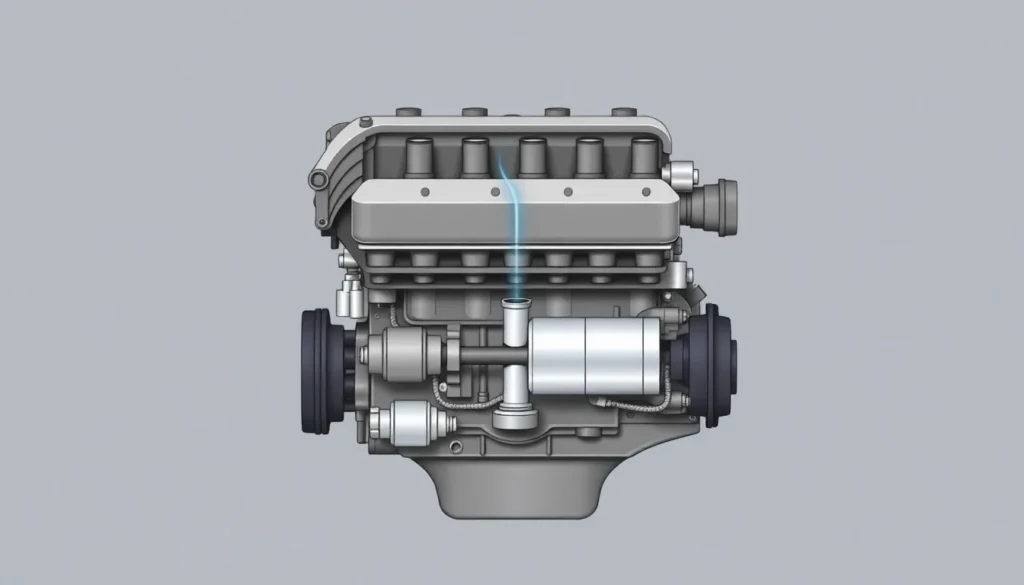
A naturally aspirated motor is an internal combustion engine that draws air into its cylinders through atmospheric pressure without employing any additional air compression devices such as turbochargers or superchargers. This type of engine operates based on the principle that the engine’s intake stroke creates a vacuum, which pulls air naturally through the intake manifold and into the combustion chamber. The term “naturally aspirated” distinguishes these engines from forced induction engines that use mechanical or exhaust-driven compressors to increase the amount of air entering the engine.
Detailed Explanation
In a naturally aspirated motor, the amount of air entering the combustion chamber is limited to the atmospheric pressure and the engine’s volumetric efficiency. During the intake stroke, the piston moves downward, creating a low-pressure area that draws air into the cylinder through the open intake valve. Because the engine does not employ forced induction, the air density and volume are dependent on ambient conditions such as altitude, temperature, and atmospheric pressure.
These engines typically have simpler designs compared to forced induction engines, lacking components like turbochargers, intercoolers, or superchargers. This simplicity can contribute to improved reliability and ease of maintenance. However, naturally aspirated engines generally produce less power for a given engine displacement compared to forced induction counterparts, as they are limited by the natural air intake volume.
How It Works
The operation of a naturally aspirated motor follows the four-stroke cycle common to most internal combustion engines: intake, compression, power, and exhaust.
- Intake Stroke: The piston moves down, creating a vacuum that draws air (and fuel in carbureted engines) into the cylinder through the intake valve.
- Compression Stroke: The intake valve closes, and the piston moves up to compress the air-fuel mixture.
- Power Stroke: The compressed mixture is ignited by a spark plug, causing combustion and forcing the piston down.
- Exhaust Stroke: The exhaust valve opens, and the piston pushes spent gases out of the cylinder.
Since the air is drawn in by vacuum created solely by piston movement and atmospheric pressure, the engine’s performance depends heavily on ambient air conditions and the design of the intake system. Engine tuning and intake manifold design can optimize airflow and volumetric efficiency to maximize power output within these natural constraints.
Examples
- Honda S2000: Known for its high-revving naturally aspirated 2.0-liter inline-four engine, the S2000 exemplifies performance achievable without forced induction.
- Toyota 2JZ-GE: The naturally aspirated variant of the famous 2JZ engine, used in models like the Toyota Supra, delivers reliable power without turbocharging.
- Ford Mustang GT (V8 models): Many Mustang GT engines are naturally aspirated V8s that rely on large displacement and efficient airflow for power.
Why It Matters
Understanding naturally aspirated motors is important because they represent a fundamental approach to engine design, emphasizing mechanical simplicity and predictable performance characteristics. These engines often provide linear throttle response and smooth power delivery, which can be preferred for driving feel and reliability. Additionally, naturally aspirated engines serve as a baseline for comparing the benefits and trade-offs of forced induction technologies in automotive engineering.
Common Misconceptions
Misconception: Naturally aspirated engines are always less powerful than turbocharged engines.
Correction: While forced induction generally increases power output, naturally aspirated engines can be highly optimized for performance, especially at high RPMs, and may provide better throttle response and reliability.
Misconception: Naturally aspirated engines are obsolete due to modern turbocharging.
Correction: Naturally aspirated engines remain in production and use in many vehicles due to their simplicity, cost-effectiveness, and driving characteristics, although turbocharging has become more common for efficiency and emissions reasons.
Pros and Cons
Comparison Table
| Aspect | Naturally Aspirated Motor | Forced Induction Motor |
|---|---|---|
| Meaning | Engine that intakes air at atmospheric pressure without external compressors. | Engine that uses turbochargers or superchargers to increase intake air pressure. |
| Power Output | Limited by atmospheric air volume and engine displacement. | Increased due to compressed intake air enabling more fuel combustion. |
| Complexity | Simple design with fewer components. | More complex due to additional forced induction hardware. |
| Throttle Response | Generally immediate and linear. | May experience turbo lag or delayed response. |
| Altitude Sensitivity | Performance decreases significantly at higher altitudes. | Less affected due to forced air compression. |
Decision Checklist
- Use this if: You prefer simplicity, reliability, and linear throttle response in your engine.
- Avoid this if: You require maximum power output from a smaller engine displacement or need better performance at high altitudes.
- Check this first: Your intended application’s power requirements, environmental conditions, and maintenance capabilities.
What is the easiest way to understand a Naturally Aspirated Motor?
The easiest way to understand a naturally aspirated motor is to think of it as an engine that breathes air the same way humans do—by drawing it in naturally without any mechanical aid. It relies solely on the piston movement and atmospheric pressure to fill its cylinders with air, unlike engines that use devices to force more air inside for extra power.
FAQ
What distinguishes a naturally aspirated motor from other engines?
A naturally aspirated motor intakes air at atmospheric pressure without using turbochargers or superchargers, relying solely on the vacuum created by piston movement.
Why do naturally aspirated engines have less power than turbocharged engines?
Because they can only draw in a limited amount of air at atmospheric pressure, limiting the amount of fuel combusted and thus the power output compared to forced induction engines that compress intake air.
Are naturally aspirated engines more reliable than forced induction engines?
Generally, yes. Their simpler design with fewer components like turbochargers reduces potential failure points, often resulting in improved reliability and easier maintenance.




Leave a Reply