
Short Answer
Overview
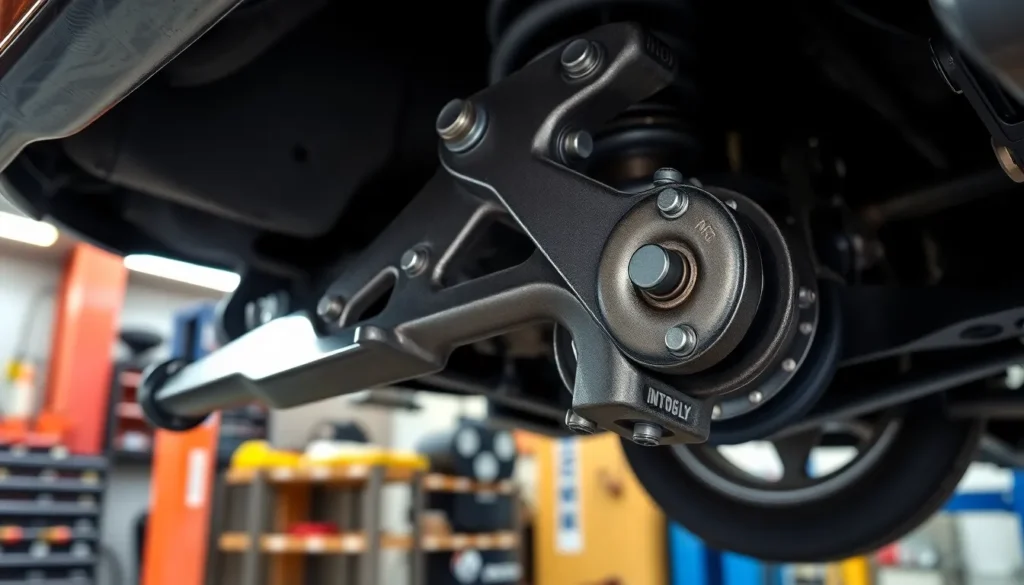
A control arm, also known as an A-arm or wishbone, is a key part of a vehicle’s suspension system. It connects the wheel assembly to the vehicle’s chassis, providing a pivot point that allows the wheels to move up and down while maintaining proper alignment with the road. This component plays an essential role in the handling, stability, and comfort of a car by managing the motion of the wheels relative to the vehicle’s body.
Detailed Explanation
Control arms typically consist of a metal arm that is attached to the frame of the car at one end and to the wheel assembly at the other. They often incorporate bushings and ball joints to allow for flexible movement while reducing vibrations and noise. There are generally two types of control arms in a vehicle’s suspension system: upper and lower control arms. In some designs, only lower control arms are used, while others use both to provide precise wheel control.
The control arm’s design can vary depending on the vehicle type and suspension system. Common materials include stamped steel, forged steel, or aluminum to balance strength and weight. The bushings, usually made of rubber or polyurethane, provide cushioning and allow the arm to pivot smoothly. Ball joints act as a flexible joint, connecting the control arm to the steering knuckle and enabling steering movements.
How It Works
The control arm functions by allowing the wheels to move vertically when driving over bumps or uneven surfaces while keeping lateral movement constrained. This controlled movement is critical for maintaining tire contact with the road, which improves grip and handling. As the wheel moves, the control arm pivots at its mounting points, absorbing shocks and transferring forces to the vehicle’s frame.
When combined with other suspension components such as springs and shock absorbers, the control arm helps maintain a smooth ride by managing the dynamic forces encountered during acceleration, braking, and cornering. It also plays a role in maintaining correct wheel alignment parameters, such as camber and caster angles, which are vital for tire wear and vehicle stability.
Examples
- Double Wishbone Suspension: In this system, both upper and lower control arms are used to allow precise control of wheel motion. This design is common in performance and luxury vehicles for improved handling.
- MacPherson Strut Suspension: Typically, only a lower control arm is used along with a strut assembly. This simpler design is widely used in many passenger cars for cost-effectiveness and space efficiency.
- Multi-Link Suspension: This system uses several control arms or links to control wheel movement in multiple directions, offering enhanced ride quality and handling characteristics.
Pros and Cons
- Pros: Control arms provide essential support for wheel alignment, improve ride comfort, and contribute to vehicle stability and handling. Their design can be adapted for various suspension types and vehicle requirements.
- Cons: Control arms and their associated bushings and ball joints can wear over time, leading to reduced performance or failure. Replacement can be complex and costly depending on the vehicle design.
Comparison Table
| Aspect | Control Arm | Alternative/Related Topic |
|---|---|---|
| Meaning | A suspension component connecting the wheel hub to the vehicle frame, allowing controlled wheel movement. | Shock Absorber: A device that dampens and absorbs impacts to smooth out ride quality. |
| Function | Maintains wheel alignment and allows vertical wheel travel. | Strut: Combines a shock absorber and a structural element of the suspension system. |
| Common Types | Upper and lower control arms. | Multi-link arms: Multiple links controlling wheel movement in several directions. |
| Material | Steel or aluminum with rubber or polyurethane bushings. | Shock absorbers: Typically metal cylinders with hydraulic fluid. |
Decision Checklist
- Use this if you need to maintain or repair precise wheel alignment and suspension performance.
- Avoid this if you require suspension components primarily focused on shock absorption without structural wheel control.
- Check this first when diagnosing suspension noises, uneven tire wear, or handling issues.
What is the easiest way to understand a Control Arm?
The easiest way to understand a control arm is to think of it as a hinged arm that connects the wheel to the car’s frame, allowing the wheel to move up and down independently while keeping it aligned properly. It acts as a pivotal link that controls the wheel’s motion and helps ensure a smooth and stable ride.
FAQ
What is the main purpose of a control arm in a car?
The main purpose of a control arm is to connect the wheel hub to the vehicle's frame, allowing vertical wheel movement while maintaining proper alignment and providing a pivot point for the suspension system.
How can I tell if my control arm is damaged?
Signs of a damaged control arm include unusual noises such as clunking or rattling when driving, uneven tire wear, poor handling, and visible damage or wear to bushings or ball joints.
Can control arms be repaired or do they need to be replaced?
While bushings and ball joints attached to control arms can sometimes be replaced separately, the control arm itself is usually replaced if it is bent, cracked, or severely worn to ensure safety and proper suspension function.



Leave a Reply