
Short Answer
Overview
A built-up roof (BUR) is a type of roofing system commonly applied to flat or low-slope roofs. It consists of multiple layers of reinforcing fabrics alternated with bitumen, typically asphalt or coal tar, to create a durable, waterproof membrane. BUR systems have been widely used in commercial and industrial buildings due to their proven longevity and resistance to weather elements.
Detailed Explanation
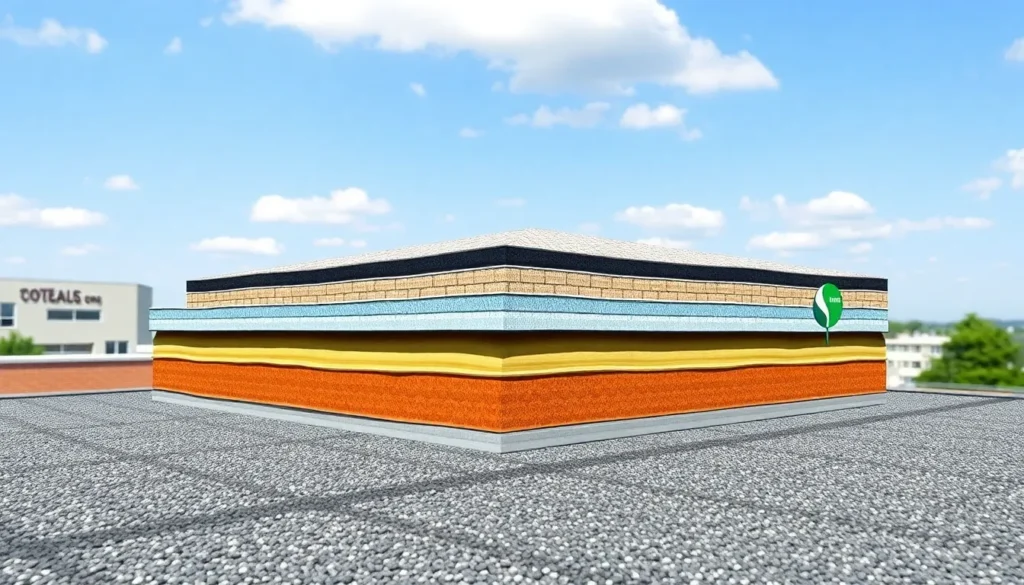
The built-up roof system is composed of several components. At its core are alternating layers of bitumen and reinforcement materials such as fiberglass, polyester, or organic felts. These layers are bonded together to form a continuous membrane. The topmost layer is usually a surface coating or aggregate (such as gravel) to protect the underlying layers from ultraviolet radiation and physical damage.
Bitumen serves as the adhesive and waterproofing agent, while the reinforcing fabrics add strength and flexibility. The number of layers can vary, but typically three to five plies are used. This layering creates a thick, robust membrane that is resistant to punctures, water infiltration, and temperature fluctuations.
How It Works
The BUR system works by creating a multiple-layer barrier that prevents water from penetrating the roof structure. The bitumen layers are heated and applied hot during installation, allowing them to bond effectively with the reinforcing felts. As the layers cool, they form a continuous, seamless surface that adheres firmly to the roof deck.
The aggregate or coating on top protects the bitumen from UV degradation and mechanical wear. This combination results in a roof membrane that can accommodate minor building movements and thermal expansion without cracking or losing integrity.
Examples
- Commercial warehouses often utilize built-up roofs due to their cost-effectiveness and durability over large, flat roof spans.
- Institutional buildings such as schools and hospitals may use BUR systems for their reliable waterproofing properties and ease of maintenance.
- Older office buildings commonly feature BUR installations, reflecting the popularity of this roofing method in the mid-20th century.
Why It Matters
Built-up roofs remain relevant due to their proven performance and longevity. They provide effective protection against water damage, which is critical for preserving the structural integrity of buildings. Additionally, their multi-layer construction offers redundancy; if one layer is compromised, others maintain the barrier. This reliability makes BUR a trusted choice for many roofing applications.
Common Misconceptions
Misconception: Built-up roofs are outdated and no longer used.
Correction: While newer roofing technologies exist, BUR systems are still widely installed and maintained due to their durability and cost-effectiveness.
Misconception: BUR systems are heavy and cause structural problems.
Correction: Although BUR membranes add weight compared to some roofing types, buildings designed or retrofitted for BUR installation account for this, and it rarely causes structural issues.
Pros and Cons
Pros:
- Durable and long-lasting with lifespans often exceeding 20 years.
- Excellent waterproofing due to multiple layers.
- Good resistance to foot traffic and weather extremes.
- Relatively low material and installation costs compared to some alternatives.
Cons:
- Installation can be labor-intensive and time-consuming.
- Use of hot bitumen requires skilled labor and safety precautions.
- Heavy weight may require structural reinforcement in some buildings.
- Maintenance can be complex if multiple layers need repair.
Comparison Table
| Aspect | Built-Up Roof (BUR) | Single-Ply Membrane |
|---|---|---|
| Meaning | Multiple layers of bitumen and reinforcing fabrics forming a membrane. | A single layer of synthetic material (e.g., TPO, EPDM) forming the roof membrane. |
| Durability | High, with multiple redundant layers. | Moderate to high, depending on material quality. |
| Weight | Heavier due to multiple layers and gravel. | Lighter and less structural load. |
| Installation | More complex, requires hot application and layering. | Relatively quick with adhesive or mechanical fastening. |
| Maintenance | Can be more involved due to layers. | Generally simpler to repair. |
Decision Checklist
What is the easiest way to understand Built-Up Roofs?
Think of a built-up roof as a sandwich made of alternating layers of sticky asphalt and fabric, topped with gravel or another protective coating. This layered structure creates a strong, waterproof shield that protects flat roofs from water and weather damage.
FAQ
What materials are used in a built-up roof?
A built-up roof typically uses bitumen—either asphalt or coal tar—and reinforcing fabrics such as fiberglass or organic felts, layered together to form a waterproof membrane.
Is a built-up roof suitable for residential homes?
Built-up roofs are primarily designed for low-slope commercial or industrial buildings and are less common on residential homes, which typically have steeper pitched roofs and different roofing materials.
How long does a built-up roof last?
With proper installation and maintenance, built-up roofs can last 20 years or more, though lifespan depends on environmental conditions and upkeep.





Leave a Reply