
Short Answer
Overview
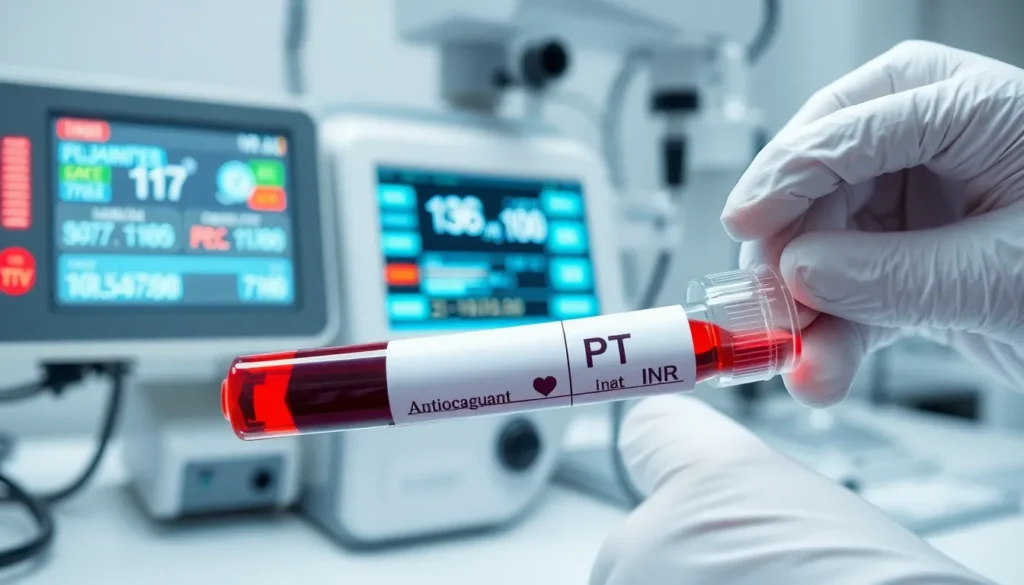
The PT INR lab test is a diagnostic blood test that evaluates the clotting tendency of blood by measuring the prothrombin time (PT) and expressing it as an international normalized ratio (INR). This test is primarily used to monitor patients who are taking anticoagulant medications such as warfarin, ensuring that their blood clotting is within a safe and therapeutic range. It helps assess the risk of excessive bleeding or clot formation.
Detailed Explanation
Prothrombin time (PT) measures the time it takes for plasma in the blood to clot after the addition of tissue factor (thromboplastin). Since PT results can vary depending on the reagents and equipment used by different laboratories, the international normalized ratio (INR) standardizes these results, allowing for consistent comparison regardless of where the test is performed. The INR is calculated using a formula that adjusts the PT value based on the sensitivity of the thromboplastin reagent.
The PT INR test is particularly useful in managing patients on vitamin K antagonists (VKAs) such as warfarin, which interfere with the synthesis of clotting factors dependent on vitamin K. By regularly measuring INR values, healthcare providers can adjust medication dosages to achieve the desired anticoagulation effect.
How It Works
A blood sample is drawn from the patient, typically via venipuncture. The sample is processed to obtain plasma, which is then mixed with thromboplastin and calcium to initiate clotting. The time taken for clot formation is measured as the prothrombin time (PT). The INR is calculated using the formula:
INR = (Patient PT / Mean Normal PT) ^ ISI
where ISI (International Sensitivity Index) reflects the responsiveness of the thromboplastin reagent used. This calculation standardizes PT results to ensure comparability. Target INR ranges vary depending on clinical conditions but generally range from 2.0 to 3.0 for most indications.
Examples
- For a patient with atrial fibrillation taking warfarin, an INR between 2.0 and 3.0 is typically targeted to reduce the risk of stroke without excessive bleeding.
- Patients with mechanical heart valves may require a higher INR range, such as 2.5 to 3.5, to prevent thrombosis.
- An INR below the target range suggests insufficient anticoagulation and increased risk of blood clots.
- An INR above the target range indicates excessive anticoagulation, leading to a higher risk of bleeding complications.
Why It Matters
The PT INR test is critical in the safe management of anticoagulant therapy. Without regular monitoring, patients receiving blood thinners risk serious complications such as hemorrhage or thrombosis. The test also provides valuable information in diagnosing bleeding disorders and liver function, as deficiencies or abnormalities in clotting factors can prolong PT and affect INR values.
Common Misconceptions
Misconception: The PT and INR tests measure the same thing.
Correction: PT is the raw clotting time measurement, while INR is a standardized calculation derived from PT to allow consistent interpretation across different labs.
Misconception: A higher INR is always dangerous.
Correction: The ideal INR depends on the clinical context; certain conditions require a higher INR to prevent clotting, while too high an INR without medical indication can be risky.
Pros and Cons
Comparison Table
| Aspect | PT INR Lab Test | Activated Partial Thromboplastin Time (aPTT) |
|---|---|---|
| Meaning | Measures extrinsic and common coagulation pathway clotting time, standardized as INR | Measures intrinsic and common coagulation pathway clotting time |
| Primary Use | Monitor warfarin anticoagulation | Monitor heparin therapy and detect intrinsic pathway disorders |
| Sample Type | Blood plasma | Blood plasma |
| Standardization | Yes, via INR | Less standardized, varies by lab |
Decision Checklist
- Use this if you need to monitor warfarin or other vitamin K antagonist therapy.
- Avoid this if you are monitoring heparin therapy, for which aPTT is preferred.
- Check this first if the patient has conditions affecting clotting factors, such as liver disease or vitamin K deficiency, as these may influence results.
What is the easiest way to understand PT INR?
The PT INR test can be understood as a blood test that measures how quickly blood clots (PT) and then standardizes this time (INR) so doctors can safely manage blood-thinning medications. If you think of blood clotting like setting jelly, the PT tells you how long it takes to set, and the INR helps ensure this timing is consistent no matter where the test is done.
FAQ
What does a PT INR test measure?
The PT INR test measures how long it takes blood to clot and standardizes this time to monitor anticoagulant therapy effectively.
Why is the INR important for patients on warfarin?
INR standardizes prothrombin time results, allowing healthcare providers to adjust warfarin dosage and reduce risks of bleeding or clotting.
Can diet affect PT INR results?
Yes, foods rich in vitamin K, such as leafy greens, can influence INR values because vitamin K is essential for blood clotting factor synthesis.





Leave a Reply