
Short Answer
Overview
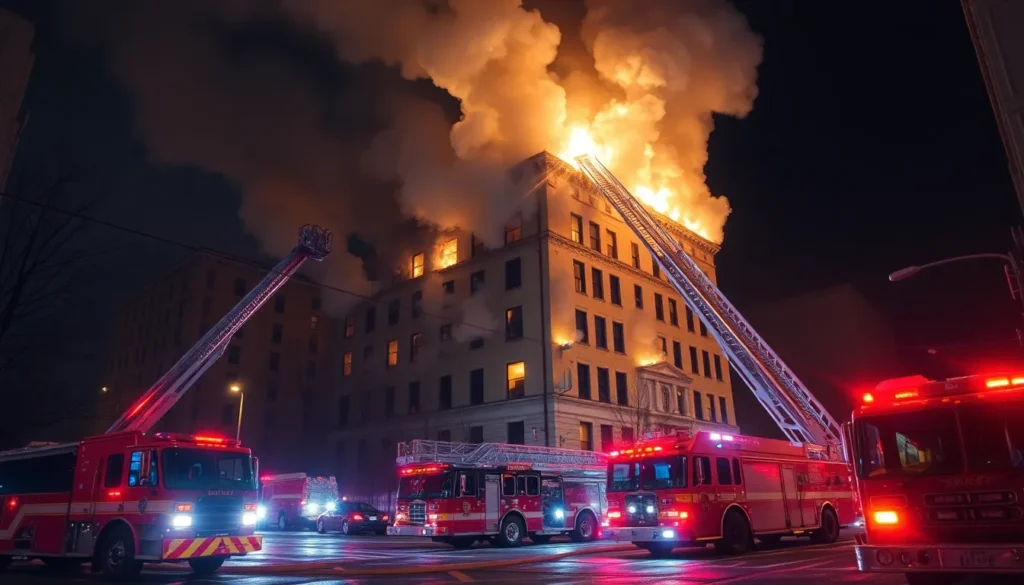
A 3 alarm fire is a term used primarily by fire departments to describe the scale and intensity of a fire incident. The “alarm” system is a method of categorizing fires based on the number of firefighting units, personnel, and equipment required to effectively manage the situation. A 3 alarm fire typically indicates a significant emergency that demands a considerable response, involving multiple fire engines, ladder trucks, and specialized teams.
Detailed Explanation
The alarm system is a standardized way for fire departments to communicate the severity of a fire and to request additional resources as needed. Each alarm level corresponds to a predefined number of units and personnel dispatched to the scene. While the exact composition can vary by jurisdiction, a 3 alarm fire generally involves three times the resources of a single alarm fire. This escalation is necessary when the fire is large, spreading rapidly, or poses significant risk to life and property.
Initially, a first alarm response is dispatched when a fire is reported. If the incident escalates or the initial units determine that more help is needed, they may request a second alarm, followed by a third alarm, and so forth. Each subsequent alarm brings more firefighting crews and equipment to the scene.
How It Works
When a fire is reported, the dispatch center sends out the first alarm, which typically includes a set number of fire engines, ladder trucks, and firefighters. If the fire proves too large or complex for this initial response, the incident commander can request additional alarms. A 3 alarm fire means that the third level of reinforcement has been activated, significantly increasing the number of responders on site.
The system allows fire departments to scale their response in an organized and efficient manner. It also helps in coordinating mutual aid, where nearby fire departments assist in controlling the blaze. The alarm level is communicated to all responding agencies, ensuring that the appropriate resources are mobilized quickly.
Examples
- A large commercial building fire that spreads rapidly and threatens neighboring structures may be classified as a 3 alarm fire to bring in sufficient firefighting crews.
- A multi-story residential apartment fire with multiple points of ignition and trapped occupants might require a third alarm response to ensure adequate rescue and containment efforts.
- An industrial fire involving hazardous materials may escalate to a 3 alarm fire to deploy specialized teams and equipment.
Common Misconceptions
Misconception: The number of alarms indicates the severity of the fire damage.
Correction: The alarm level primarily reflects the resources dispatched, not the actual damage extent, which may vary after the fire is controlled.
Misconception: All fire departments use the same criteria for alarm levels.
Correction: Alarm level definitions and resource assignments differ between municipalities and departments, so a 3 alarm fire in one city may not be identical to another.
Pros and Cons
Pros: Efficient resource allocation, scalable response, improved coordination during large incidents, enhanced safety for firefighters and civilians.
Cons: Potential for resource strain on departments, public misunderstanding of alarm levels, possible delays in escalation if initial assessment is inaccurate.
Comparison Table
| Aspect | 3 Alarm Fire | 1 Alarm Fire |
|---|---|---|
| Meaning | Fire requiring triple the initial response, indicating a significant incident | Initial level response for a reported fire incident |
| Resources Deployed | Multiple fire engines, ladder trucks, and personnel, often involving mutual aid | Basic firefighting units and crews sufficient for small or contained fires |
| Severity | Higher severity or complexity, potentially large-scale or hazardous fires | Lower severity, usually manageable by local units |
Decision Checklist
What is the easiest way to understand a 3 alarm fire?
Think of the alarm system as a way to call in backup: a 3 alarm fire means the situation is serious enough that firefighters have called for two additional waves of support beyond the initial team, signaling a larger, more complex fire incident requiring more resources.
FAQ
What does a 3 alarm fire mean in terms of firefighter response?
It means that the fire is significant enough to require three times the number of firefighting units and personnel dispatched for a basic fire response.
Are alarm levels the same in every city?
No, alarm levels and the number of units assigned can vary depending on local fire department protocols and resources.
Does a higher alarm number always mean more damage?
Not necessarily. A higher alarm indicates a larger response, but the actual damage depends on many factors and may not correlate directly with alarm level.






Leave a Reply