
Short Answer
Overview
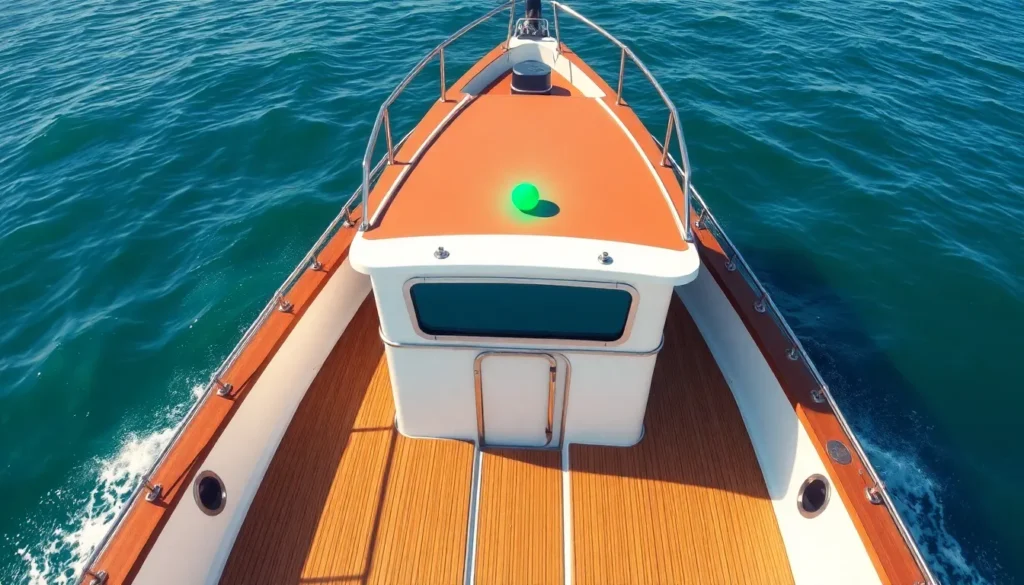
Starboard is a nautical term referring to the right side of a boat or ship when a person is facing the bow (front) of the vessel. This term is standardized in maritime navigation to avoid confusion when describing directions aboard a vessel. Alongside its counterpart, port (the left side), starboard is essential for clear communication, especially when navigating or docking.
Detailed Explanation
The word “starboard” originates from Old English, combining “steor” (steer) and “bord” (side of a ship), reflecting the traditional placement of the steering oar on the right side of early vessels. On modern boats and ships, starboard is always the right side from the perspective of looking forward toward the bow. This orientation remains consistent regardless of the observer’s position on the ship.
Starboard is commonly identified by specific markings and lights: at night, a green navigation light is displayed on the starboard side, while the port side shows a red light. These visual cues help other vessels determine direction and avoid collisions.
How It Works
When communicating directions on board, terms like starboard and port are used to avoid ambiguity that can arise from relative terms such as left and right, which depend on the observer’s orientation. For example, “turn starboard” means to steer the vessel to the right side based on the bow-facing perspective.
In navigation rules, starboard also plays a role in right-of-way decisions. For instance, when two vessels are approaching each other head-on, each is required to alter course to starboard to pass port side to port side safely.
Examples
- A sailor instructs, “Turn to starboard,” meaning the ship should turn right relative to its forward direction.
- At night, a boat shows a green light on the starboard side to indicate its right side to nearby vessels.
- In a race, a crew member calls out, “Starboard tack!” to indicate the wind is coming from the starboard side.
Pros and Cons
Pros:
- Provides a universal, unambiguous reference for directions aboard vessels.
- Enhances safety by standardizing navigation and communication.
- Integral to maritime rules of the road, reducing collision risks.
Cons:
- May be confusing to novices unfamiliar with nautical terminology.
- Requires training and experience to use correctly in dynamic situations.
Comparison Table
| Aspect | Starboard | Port |
|---|---|---|
| Meaning | Right side of a vessel facing forward | Left side of a vessel facing forward |
| Navigation Light Color | Green | Red |
| Position of Steering | Traditionally right side | Opposite side of starboard |
Decision Checklist
- Use this if you need to give clear directional commands on a vessel.
- Avoid this if your audience is unfamiliar with nautical terminology and requires simpler explanations.
- Check this first to ensure clarity in communication when multiple people are navigating or maneuvering the boat.
What is the easiest way to understand Starboard on a Boat?
The simplest way to understand starboard is to imagine standing at the back of a boat looking toward the front (bow). The side on your right is the starboard side. Remembering the phrase “Starboard is the right side” can help reinforce this concept quickly.
FAQ
What does starboard mean on a boat?
Starboard refers to the right-hand side of a boat or ship when a person is facing forward toward the bow. It is a standardized term used in navigation and communication aboard vessels.
Why is starboard important in navigation?
Starboard provides a universal reference for directions on vessels, which is crucial for clear communication, safe maneuvering, and adherence to maritime navigation rules.
How can I remember which side is starboard?
A common mnemonic is that starboard starts with 'S' and so does 'right' in certain languages like German ('Steuerbord'). Another way is to remember that the green navigation light is on the starboard side, and green often associates with 'go' or 'right.'






Leave a Reply