
Short Answer
Overview
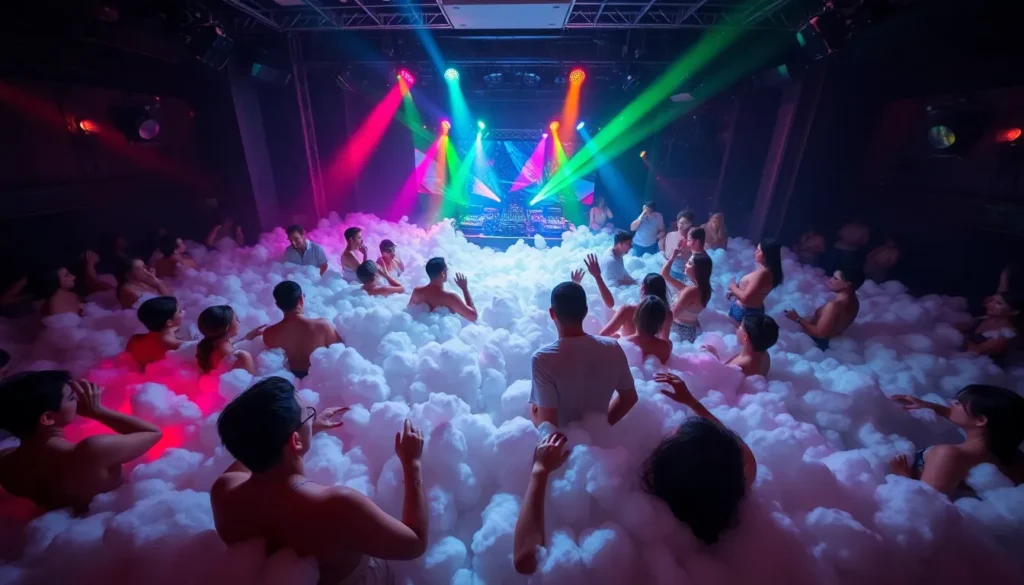
A foam party is a type of social gathering or entertainment event where a large amount of foam is produced and dispersed into a designated area, allowing attendees to dance and mingle while surrounded by foam bubbles. The foam is usually generated by specialized foam machines that mix water, air, and foam liquid to create a voluminous, frothy environment. Foam parties have become popular in various settings, including nightclubs, music festivals, private parties, and themed events.
Detailed Explanation
Foam parties originated as an innovative form of entertainment designed to enhance party atmospheres and provide guests with a novel experience. The foam used is generally a non-toxic, biodegradable solution that produces bubbles safe for skin contact. Participants often wear swimwear or casual clothing suitable for wet conditions, as the foam can cause dampness. Foam parties can vary in scale from small private events to large-scale public gatherings that attract hundreds or thousands of attendees.
While the core attraction is the foam itself, many foam parties incorporate additional elements such as music, lighting effects, DJs, and themed decorations to create an immersive party environment. The foam can reach varying heights, sometimes covering participants up to their waists or higher, depending on the machine’s output and event setup.
How It Works
Foam parties rely on specialized foam machines that mix a foaming agent (a liquid detergent-like substance) with water and pressurized air. This mixture is then expelled through nozzles to produce a continuous stream of foam bubbles. The machines can be adjusted to control the density and volume of the foam produced.
The foam is typically lightweight and evaporates or dissipates within a few minutes to an hour, depending on environmental conditions and ventilation. The floor and surrounding areas are often covered with non-slip mats or other protective materials to enhance safety due to the increased slipperiness caused by the foam.
Examples
- Nightclub Foam Parties: Many nightclubs host foam parties during peak seasons, especially in warmer climates, as a way to attract crowds and provide a distinct clubbing experience.
- Festival Foam Zones: Some music and cultural festivals designate foam areas where attendees can enjoy the foam while listening to live performances or DJs.
- Private and Themed Events: Foam parties are also popular for private celebrations such as birthdays, bachelor/bachelorette parties, and summer events.
Common Misconceptions
Misconception: Foam parties use harmful chemicals that can irritate the skin.
Correction: Most foam solutions used in parties are formulated to be non-toxic and safe for skin contact, although individuals with sensitive skin should exercise caution.
Misconception: Foam parties are only suitable for children.
Correction: While foam parties can be family-friendly, they are frequently organized for adults in nightclub and festival settings.
Pros and Cons
Pros:
- Creates a unique and engaging social atmosphere.
- Encourages interaction and fun among participants.
- Can be adapted to various event sizes and themes.
- Generally uses safe, biodegradable foam solutions.
Cons:
- Potential safety risks due to slippery surfaces.
- Requires specialized equipment and setup.
- May cause discomfort for people with skin sensitivities or respiratory issues.
- Cleanup after the event can be time-consuming.
Comparison Table
| Aspect | Foam Party | Alternative/Related Topic: Water Party |
|---|---|---|
| Meaning | Social event featuring large volumes of foam for entertainment. | An event where water is the primary medium, often involving splashing or water-based activities. |
| Environment | Foam-filled, slippery, and bubbly. | Wet but clear, often involving pools or sprinklers. |
| Equipment | Foam machines, foaming agents. | Water sources such as hoses, sprinklers, or pools. |
| Safety Considerations | Slippery floors, foam safety for skin and eyes. | Risk of drowning or slipping on wet surfaces. |
| Typical Venues | Nightclubs, festivals, private parties. | Outdoor spaces, pools, beaches. |
Decision Checklist
What is the easiest way to understand Foam Parties?
The easiest way to understand a foam party is to think of it as a dance or social event where the room is filled with a thick layer of bubbly foam, creating a playful and immersive environment for attendees to enjoy music and socialize in a unique setting.
FAQ
Is the foam used in foam parties safe for the skin?
Yes, the foam solutions used in foam parties are typically non-toxic and designed to be safe for skin contact. However, individuals with sensitive skin should exercise caution and check ingredient information beforehand.
Can foam parties be held outdoors?
Yes, foam parties can be held both indoors and outdoors. Outdoor foam parties are common during warmer weather and may have fewer concerns about ventilation.
What safety measures are necessary at foam parties?
Safety measures include using non-slip mats, ensuring adequate ventilation, monitoring foam density, and providing clear instructions to participants to avoid slipping or inhaling excessive foam.



Leave a Reply