
Short Answer
Overview
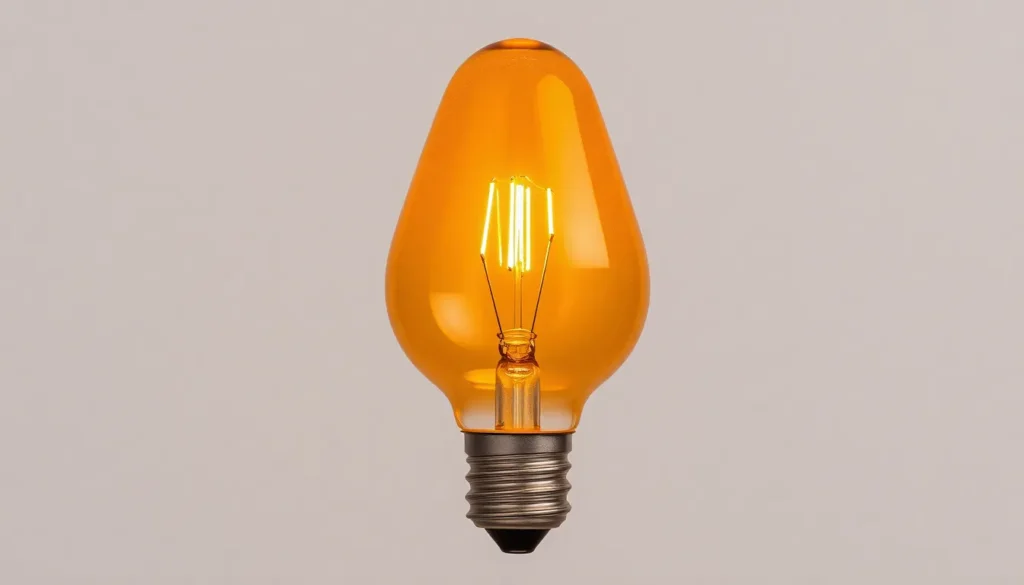
A Type A bulb is a standardized shape for light bulbs, recognized primarily for its classic pear-shaped glass enclosure and screw-type base. This bulb shape is the most familiar and widely used in household and commercial lighting fixtures. The designation “Type A” refers to the bulb’s shape and size, not the technology or wattage. Historically associated with incandescent bulbs, Type A bulbs are now also produced using LED and compact fluorescent lamp (CFL) technologies, accommodating energy efficiency demands while maintaining compatibility with existing fixtures.
Detailed Explanation
The Type A bulb typically features a rounded top tapering down to a narrower neck where it connects to the screw base, commonly termed as E26 in North America or E27 in Europe, denoting the diameter of the base in millimeters. The bulb’s shape allows for broad light dispersion in all directions, making it suitable for general-purpose lighting. The Type A designation is standardized by organizations such as the American National Standards Institute (ANSI) to ensure uniformity in shape and size across manufacturers.
Type A bulbs come in a range of wattages and light outputs, from traditional incandescent versions producing warm light to modern LED variants offering a spectrum of color temperatures and improved energy efficiency. The versatility in technology allows consumers to select bulbs that match specific lighting preferences and energy consumption goals.
How It Works
The operation of a Type A bulb depends on its underlying technology. In incandescent Type A bulbs, electricity passes through a tungsten filament, heating it until it glows and emits light. This process also generates heat as a byproduct. In LED Type A bulbs, electrical current powers light-emitting diodes, which produce light more efficiently and with less heat. Compact fluorescent Type A bulbs use a gas discharge method where electricity excites mercury vapor to emit ultraviolet light, which then excites a phosphor coating inside the bulb to produce visible light.
Despite the differences in light generation methods, all Type A bulbs share the same general shape and base size, ensuring compatibility with fixtures designed for this form factor.
Examples
- Incandescent Type A Bulb: The traditional pear-shaped bulb used in homes before the advent of energy-efficient lighting.
- LED Type A Bulb: Modern energy-saving bulbs that mimic the shape of incandescent Type A bulbs but consume less power and last longer.
- Compact Fluorescent Type A Bulb: Fluorescent bulbs shaped like Type A bulbs, providing energy savings over incandescent but containing small amounts of mercury.
Pros and Cons
Pros:
- Universal shape and size compatible with most fixtures.
- Wide availability in various lighting technologies.
- Good light dispersion suitable for general illumination.
Cons:
- Incandescent Type A bulbs are less energy-efficient and have shorter lifespans.
- Some CFL variants contain mercury, requiring special disposal.
- LED Type A bulbs may have higher upfront costs despite long-term savings.
Comparison Table
| Aspect | Type A Bulb | Alternative/Related Bulb Shapes |
|---|---|---|
| Meaning | Standard pear-shaped bulb with screw base, used for general lighting. | Examples include Type B (candelabra), Type G (globe), and Type R (reflector) bulbs, which differ in shape and light distribution. |
Decision Checklist
- Use this if: You need a general-purpose bulb compatible with most residential or commercial fixtures.
- Avoid this if: You require directional lighting that Type A bulbs do not provide efficiently.
- Check this first: Fixture compatibility and preferred lighting technology (incandescent, LED, CFL) before purchase.
What is the easiest way to understand Type A Bulb?
The easiest way to understand a Type A bulb is to think of the classic household light bulb shape that fits into standard screw-in sockets. Regardless of the technology used inside—incandescent, LED, or CFL—the Type A bulb maintains this familiar shape, making it a versatile and widely compatible lighting solution.
FAQ
What does 'Type A' mean in light bulbs?
Type A refers to the shape and size of the bulb, specifically a pear-shaped bulb with a standard screw base used commonly in general lighting.
Can I replace an incandescent Type A bulb with an LED Type A bulb?
Yes, LED Type A bulbs are designed to fit the same fixtures and bases as incandescent Type A bulbs, offering energy savings and longer lifespan.
Are all Type A bulbs the same size?
While Type A bulbs share a general shape, there are size variations such as A15, A19, and A21, with A19 being the most common household size.





Leave a Reply