
Short Answer
Overview
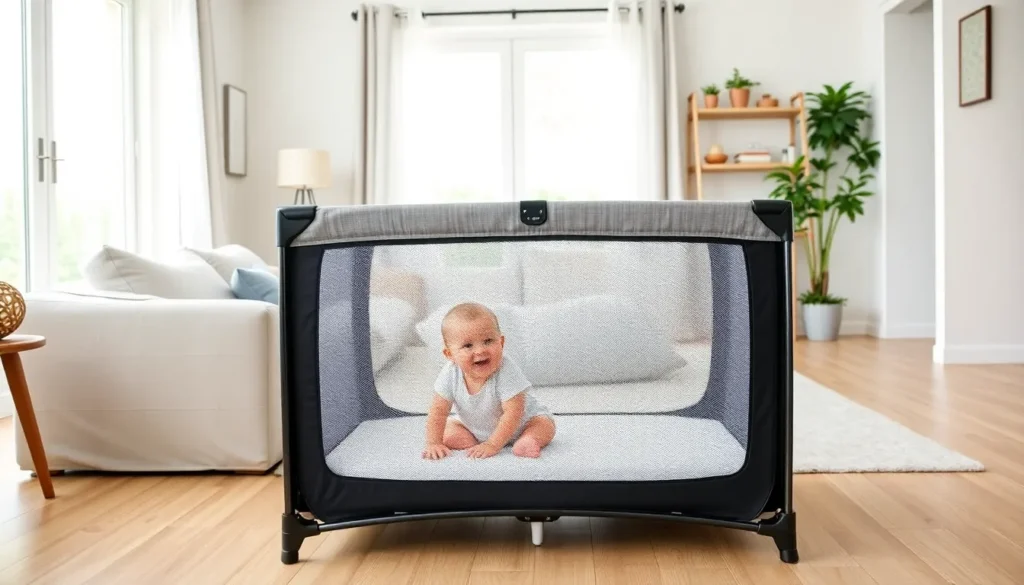
A pack and play, also known as a portable playard or playpen, is a collapsible and portable enclosure designed primarily for infants and toddlers. It provides a safe, confined space where a child can sleep, play, or be changed. Its design focuses on ease of transportation and setup, making it a versatile item for caregivers both at home and on the go.
Detailed Explanation
Typically constructed from lightweight metal or plastic frames covered with breathable mesh or fabric, pack and plays are designed to fold into compact shapes for travel or storage. They often include features such as a bassinet insert for newborns, changing tables, and storage compartments for baby essentials. The mesh sides offer ventilation and visibility, enabling caregivers to easily monitor the child.
How It Works
The pack and play operates through a folding mechanism that allows it to be collapsed and expanded without tools. When expanded, it forms a secure enclosure with raised sides to prevent infants and toddlers from falling out. Some models come with additional attachments or accessories that can be installed or removed as needed. The portability and quick assembly make it ideal for use in various settings such as homes, daycare centers, and during travel.
Examples
- A basic pack and play with mesh sides and a foldable frame for travel convenience.
- A model equipped with a removable bassinet insert for newborn use.
- A multifunctional pack and play featuring an integrated changing station and storage pockets.
Pros and Cons
Pros: Portability allows easy transportation and storage; multifunctional design supports sleeping, playing, and changing; mesh sides provide ventilation and visibility; generally easy to clean and maintain.
Cons: Limited space compared to traditional cribs; may not provide as much cushioning or support; some models can be relatively heavy despite portability; improper setup can pose safety risks.
Comparison Table
| Aspect | Pack and Play | Traditional Crib |
|---|---|---|
| Meaning | Portable, foldable playard for infants and toddlers | Stationary sleeping furniture for infants |
| Portability | High – designed for travel and easy transport | Low – generally fixed and bulky |
| Functionality | Multifunctional: sleep, play, change | Primarily sleeping |
| Setup | Quick assembly and folding | Requires assembly, usually stays assembled |
| Space | Compact and confined | More spacious |
Decision Checklist
- Use this if you need a portable, multifunctional space for your infant or toddler that can be easily transported.
- Avoid this if you require a permanent, spacious sleeping area that resembles a traditional crib.
- Check this first for safety certifications, foldability ease, and additional features like bassinets or changing tables before purchase.
What is the easiest way to understand a Pack and Play?
Think of a pack and play as a portable mini-room designed specifically for a baby or toddler. It folds up like a suitcase for easy travel but expands into a safe, enclosed space where the child can sleep, play, or be changed, combining convenience with safety.
FAQ
Is a pack and play safe for overnight sleeping?
Many pack and plays are designed to be safe for overnight sleeping when used according to manufacturer instructions and safety guidelines. However, caregivers should ensure the model meets current safety standards and that the mattress is firm and fits snugly.
Can a pack and play be used for newborns?
Yes, some pack and plays include bassinet inserts that elevate and secure newborns, making them suitable from birth. It is important to verify that the product is intended for newborn use before use.
How portable is a pack and play?
Pack and plays are specifically designed to be portable, featuring foldable frames and carrying cases. Most models can be folded and transported easily in a car or airplane.



Leave a Reply