
Short Answer
Overview
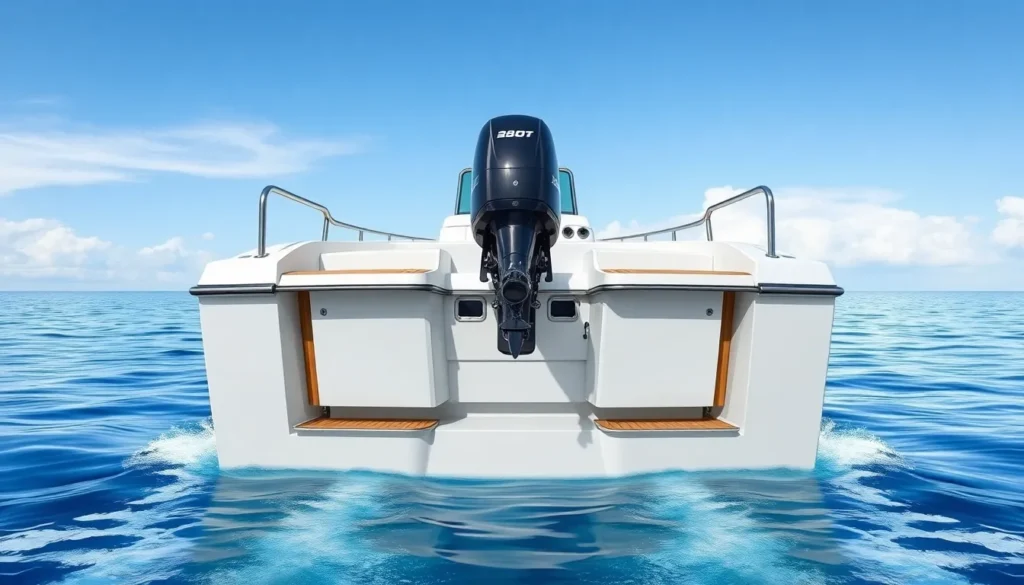
A transom on a boat refers to the flat or slightly curved vertical surface that forms the stern, or rear end, of the vessel. It is a critical structural component that often serves as the mounting point for outboard motors, steering mechanisms, and other equipment. The transom can vary in shape and size depending on the type of boat and its intended use, but its fundamental role in maintaining the vessel’s integrity and functionality remains consistent across designs.
Detailed Explanation
The transom is typically constructed from materials such as wood, fiberglass, aluminum, or composite substances, chosen for their strength and durability. It connects the two sides of the hull at the stern and provides a rigid surface that can withstand the forces exerted by water pressure and mechanical components. Beyond structural support, the transom often includes features like drain plugs, transom wells, or swim platforms.
In traditional wooden boats, the transom is an essential element in the framing system, offering a surface to which the hull planking can be attached. In modern recreational boats, especially powerboats, the transom is designed to accommodate engines, often featuring reinforced areas to support the weight and thrust of outboard motors.
How It Works
The transom functions by providing a stable and secure surface at the aft end of the boat. It absorbs and distributes the mechanical stresses caused by engine mounting and water impact during navigation. When an outboard motor is attached, the transom must resist the torque and vibration generated by the engine, enabling efficient propulsion and steering control.
Additionally, the transom contributes to the boat’s buoyancy and hydrodynamics by shaping the stern’s interaction with water. Its design impacts the boat’s planing ability, wake formation, and overall stability. Some transoms are designed with a slight angle to improve performance and reduce drag.
Examples
- Outboard Motor Mounting: On many small fishing boats and recreational vessels, the transom serves as the primary mounting surface for outboard engines, requiring reinforcement to handle engine thrust.
- Stern-Walk or Swim Platforms: Some boats feature extended transoms that include platforms for boarding, swimming, or fishing, enhancing accessibility and utility.
- Transom Wells: In certain designs, the transom incorporates a well or cutout to position the outboard motor lower in the water, improving performance and reducing noise.
Pros and Cons
- Pros: Provides a strong, flat surface for mounting engines and equipment; contributes to structural integrity; facilitates easier access to the water; can improve boat handling when properly designed.
- Cons: If poorly constructed or damaged, can compromise hull integrity; may add weight to the stern affecting balance; limited in design flexibility compared to other stern types.
Comparison Table
| Aspect | Transom | Alternative Stern Types (e.g., Canoe Stern) |
|---|---|---|
| Meaning | Flat or slightly curved vertical surface at the stern of a boat, often reinforced for engine mounting. | Rounded or pointed stern shape that tapers smoothly, typically not suitable for outboard motor mounting. |
| Functionality | Supports motors and equipment, provides structural strength, allows easy access to water. | Designed for improved hydrodynamic flow and aesthetics, less suited for heavy equipment attachment. |
| Common Use | Powerboats, fishing boats, recreational vessels. | Sailing vessels, traditional or classic boats. |
Decision Checklist
- Use this if: You need a sturdy platform for mounting an outboard motor or require a flat stern area for boarding or equipment.
- Avoid this if: You prefer a streamlined, traditional stern shape for sailing performance or aesthetics without engine mounting needs.
- Check this first: The material strength and reinforcement of the transom to ensure it can handle engine weight and thrust.
What is the easiest way to understand a Transom on a Boat?
The simplest way to understand a transom is to think of it as the boat’s rear wall—a flat surface that closes off the back end, giving it shape, strength, and a place to attach engines or other gear. It is like the ‘backbone’ of the stern, holding everything together and supporting the boat’s propulsion system.
FAQ
What is the difference between a transom and a stern?
The stern is the entire rear section of a boat, while the transom is specifically the flat or slightly curved vertical surface that forms the back wall of the stern.
Can any boat have a transom?
Most powerboats and many recreational boats have a transom, especially those designed to mount outboard motors. However, sailboats and traditional vessels may have other stern designs such as canoe or rounded sterns.
Why is the transom important for mounting an outboard motor?
The transom provides a strong, reinforced surface capable of withstanding the forces exerted by the engine’s weight and thrust, ensuring safe and efficient propulsion.


Leave a Reply