
Short Answer
Overview
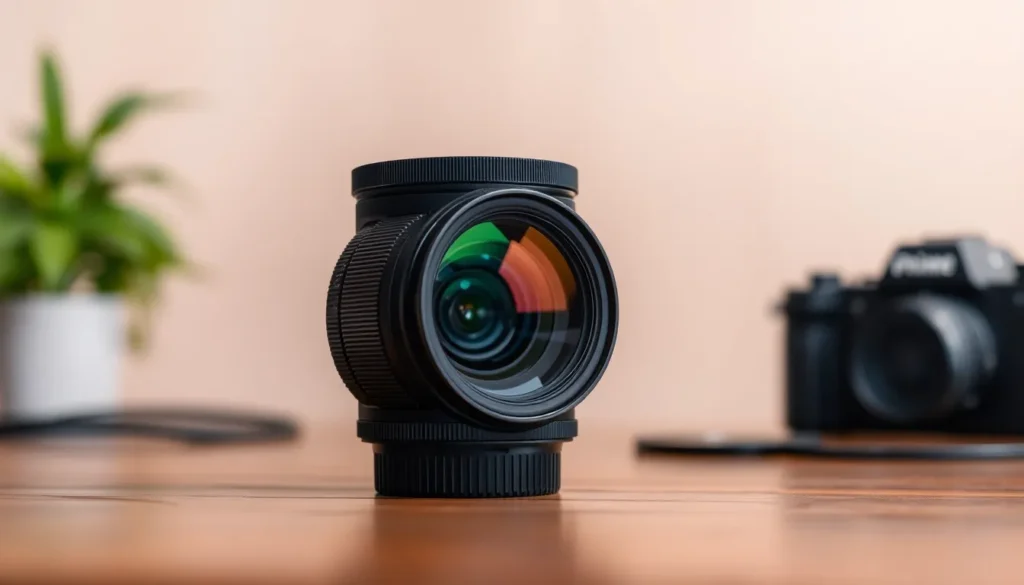
A prime lens is a type of camera lens with a fixed focal length, meaning it does not zoom in or out. Unlike zoom lenses, which cover a range of focal lengths, prime lenses are designed to provide a single, specific angle of view. They are widely used in photography and videography due to their optical qualities and other characteristics.
Detailed Explanation
The primary feature of a prime lens is its fixed focal length, such as 35mm, 50mm, or 85mm. Because the lens elements are optimized for one focal length, prime lenses often offer superior image quality, including sharper images, better contrast, and less distortion compared to zoom lenses. The optical simplicity also typically allows for larger maximum apertures (i.e., lower f-numbers), which enable more light to enter the camera, improving performance in low-light situations and allowing for a shallower depth of field.
Prime lenses are generally lighter and more compact than zoom lenses because of their simpler internal structure. This can make them easier to carry and use, particularly for street photography, portraits, or other scenarios where discretion is beneficial.
How It Works
Unlike zoom lenses that use complex groups of glass elements and mechanical parts to vary focal length, prime lenses have a fixed optical design tailored to a single focal distance. The fixed focal length means the photographer must physically move closer or farther from the subject to change framing, rather than adjusting the lens itself. This can encourage a more deliberate approach to composition.
The large aperture capability of prime lenses is achieved by wider lens elements and fewer glass components, which allow more light to pass through. This also facilitates effects such as bokeh—the aesthetic quality of the out-of-focus areas in an image.
Examples
- 50mm f/1.8 Lens: Often referred to as a ‘nifty fifty,’ this is a popular prime lens for general photography, offering a field of view close to human vision and a wide aperture for low-light and portrait work.
- 35mm f/1.4 Lens: Favored for environmental portraits and street photography, this lens provides a slightly wider angle of view while maintaining a large aperture.
- 85mm f/1.8 Lens: Commonly used for portrait photography, this telephoto prime lens allows for flattering subject isolation with a shallow depth of field.
Why It Matters
Prime lenses hold significance in photography due to their ability to deliver high image quality and creative control. Their wide apertures enable photographers to shoot in challenging lighting conditions without using a flash. Additionally, the fixed focal length can foster greater skill in composition and framing, as photographers must physically move to adjust perspective.
Common Misconceptions
Misconception: Prime lenses are outdated and less versatile than zoom lenses.
Correction: While prime lenses have a fixed focal length, their superior image quality and aperture capabilities often make them preferable for many photographic applications, despite the lack of zoom.
Misconception: Prime lenses are always more expensive than zoom lenses.
Correction: Pricing varies widely depending on the lens brand, aperture, and build quality. Some prime lenses, especially those with smaller apertures, can be very affordable compared to high-end zoom lenses.
Pros and Cons
Comparison Table
| Aspect | Prime Lens | Zoom Lens |
|---|---|---|
| Meaning | Lens with a fixed focal length | Lens with variable focal length |
| Flexibility | Limited to one field of view | Adjustable focal length for framing |
| Image Quality | Generally sharper and higher quality | May have more distortion and less sharpness |
| Aperture | Typically larger maximum aperture (e.g., f/1.8) | Usually smaller maximum aperture (e.g., f/3.5-5.6) |
| Size and Weight | More compact and lighter | Bulkier and heavier |
| Cost | Varies, often less expensive for basic primes | Varies, often more expensive for high-quality zooms |
Decision Checklist
- Use this if: You prioritize image quality, low-light performance, and are comfortable moving physically to adjust framing.
- Avoid this if: You need quick focal length changes without moving, such as in fast-paced or unpredictable shooting environments.
- Check this first: Consider your typical shooting scenarios, weight and size preferences, and budget before choosing a prime lens.
What is the easiest way to understand a Prime Lens?
The simplest way to understand a prime lens is to think of it as a camera lens that sees the world at one fixed zoom level. To get closer or wider in your photo, you must physically move, not twist a ring on the lens. This fixed viewpoint often results in clearer, brighter images and encourages photographers to be more intentional with their composition.
FAQ
Why choose a prime lens over a zoom lens?
Prime lenses typically offer better image quality, larger apertures for low-light shooting, and a more compact design. However, they lack the flexibility of zooming.
Can you zoom with a prime lens?
No, prime lenses have a fixed focal length, so to change framing, the photographer must physically move closer or farther from the subject.
Are prime lenses better for portraits?
Many photographers prefer prime lenses with focal lengths like 85mm or 50mm for portraits because they provide flattering perspective and can produce a shallow depth of field to isolate the subject.




Leave a Reply