
Short Answer
Overview
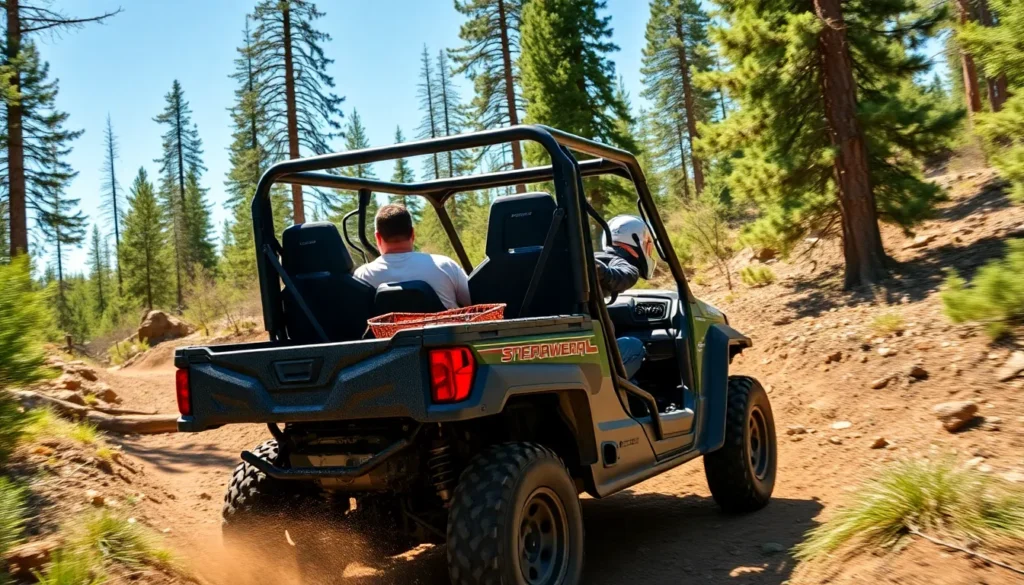
A side by side (often abbreviated as SxS) is a type of off-road vehicle designed with two or more seats arranged side-by-side, as opposed to one behind the other. These vehicles are characterized by their compact size, four-wheel drive capabilities, and versatility, making them popular for recreational activities, work tasks, and transportation in challenging terrains. Side by sides are distinct from all-terrain vehicles (ATVs), which typically have a single rider or tandem seating.
Detailed Explanation
Side by sides are small, motorized vehicles built for navigating rough landscapes, including forests, farms, deserts, and mountainous areas. They usually feature a roll cage, seat belts, and a steering wheel, differentiating them from traditional ATVs that use handlebars. The vehicles are designed with safety and utility in mind, offering protection to the occupants and the ability to transport passengers and cargo. They are powered by internal combustion engines or, increasingly, electric motors.
These vehicles come in various sizes and configurations to serve different purposes, from lightweight recreational models to heavy-duty work vehicles equipped with cargo beds and towing capabilities. Their design accommodates two to six passengers depending on the model, with some specialized versions offering additional features such as advanced suspension systems, enhanced lighting, and custom attachments for agriculture or industrial use.
How It Works
Side by sides operate similarly to small off-road trucks. They are powered by engines ranging from 400cc to over 1000cc, which provide sufficient power to maneuver through difficult terrain. The drivetrain typically includes four-wheel drive with selectable modes, allowing users to switch between two-wheel and four-wheel drive as needed for traction. The steering system uses a conventional steering wheel connected to front wheels, and braking is managed through hydraulic disc brakes on all wheels.
The suspension system is designed to absorb shocks from uneven ground, often featuring independent suspension on all wheels for improved handling and comfort. Controls include a gear shifter, accelerator, brake pedals, and sometimes reverse gear. Many side by sides also have features like power steering, electronic fuel injection, and digital displays for monitoring vehicle status.
Examples
- Recreational Side by Side: Lightweight models designed for trail riding, hunting, or exploring, often with two seats and basic cargo space.
- Utility Side by Side: Larger vehicles equipped with cargo beds, towing hitches, and enhanced durability for agricultural or construction work.
- Sport Side by Side: High-performance models with powerful engines and advanced suspension systems intended for racing or aggressive off-road use.
Why It Matters
Side by sides have become an important category of off-road vehicles due to their versatility and safety features. They provide a practical solution for transportation and work in environments where conventional vehicles cannot operate effectively. Their ability to carry passengers and cargo simultaneously makes them valuable for industries such as farming, forestry, and outdoor recreation. Additionally, their relatively low cost and ease of maintenance contribute to their growing popularity worldwide.
Common Misconceptions
Misconception: Side by sides are just larger ATVs.
Correction: While similar, side by sides differ significantly by having side-by-side seating, a steering wheel, roll cages, and often greater safety features.
Misconception: Side by sides are only for recreational use.
Correction: Many side by sides are designed specifically for utility and work purposes, such as farming or construction tasks.
Pros and Cons
Pros:
- Enhanced safety features such as roll cages and seat belts.
- Ability to carry passengers and cargo simultaneously.
- Versatile for both recreational and utility purposes.
- Good maneuverability in rough terrain.
- Relatively easy to operate compared to larger off-road vehicles.
Cons:
- Limited speed and range compared to larger vehicles.
- Can be expensive depending on features and size.
- Requires proper training and safety gear to operate safely.
- Not suitable for use on all public roads due to regulations.
Comparison Table
| Aspect | Side By Side | All-Terrain Vehicle (ATV) |
|---|---|---|
| Meaning | Off-road vehicle with side-by-side seating and steering wheel | Off-road vehicle with single or tandem seating and handlebars |
| Seating | Two or more seats side-by-side | Usually one or two seats, in-line seating |
| Control | Steering wheel | Handlebars |
| Safety Features | Roll cage, seat belts | Minimal or no roll cage, no seat belts |
| Primary Use | Recreational and utility work | Recreational and sport |
Decision Checklist
What is the easiest way to understand Side By Side?
The easiest way to understand a side by side is to think of it as a small, off-road truck designed for two or more people sitting next to each other, equipped with a steering wheel and safety features, used for both fun and practical tasks in rough terrain.
FAQ
What is the main difference between a side by side and an ATV?
The main difference is that side by sides have side-by-side seating and a steering wheel, while ATVs usually have single or tandem seating controlled by handlebars.
Are side by sides legal on public roads?
Legality varies by jurisdiction. Many places restrict side by sides from public roads due to safety regulations, but some areas allow them if they meet specific requirements.
What safety features do side by sides typically have?
Side by sides often include roll cages, seat belts, and sometimes additional features like doors and airbags to enhance occupant safety.




Leave a Reply