
Short Answer
Overview
A DOT number, or Department of Transportation number, is a unique identifier assigned by the United States Department of Transportation (USDOT) to commercial motor vehicles and their operators. It is primarily used for regulatory purposes in the United States to monitor and ensure compliance with federal safety standards and other transportation regulations. The DOT number is essential for companies and individuals engaged in interstate commerce who operate commercial vehicles above certain weight thresholds or transport hazardous materials.
Detailed Explanation
The DOT number is issued by the Federal Motor Carrier Safety Administration (FMCSA), a division of the USDOT. It acts as a tracking tool that links a vehicle or carrier to a database containing safety records, inspection results, crash investigations, and compliance reviews. The number helps authorities identify carriers and hold them accountable for adhering to regulations related to vehicle maintenance, driver qualifications, hours of service, and cargo safety.
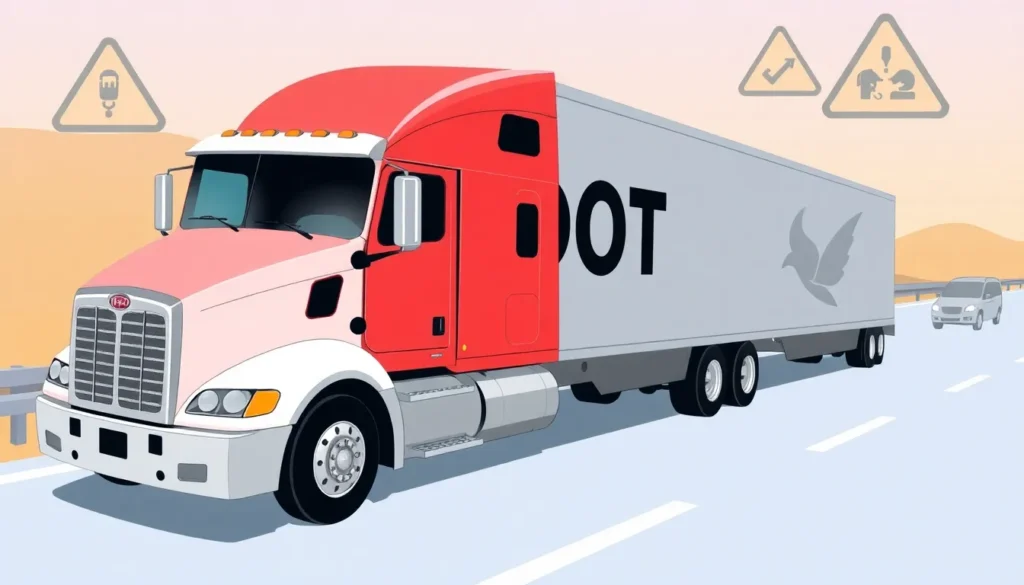
Obtaining a DOT number is mandatory for motor carriers that operate commercial vehicles weighing over 10,000 pounds, transport hazardous materials requiring safety permits, or carry passengers for hire. The number must be displayed on the vehicle’s exterior, generally on both sides, to ensure visibility for inspection and enforcement personnel.
How It Works
When a company or individual applies for a DOT number through the FMCSA, they must provide detailed information about their operations, including the types of vehicles used, nature of cargo, and operational areas. Once issued, the DOT number becomes the carrier’s official identifier in federal databases.
The FMCSA uses the DOT number to collect and maintain data on safety compliance. This data includes roadside inspection results, safety audits, and accident reports. The information is accessible to regulatory agencies, law enforcement, and sometimes the public, facilitating transparency and accountability in the commercial transportation sector.
Failure to obtain or properly display a DOT number when required can result in penalties, fines, or operational restrictions. Additionally, carriers with poor safety records linked to their DOT number may face increased scrutiny or suspension.
Examples
- Interstate Trucking Company: A freight company operating heavy trucks across state lines must register and obtain a DOT number to legally transport goods.
- Hazardous Materials Transporter: A business that transports chemicals classified as hazardous must have a DOT number and adhere to additional safety regulations.
- Passenger Bus Operator: A company providing commercial passenger bus services between states needs a DOT number for compliance and monitoring purposes.
Pros and Cons
Pros:
- Enhances safety by enabling regulatory oversight of commercial vehicles.
- Improves accountability and transparency for carriers operating in interstate commerce.
- Facilitates efficient enforcement of transportation regulations.
- Provides carriers with a recognized identity for federal compliance.
Cons:
- Compliance requirements can impose administrative and operational burdens on small carriers.
- Noncompliance risks fines and operational disruptions.
- Public access to safety records may impact company reputation.
Comparison Table
| Aspect | DOT Number | USDOT Number |
|---|---|---|
| Meaning | A unique identifier assigned by the Department of Transportation to commercial motor carriers. | Often used interchangeably with DOT number; specifically refers to the number issued by the Federal Motor Carrier Safety Administration. |
| Purpose | To monitor safety compliance and regulatory adherence of commercial vehicles. | Same as DOT number; emphasizes federal regulation under FMCSA. |
| Usage | Required for interstate commercial vehicle operations meeting weight or cargo criteria. | Same as DOT number. |
Decision Checklist
- Use this if: You operate commercial vehicles in interstate commerce or transport hazardous materials.
- Avoid this if: Your vehicle operations are purely intrastate and below regulatory thresholds (subject to state regulations).
- Check this first: Determine if your vehicle weight, cargo type, or passenger capacity requires a DOT number under FMCSA rules.
What is the easiest way to understand a DOT Number?
The simplest way to understand a DOT number is as a federally issued identification code for commercial vehicles and carriers. It functions like a license or registration number that allows government agencies to track and regulate the safety and compliance of companies operating commercial transportation services across state lines.
FAQ
Who needs a DOT number?
Any person or company operating commercial vehicles involved in interstate commerce that weigh over 10,000 pounds, transport hazardous materials, or carry passengers for hire must obtain a DOT number.
Is a DOT number the same as a license plate?
No, a DOT number is a regulatory identifier for safety compliance, while a license plate is issued by state authorities for vehicle registration.
How can I apply for a DOT number?
Applications for a DOT number are submitted through the Federal Motor Carrier Safety Administration’s online portal, where applicants provide detailed operational information.






Leave a Reply