
Short Answer
Overview
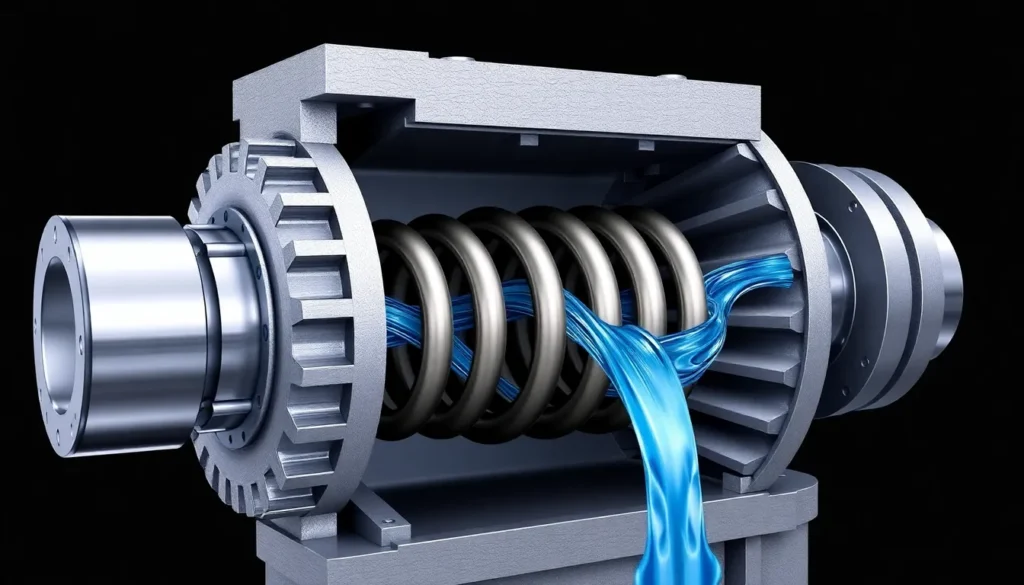
A progressive cavity pump is a positive displacement pump designed to transport fluids in a steady, non-pulsating flow. It comprises a helical rotor rotating within a stator that forms cavities, which move progressively from the inlet to the outlet. These pumps are particularly effective for handling viscous, abrasive, shear-sensitive, or multiphase fluids, making them valuable across various industrial sectors.
Detailed Explanation
The design of a progressive cavity pump involves a single helix rotor and a double helix stator. The rotor is typically metallic and shaped like a screw, while the stator is made from an elastomeric material molded with an internal helical cavity. As the rotor turns eccentrically inside the stator, cavities are created that advance along the pump, transporting the fluid. This mechanism allows for consistent volumetric displacement independent of pressure, making it ideal for precise flow requirements.
How It Works
Operation of a progressive cavity pump is based on the formation and progression of cavities between the rotor and stator. The rotor, rotating within the stator, creates sealed chambers that move fluid from the suction to the discharge side. The number of cavities corresponds to the rotor’s geometry, and the eccentric motion ensures the cavities move smoothly without fluid backflow. This results in a uniform flow rate, minimal pulsation, and low shear stress on pumped materials.
Examples
- Wastewater Treatment: Progressive cavity pumps are used to handle sludge and slurry, where their ability to pump abrasive and viscous material is essential.
- Food Industry: These pumps can transfer products like dough, syrups, or sauces without damaging their texture due to low shear operation.
- Oil and Gas: They are employed to pump heavy crude oil or to transfer drilling mud where consistent flow at varying pressures is necessary.
Pros and Cons
Pros:
- Capable of handling highly viscous and abrasive fluids.
- Provides smooth, non-pulsating flow.
- Gentle handling reduces shear on sensitive fluids.
- Can pump multiphase mixtures including solids.
- Good self-priming capability and can operate dry for short periods.
Cons:
- Stator wear limits lifespan, especially with abrasive fluids.
- Lower efficiency compared to centrifugal pumps for low-viscosity fluids.
- Relatively complex design can lead to higher maintenance costs.
- Limited to moderate pressure and flow ranges.
Comparison Table
| Aspect | Progressive Cavity Pump | Centrifugal Pump |
|---|---|---|
| Meaning | Positive displacement pump moving fluid by progressing cavities between rotor and stator. | Dynamic pump using rotational kinetic energy to move fluid by centrifugal force. |
| Suitable Fluids | Viscous, abrasive, shear-sensitive, slurry, multiphase fluids. | Low viscosity, clean fluids with low solids content. |
| Flow Characteristics | Steady, non-pulsating, volumetric flow. | Pulsating flow with variable pressure and flow depending on system conditions. |
| Efficiency | Higher efficiency with viscous fluids. | Higher efficiency with low-viscosity fluids. |
| Maintenance | Stator wear requires periodic replacement; more complex. | Generally simpler with fewer wear parts. |
Decision Checklist
- Use this if you need to pump viscous, abrasive, or shear-sensitive fluids requiring consistent flow.
- Avoid this if you are handling low-viscosity, clean fluids where a centrifugal pump is more efficient.
- Check this first if the fluid contains solids, is highly abrasive, or requires gentle pumping to avoid damage.
What is the easiest way to understand Progressive Cavity Pumps?
Think of a progressive cavity pump as a screw turning inside a flexible tube, creating pockets that carry fluid steadily from one end to the other. This simple mechanical action allows it to handle tough fluids that other pumps struggle with, providing smooth and controlled flow.
FAQ
What types of fluids can a progressive cavity pump handle?
Progressive cavity pumps are suitable for viscous, abrasive, shear-sensitive fluids, slurries, and multiphase mixtures containing solids.
How does a progressive cavity pump differ from a centrifugal pump?
Unlike centrifugal pumps that impart kinetic energy to fluids, progressive cavity pumps move fluid by positive displacement through cavities formed between the rotor and stator, providing steady flow regardless of pressure.
What are common maintenance concerns for progressive cavity pumps?
The elastomeric stator is subject to wear, especially with abrasive fluids, requiring periodic replacement. Proper alignment and lubrication of bearings are also important for longevity.





Leave a Reply