
Short Answer
Overview
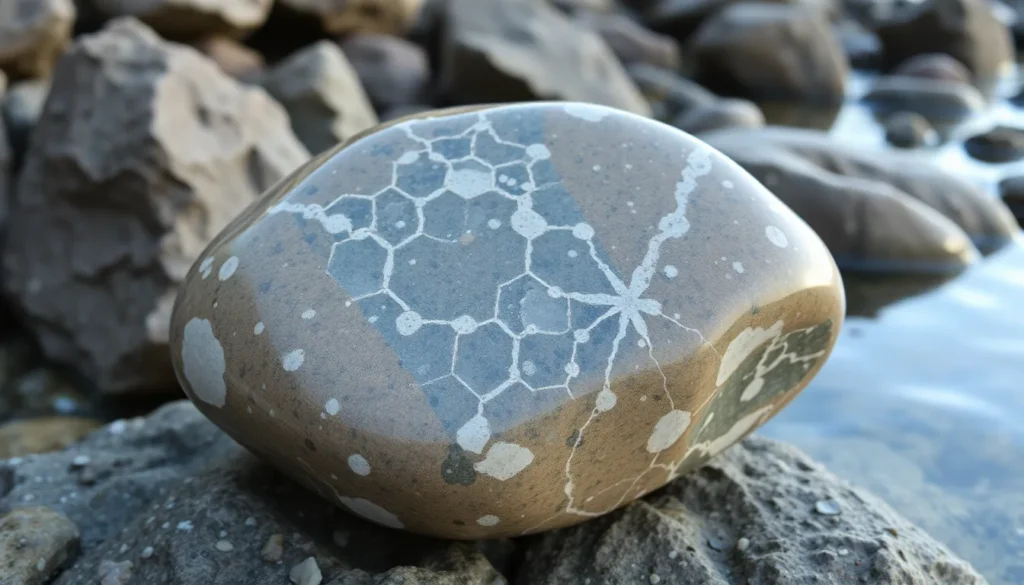
Petoskey stones are fossilized remains of a prehistoric coral species known as Hexagonaria percarinata. These stones are primarily found in the northern regions of Michigan’s Lower Peninsula, particularly along the shores of Lake Michigan. Recognized for their distinctive hexagonal patterns, Petoskey stones are often polished and used in jewelry or collected as natural curiosities. The stone is named after the city of Petoskey, Michigan, where they are commonly discovered.
Detailed Explanation
The Petoskey stone originates from fossilized rugose coral that thrived during the Devonian period, approximately 350 million years ago. The coral’s skeletal structure formed a unique six-sided pattern, which is preserved in the stone. Over time, geological processes embedded these fossil corals into limestone formations. Glacial activity during the last Ice Age further distributed these stones, depositing them along beaches and riverbeds where they are accessible today.
How It Works
Petoskey stones develop through a process of fossilization where the original coral’s calcium carbonate skeleton is gradually replaced by minerals, preserving its detailed structure. The hexagonal pattern visible on the stone’s surface represents the coral’s individual corallites, the small skeletal cups that housed the polyps. When the stone is polished, these patterns become more pronounced, revealing the intricate fossil design.
Examples
- Polished Petoskey stones used as decorative items or jewelry.
- Raw Petoskey stones collected along Lake Michigan’s shores.
- Petoskey stones displayed in geological and natural history museums.
Pros and Cons
Pros: Unique natural fossil with distinctive patterns; culturally significant as Michigan’s state stone; popular among collectors and jewelry makers.
Cons: Limited geographic availability; fragile when unpolished; over-collection can impact natural sites.
Comparison Table
| Aspect | Petoskey Stone | Coral Fossil (General) |
|---|---|---|
| Meaning | Fossilized rugose coral with hexagonal patterns unique to Michigan | Fossilized remains of various coral species worldwide, often less defined patterns |
| Formation | Devonian period, ~350 million years ago, preserved in limestone | Varies by species and location; fossilization processes differ |
| Geographic Location | Primarily northern Michigan, USA | Global distribution depending on coral species |
| Use | Collectibles, jewelry, state symbol | Scientific study, educational purposes, collectibles |
Decision Checklist
- Use this if you are interested in unique geological specimens or Michigan state symbols.
- Avoid this if you seek fossils from diverse coral species or regions outside Michigan.
- Check this first for authenticity by examining the hexagonal pattern and consulting local guidelines on stone collection.
What is the easiest way to understand Petoskey Stone?
The easiest way to understand a Petoskey stone is to view it as a fossilized coral with a distinct hexagonal pattern that results from the coral’s ancient skeletal structure, preserved over millions of years and found mainly in Michigan.
FAQ
What is a Petoskey stone made of?
A Petoskey stone is composed primarily of fossilized rugose coral, specifically the species Hexagonaria percarinata, preserved in limestone.
Where can Petoskey stones be found?
They are mainly found in the northern Lower Peninsula of Michigan, especially along Lake Michigan's shores.
Why do Petoskey stones have hexagonal patterns?
The hexagonal patterns are the preserved skeletal structures of individual coral polyps, called corallites, that formed the coral colony millions of years ago.






Leave a Reply