
Short Answer
Overview
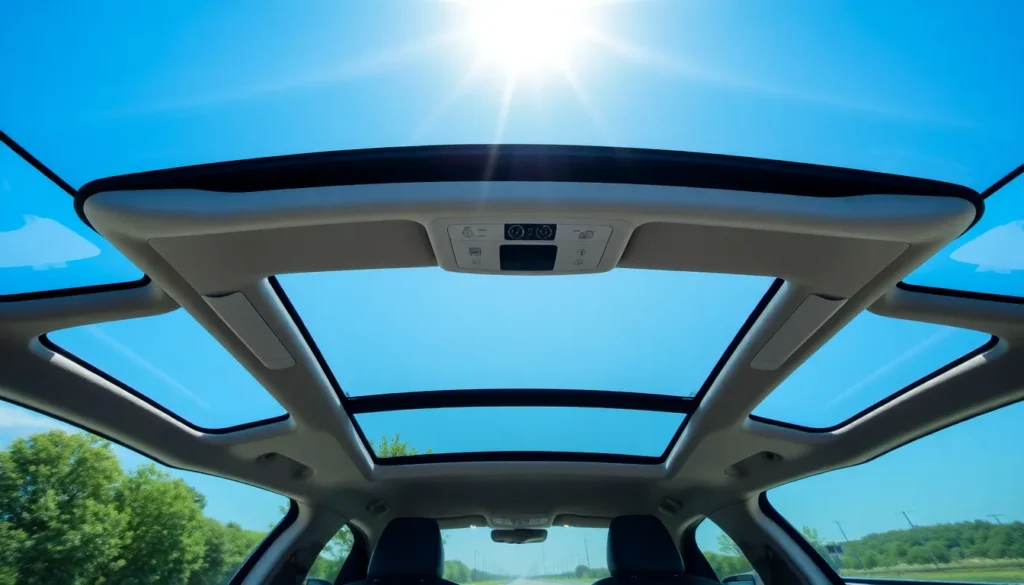
A panoramic sunroof is an automotive feature consisting of large, often multi-panel glass panels integrated into the roof of a vehicle. Unlike conventional sunroofs, which are typically smaller and cover only the front seating area, panoramic sunroofs generally extend over both the front and rear seats, providing a broader view of the sky and increased natural light inside the vehicle cabin. They can be fixed or operable, with some designs allowing one or more panels to slide open to provide ventilation and an open-air experience.
Detailed Explanation
Panoramic sunroofs are designed to enhance the interior ambiance of a vehicle by allowing more natural light to enter and offering passengers an expansive view of the outside environment. These sunroofs may consist of a single large glass panel or multiple glass sections, sometimes separated by structural supports known as crossbars. Their size and placement often extend from the windshield area to near the rear seats, depending on the vehicle’s design. This feature is found in various vehicle categories, including sedans, SUVs, and crossovers.
Manufacturers typically use tempered or laminated glass for panoramic sunroofs to ensure safety and durability. Some panoramic sunroofs are equipped with a power-operated shade or sunblind to control the amount of light entering the vehicle and to reduce heat buildup on sunny days.
How It Works
Panoramic sunroofs operate using a combination of mechanical and electrical components. Power-operated models utilize electric motors to slide the glass panels open or tilt them for ventilation. The controls are typically located on the vehicle’s overhead console or central dashboard. The glass panels are sealed with weatherstripping to prevent water ingress and minimize noise when closed.
In fixed panoramic sunroofs, the glass is permanently sealed and does not open but still allows natural light to brighten the cabin. Operable variants provide the option to tilt or slide the panels, enhancing air circulation and the open-air experience.
Examples
- Tesla Model S: Features a large fixed panoramic glass roof that extends over most of the passenger cabin.
- BMW X5: Offers an optional panoramic sunroof with two glass panels, one of which can be opened for ventilation.
- Audi Q5: Includes a panoramic sunroof option that slides open electrically and has a power sunshade.
Pros and Cons
Pros:
- Enhances natural light and visibility inside the vehicle.
- Improves passenger experience with a sense of spaciousness.
- Provides an open-air feeling when operable.
- Can increase vehicle resale value due to desirability.
Cons:
- May increase the vehicle’s overall weight, affecting fuel efficiency.
- Potential for leaks or mechanical failures over time.
- Can increase interior temperature, necessitating effective sunshades.
- Generally more expensive to repair or replace than standard roofs.
Comparison Table
| Aspect | Panoramic Sunroof | Traditional Sunroof |
|---|---|---|
| Meaning | Large glass roof panel(s) covering front and rear seats, often spanning most of the roof. | Smaller glass panel usually located above front seats, often operable. |
| Size | Significantly larger, may cover majority of roof area. | Smaller, limited to front section of roof. |
| Functionality | Often operable with sliding and tilting options; some fixed. | Usually operable with sliding or tilting. |
| Light and Visibility | Provides extensive natural light and panoramic views. | Provides limited light and view. |
| Cost | Generally more expensive to manufacture and repair. | Less expensive compared to panoramic sunroofs. |
Decision Checklist
- Use this if: You want to increase natural light and create an airy feeling inside the vehicle.
- Avoid this if: You are concerned about potential maintenance costs or interior heat buildup.
- Check this first: Ensure your vehicle’s structural design supports a panoramic sunroof and verify warranty coverage for repairs.
What is the easiest way to understand Panoramic Sunroof?
The easiest way to understand a panoramic sunroof is to think of it as a large glass roof section on a car that lets in more light and provides passengers with a broad view of the sky, much like a large window above the seats. Unlike smaller sunroofs that only open above the front seats, panoramic sunroofs span a larger area, sometimes covering almost the entire roof, enhancing the feeling of openness inside the vehicle.
FAQ
What is the difference between a panoramic sunroof and a regular sunroof?
A panoramic sunroof is much larger, often covering both the front and rear seats, while a regular sunroof is typically smaller and only covers the front seating area.
Are panoramic sunroofs safe?
Yes, panoramic sunroofs use tempered or laminated safety glass designed to withstand impacts and protect occupants in case of accidents.
Do panoramic sunroofs affect vehicle temperature?
Panoramic sunroofs can increase interior heat due to the large glass surface, but many include sunshades or tinted glass to help mitigate this effect.




Leave a Reply