
Short Answer
Overview
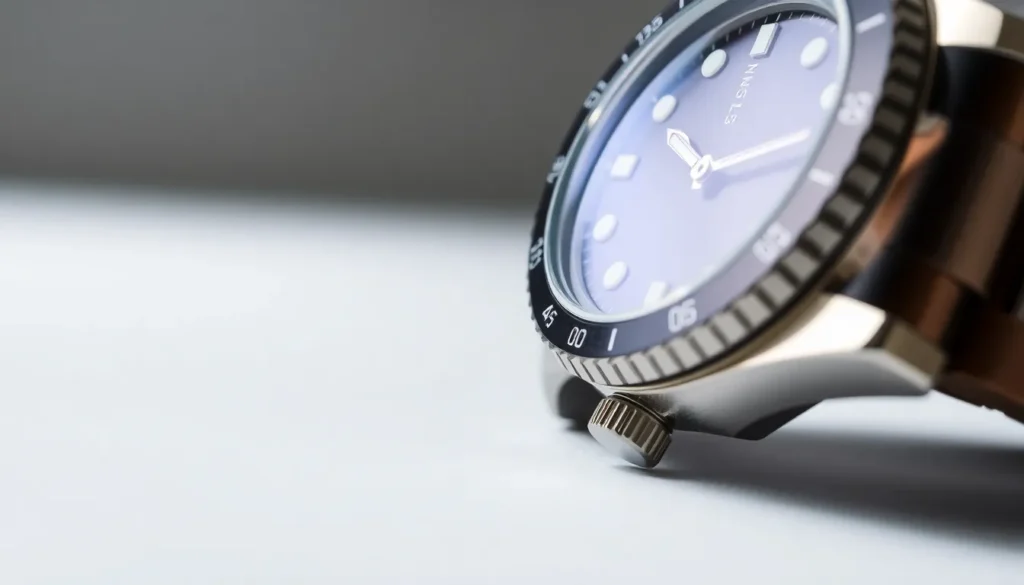
The bezel on a watch is the outer ring that encircles the watch face, commonly securing the crystal in place and often serving additional functional or decorative purposes. It is an integral component of wristwatches that contributes to the watch’s structural integrity and aesthetics. Bezels may be fixed or rotatable, and their design can vary widely depending on the watch type and intended use.
Detailed Explanation
Typically made from metals such as stainless steel, gold, or titanium, or sometimes from ceramic or other materials, the bezel forms the boundary between the watch crystal and the case. In many watches, the bezel holds the crystal firmly to protect the dial and internal components from dust, moisture, and shocks. Beyond protection, bezels often include markings or scales that provide additional functionality, such as timing elapsed minutes, measuring speed, or tracking a second time zone.
Design variations include smooth bezels, bezels with engraved or printed indices, and bezels with embedded gemstones. The bezel’s width, thickness, and texture contribute significantly to the overall look and style of the watch.
How It Works
In watches with fixed bezels, the bezel serves primarily as a structural and decorative element. In watches with rotatable bezels, such as dive watches or pilot watches, the bezel can be turned to align with the minute hand or other references to measure elapsed time or other parameters.
Rotatable bezels often feature ratcheting mechanisms to prevent accidental movement, ensuring precise timing functions. For example, a unidirectional bezel allows rotation only in one direction, typically counterclockwise, to avoid underestimating elapsed time underwater. Some watches feature bidirectional bezels for quick adjustments, such as GMT watches with 24-hour scales.
Examples
- Dive Watch Bezel: Usually unidirectional with minute markers, allowing divers to track dive duration safely.
- GMT Watch Bezel: Often bidirectional with 24-hour markings to indicate a second time zone.
- Tachymeter Bezel: Marked with a scale for measuring speed over a known distance, common in chronograph watches.
Pros and Cons
Pros:
- Provides protection to the watch crystal and internal components.
- Enhances watch functionality with timing and measurement scales.
- Contributes significantly to the watch’s aesthetic appeal and style.
Cons:
- Rotatable bezels can be susceptible to accidental movement if not properly secured.
- Bezel materials can scratch or wear over time, potentially affecting appearance.
- Complex bezel mechanisms can add to the watch’s cost and maintenance needs.
Comparison Table
| Aspect | Bezel | Crystal |
|---|---|---|
| Meaning | The outer ring encircling the watch face, often holding the crystal and providing additional functions. | The transparent cover, usually made of glass or synthetic sapphire, protecting the watch dial. |
| Function | Secures the crystal, allows timing functions (if rotatable), adds aesthetic design. | Protects the watch face from dust, moisture, and impacts. |
Decision Checklist
- Use this if you want to understand the external components of a watch and their functions.
- Avoid this if you are looking exclusively for internal watch mechanisms like the movement or escapement.
- Check this first when selecting a watch with specific functional requirements, such as a dive watch or GMT watch.
What is the easiest way to understand a bezel on a watch?
The easiest way to understand a bezel is to think of it as the watch’s outer frame around the face, which not only holds the glass in place but may also rotate to help measure elapsed time or display additional information. It is both a protective and functional ring that enhances the watch’s usability and style.
FAQ
What is the primary purpose of a bezel on a watch?
The primary purpose of a bezel is to secure the watch crystal and provide additional functions such as timing or measurement scales, depending on the watch design.
Can bezels rotate, and why is this useful?
Yes, many bezels can rotate; this feature is especially useful for functions like timing elapsed periods in diving or tracking a second time zone in GMT watches.
What materials are bezels typically made from?
Bezels are commonly made from durable metals such as stainless steel, gold, or titanium, and sometimes from ceramic or other scratch-resistant materials.





Leave a Reply