
Short Answer
Overview
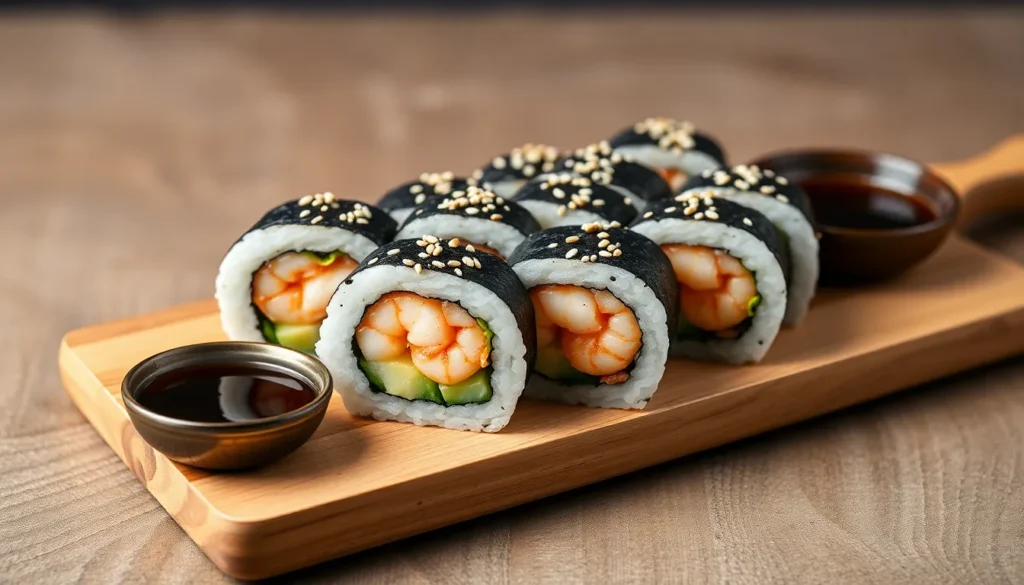
The Boston roll is a variety of sushi roll commonly found in Western sushi cuisine. Unlike traditional Japanese sushi that often features raw fish, the Boston roll typically includes cooked seafood, such as cooked shrimp or crab, combined with avocado and sometimes cucumber. It is wrapped in seaweed and sushi rice, and occasionally topped with additional ingredients like fish roe or sesame seeds. The Boston roll is appreciated for its mild, approachable flavor, making it popular among those new to sushi or those who prefer cooked ingredients.
Detailed Explanation
The Boston roll derives its name from the city of Boston, Massachusetts, where it gained popularity through sushi restaurants catering to Western tastes. The roll generally contains cooked shrimp or imitation crab meat (surimi), which is combined with fresh avocado and occasionally cucumber to provide texture and freshness. The roll is then wrapped in nori (seaweed) and sushi rice, sometimes with the rice on the outside, known as an “inside-out roll.” Some variations may include mayonnaise or spicy sauces, but these are not standard.
How It Works
Preparation of a Boston roll starts with the sushi rice, which is seasoned with rice vinegar, sugar, and salt. A bamboo mat is used to shape the roll. A sheet of nori is placed on the mat, followed by an even layer of sushi rice. The cooked seafood and avocado are placed centrally, and the roll is carefully rolled into a cylinder shape. The roll is then sliced into bite-sized pieces. The balance between the creamy avocado and the savory cooked seafood is key to the roll’s flavor profile. The use of cooked seafood makes it suitable for individuals who avoid raw fish.
Examples
- Classic Boston Roll: Contains cooked shrimp, avocado, and cucumber wrapped with sushi rice and nori, sometimes topped with tobiko (flying fish roe).
- Spicy Boston Roll: Includes cooked crab meat with a spicy mayonnaise sauce, avocado, and cucumber.
- Vegetarian Boston-Inspired Roll: A variation substituting seafood with cooked mushrooms or tofu with avocado and cucumber.
Pros and Cons
- Pros: Suitable for those who prefer cooked seafood over raw fish, mild flavor appealing to a broad audience, easy to find in many Western sushi restaurants.
- Cons: May not appeal to traditionalists seeking authentic Japanese raw fish sushi, often contains imitation crab rather than fresh seafood, can be less flavorful compared to more complex rolls.
Comparison Table
| Aspect | Boston Roll | Traditional Sushi Roll |
|---|---|---|
| Meaning | A sushi roll featuring cooked seafood and avocado, popular in Western sushi menus. | Sushi roll typically featuring raw fish and traditional Japanese ingredients. |
| Main Ingredients | Cooked shrimp or crab, avocado, cucumber, rice, nori. | Raw fish (e.g., tuna, salmon), rice, nori, sometimes vegetables. |
| Flavor Profile | Mild, creamy, and savory. | Varies widely, often more robust and fresh. |
| Target Audience | Beginners and those avoiding raw fish. | Traditional sushi enthusiasts and raw fish lovers. |
Decision Checklist
- Use this if: You prefer cooked seafood or are new to sushi.
- Avoid this if: You seek authentic Japanese raw fish sushi experience.
- Check this first: Verify seafood freshness and preparation style if dietary restrictions apply.
What is the easiest way to understand a Boston Roll?
The simplest way to understand a Boston roll is to recognize it as a Western-style sushi roll made with cooked seafood, typically shrimp or crab, combined with avocado and rice, offering a mild and accessible taste compared to traditional raw fish sushi.
FAQ
Is a Boston roll made with raw fish?
No, a Boston roll typically contains cooked seafood such as cooked shrimp or crab, making it different from sushi rolls that feature raw fish.
What ingredients are in a Boston roll?
The Boston roll usually includes cooked shrimp or crab, avocado, sometimes cucumber, sushi rice, and seaweed (nori). Some variations may include sauces or toppings like fish roe.
Why is it called a Boston roll?
The name "Boston roll" is believed to originate from Boston, Massachusetts, where the roll became popular in sushi restaurants catering to Western tastes.





Leave a Reply