
Short Answer
Overview
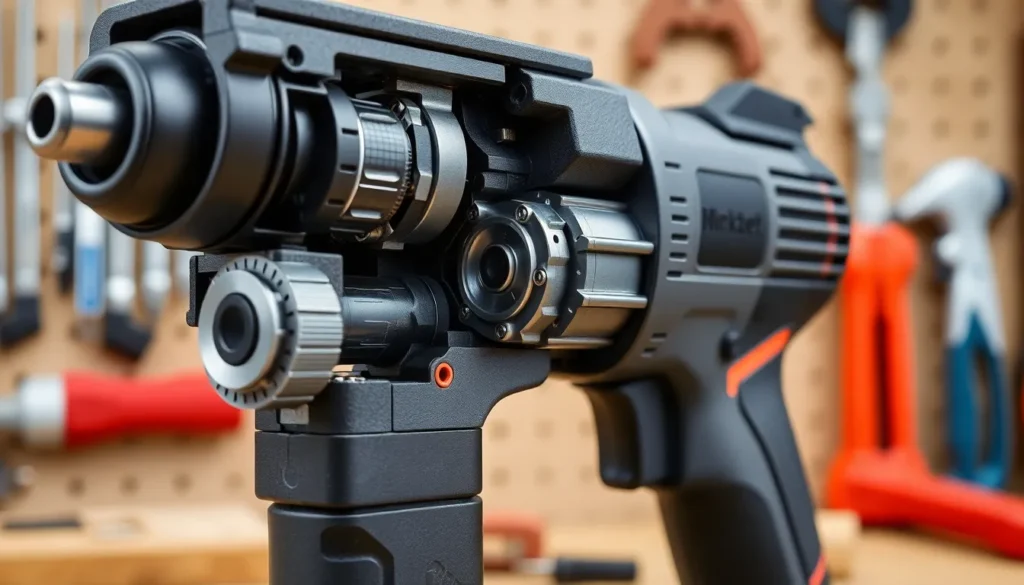
A brushless drill is a cordless or corded power tool that uses a brushless electric motor rather than a traditional brushed motor. Brushless motors eliminate the need for carbon brushes, which are components that wear out over time in brushed motors. This technological advancement results in greater efficiency, longer motor life, reduced maintenance, and often improved power output. Brushless drills are widely used in construction, woodworking, metalworking, and general household applications for drilling holes and driving screws.
Detailed Explanation
Traditional electric drills typically use brushed motors, where carbon brushes conduct electricity to the motor’s rotating armature. In contrast, a brushless drill replaces this system with electronic controllers and permanent magnets. The absence of brushes reduces friction and electrical losses, making the motor more efficient and less prone to wear. The electronic controller precisely regulates the motor’s speed and torque, enabling better performance and energy management.
Brushless drills often incorporate advanced features such as variable speed control, electronic braking, and torque settings, enhancing user control and versatility. Although they tend to have a higher initial cost compared to brushed drills, the long-term benefits include lower maintenance costs and improved reliability.
How It Works
In a brushless drill, the rotor contains permanent magnets, and the stator consists of coils that are energized in a controlled sequence by an electronic speed controller (ESC). This controller receives feedback on the rotor’s position through sensors or sensorless algorithms, adjusting the current flow to the stator coils. This precise control allows for smooth rotation without the mechanical contact points needed in brushed motors.
As a result, the brushless motor generates less heat, operates more quietly, and delivers higher torque per watt of power consumed. The improved efficiency also extends battery life in cordless models, making brushless drills preferable for extended use.
Examples
- Professional contractors often prefer brushless drills for heavy-duty applications requiring sustained torque and reliability.
- DIY enthusiasts choose brushless drills for home improvement projects due to their ease of use and longer battery life.
- Manufacturers produce a range of brushless drills with varying voltage capacities, torque ratings, and features to suit different tasks, from light drilling to fastening in dense materials.
Pros and Cons
Pros:
- Increased motor efficiency and longer battery life.
- Reduced maintenance due to the absence of brushes.
- Higher power output and torque compared to brushed motors of similar size.
- Less heat generation, which enhances durability.
- Quieter operation.
Cons:
- Generally higher upfront cost than brushed drills.
- More complex electronics that may be costly to repair.
- Some users may find the initial investment prohibitive for occasional use.
Comparison Table
| Aspect | Brushless Drill | Brushed Drill |
|---|---|---|
| Meaning | Drill powered by a brushless electric motor with electronic commutation. | Drill powered by a motor using carbon brushes for electrical contact. |
| Efficiency | Higher efficiency with less energy loss. | Lower efficiency due to friction and electrical losses in brushes. |
| Maintenance | Minimal maintenance; no brush replacement. | Requires periodic brush replacement and maintenance. |
| Durability | Longer motor lifespan. | Shorter motor lifespan due to brush wear. |
| Cost | Higher initial cost. | Lower initial cost. |
| Noise | Quieter operation. | Noisier due to brush friction. |
Decision Checklist
- Use this if you require a durable, efficient, and high-performance drill for frequent or professional use.
- Avoid this if your drilling needs are infrequent or budget constraints prioritize lower initial costs.
- Check this first if you need longer battery life and less maintenance in a cordless power tool.
What is the easiest way to understand a brushless drill?
The easiest way to understand a brushless drill is to think of it as a modern power tool motor that replaces traditional mechanical parts (brushes) with electronic components, resulting in better performance, longer life, and higher efficiency. This change means less wear and tear and more power delivered to the drill bit.
FAQ
What is the main difference between a brushless and a brushed drill?
The main difference lies in the motor design; brushless drills use electronic controls and permanent magnets to eliminate brushes, resulting in higher efficiency and less maintenance.
Are brushless drills more expensive than brushed drills?
Yes, brushless drills typically have a higher upfront cost due to their advanced motor technology, but they often provide better long-term value through durability and efficiency.
Can brushless drills be repaired if the electronics fail?
While repair is possible, brushless drills have complex electronic components that can be costly to fix; sometimes replacement is more economical depending on the extent of the damage.




Leave a Reply