
Short Answer
Overview
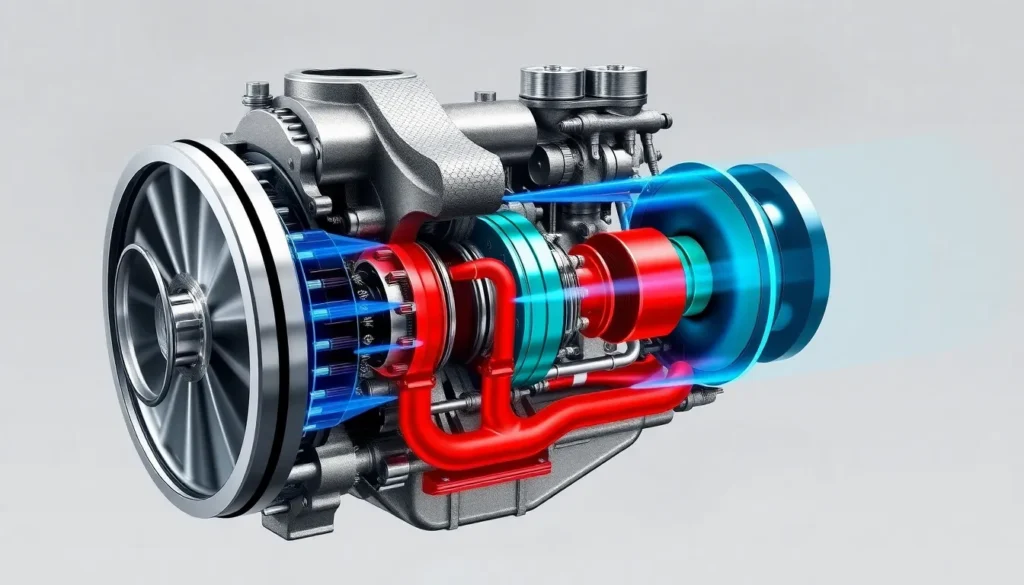
A Turbomax engine refers to an internal combustion engine equipped with turbocharging technology aimed at increasing engine efficiency and power output. The term “Turbomax” is sometimes used generically or commercially to describe engines or engine systems optimized for enhanced performance through the use of turbochargers. Turbocharging is a method where exhaust gases drive a turbine that compresses intake air, allowing more oxygen to enter the combustion chamber, leading to improved combustion and power.
Detailed Explanation
The Turbomax engine concept centers around augmenting traditional internal combustion engines by incorporating a turbocharger unit. This turbocharger consists mainly of a turbine and a compressor connected by a shaft. The exhaust gases exiting the engine spin the turbine, which in turn drives the compressor to force additional air into the engine cylinders. More air allows for more fuel to burn efficiently, increasing power without significantly increasing engine size.
In many implementations, Turbomax engines use advanced materials and cooling systems to manage the higher pressures and temperatures generated by turbocharging. They may also integrate electronic controls to optimize turbo boost pressure and fuel injection timing for different operating conditions.
How It Works
The key component of a Turbomax engine is the turbocharger. The process begins with the engine burning fuel, which produces exhaust gases expelled at high velocity. These gases enter the turbine side of the turbocharger, causing it to spin. This spinning action drives the compressor side, which draws in ambient air, compresses it, and forces it into the engine’s intake manifold at a higher pressure.
This increased air density means more oxygen molecules are available in the combustion chamber, allowing for a more powerful explosion when fuel is ignited. The result is increased engine power output and improved fuel efficiency compared to naturally aspirated engines of similar displacement.
Modern Turbomax engines often feature intercoolers that cool the compressed air before it enters the engine, improving efficiency and reducing the risk of engine knocking. Electronic control units (ECUs) may adjust boost pressure dynamically to balance performance and reliability.
Examples
- Automotive: Certain performance-oriented vehicles use engines branded or described as Turbomax to indicate the presence of turbocharging technology tailored for higher power output.
- Marine Engines: Some marine propulsion systems incorporate turbocharged diesel engines under similar designations to enhance power for vessels without increasing engine size excessively.
- Industrial Applications: Turbocharged engines labeled as Turbomax may be found in industrial equipment where power density and efficiency are critical.
Pros and Cons
- Pros: Enhanced power output without significantly increasing engine size, improved fuel efficiency, better altitude performance, and reduced emissions compared to naturally aspirated engines.
- Cons: Increased mechanical complexity, potential turbo lag, higher maintenance requirements, and increased thermal stress on engine components.
Comparison Table
| Aspect | Turbomax Engine | Naturally Aspirated Engine |
|---|---|---|
| Meaning | Internal combustion engine with turbocharger to boost air intake and power | Engine that relies on atmospheric pressure for air intake without forced induction |
| Power Output | Higher for given displacement due to forced induction | Lower, limited by atmospheric air pressure |
| Efficiency | Generally more efficient, especially at higher loads | Less efficient, particularly at higher power demands |
| Complexity | More complex with turbocharger and associated systems | Relatively simpler design |
| Maintenance | Higher due to turbocharger components | Lower maintenance requirements |
Decision Checklist
- Use this if: You require higher power output and improved fuel efficiency without increasing engine size significantly.
- Avoid this if: You prefer simpler engine designs with lower maintenance and are less concerned about maximizing power or efficiency.
- Check this first: Compatibility of turbocharging with your specific application, cooling systems, and fuel quality before opting for a Turbomax engine.
What is the easiest way to understand Turbomax Engine?
The easiest way to understand a Turbomax engine is to think of it as a conventional internal combustion engine enhanced by a turbocharger that forces more air into the engine, allowing it to burn more fuel and produce more power efficiently. It is essentially a method of boosting engine performance by improving the air intake process using exhaust energy.
FAQ
What distinguishes a Turbomax engine from other turbocharged engines?
The term 'Turbomax' is often a brand or marketing designation rather than a specific unique technology. It generally refers to engines that utilize turbocharging to enhance performance but does not imply a distinct engineering principle beyond standard turbocharging methods.
Does a Turbomax engine consume more fuel due to increased power?
While a Turbomax engine can produce more power, it often does so more efficiently than a naturally aspirated engine of similar size. Under certain conditions, fuel consumption may be lower for a given power output, but overall consumption depends on driving habits and engine tuning.
Are Turbomax engines more prone to mechanical issues?
Because of the added complexity and higher operating pressures and temperatures, Turbomax engines can have increased maintenance requirements and potential for turbocharger-related issues if not properly maintained. However, modern engineering and materials have improved reliability significantly.




Leave a Reply