
Short Answer
Overview
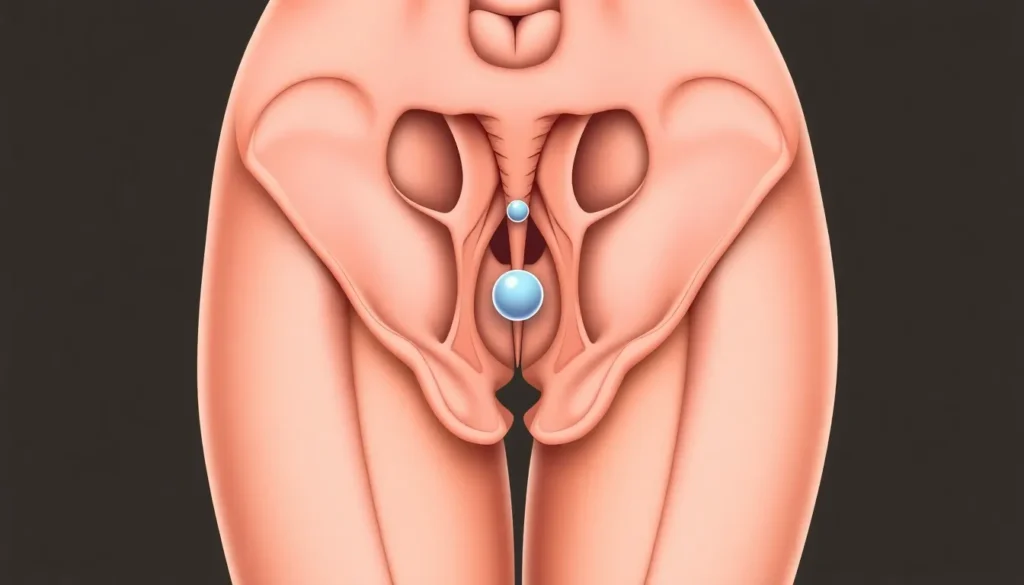
A Christina body piercing is a form of female genital piercing situated at the mons pubis, the area just above the clitoral hood where the outer labia meet. It is classified as a surface piercing because it passes through flat skin rather than through a body part like the earlobe or nostril. This piercing is primarily chosen for aesthetic reasons and personal expression rather than functional or sexual enhancement.
Detailed Explanation
The Christina piercing involves inserting jewelry through the skin at the top of the vulva, typically between the pubic mound and the outer labia. Due to its location, it requires careful consideration regarding the anatomy of the individual, as not all are suitable candidates. The piercing usually consists of a curved or straight barbell or a surface bar designed to minimize irritation and rejection. Healing time can be lengthy, often ranging from several months to a year, and the piercing is prone to migration or rejection due to the nature of the skin and movement in the area.
How It Works
The procedure for a Christina piercing is typically carried out by a professional piercer under sterile conditions. An area on the mons pubis is marked, and a needle is carefully inserted through the skin to create a channel for the jewelry. The jewelry is then inserted and secured. Due to the piercing’s surface nature, the body may recognize the jewelry as a foreign object and attempt to push it out, which can lead to rejection. Proper aftercare, including cleaning and avoiding trauma to the area, is essential for successful healing.
Examples
- A standard Christina piercing using a curved barbell positioned vertically through the mons pubis.
- Use of a surface bar designed specifically to reduce pressure and irritation on the skin surface.
- Combination of a Christina piercing with other genital piercings, such as a clitoral hood or triangle piercing, for aesthetic variation.
Pros and Cons
Pros: Provides a unique and personalized form of body modification; can enhance self-expression and body confidence; relatively discreet due to its location.
Cons: High risk of rejection or migration; long and potentially uncomfortable healing period; not suitable for all anatomies; possible complications include infection and scarring.
Comparison Table
| Aspect | Christina Body Piercing | Clitoral Hood Piercing |
|---|---|---|
| Meaning | A surface piercing located at the mons pubis for aesthetic purposes | A piercing through the fold of skin covering the clitoris, often for sexual enhancement |
| Healing Time | 6 months to 1 year | 4 to 8 weeks |
| Risk of Rejection | High due to surface piercing nature | Lower, as it passes through a fold of skin |
| Typical Jewelry | Curved or surface barbell | Captive bead ring or curved barbell |
Decision Checklist
- Use this if you want a unique genital piercing primarily for aesthetic reasons and have suitable anatomy.
- Avoid this if you have thin skin at the mons pubis or are prone to piercing rejection.
- Check this first by consulting a professional piercer to assess your anatomy and discuss risks.
What is the easiest way to understand Christina Body Piercing?
The Christina piercing is best understood as a decorative, surface-level female genital piercing placed above the clitoral area, valued for its visual appeal but requiring careful consideration due to its location and healing challenges.
FAQ
Is the Christina piercing painful?
Pain levels vary by individual but are generally described as moderate due to the thickness of the mons pubis skin and the nature of the piercing procedure.
Can everyone get a Christina piercing?
Not everyone is a suitable candidate; the piercing requires sufficient tissue and proper anatomy, which a professional piercer must assess.
How should I care for a Christina piercing?
Aftercare involves regular cleaning with saline solution, avoiding irritation from clothing, and monitoring for signs of infection or rejection.

Leave a Reply