
Short Answer
Overview
A DoD Delete is a data sanitization process designed to securely erase digital information from storage devices. It adheres to the standards established by the United States Department of Defense (DoD) to ensure that deleted data cannot be recovered by any known methods. This technique is commonly used to protect sensitive information and to comply with various data privacy and security regulations.
Detailed Explanation
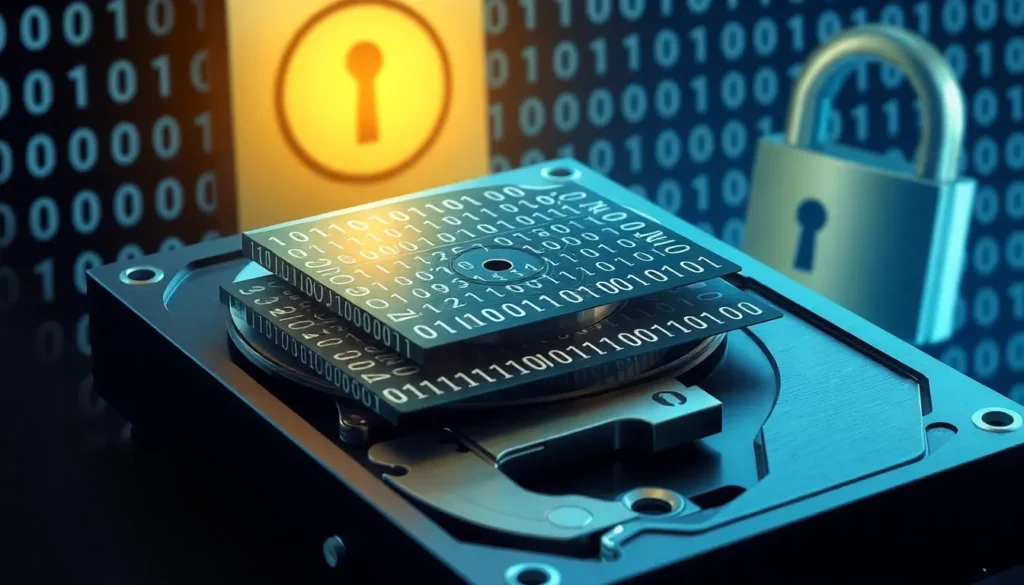
The term “DoD Delete” originates from the data wiping procedures outlined in the DoD 5220.22-M standard, which describes a specific method for overwriting data on hard drives and other storage media. The process involves multiple passes of writing patterns of zeros, ones, and random data over the entire storage area. This overwriting approach makes it extremely difficult—if not impossible—for data recovery tools to reconstruct the original information.
While the original DoD 5220.22-M standard was primarily intended for magnetic hard drives, its principles have been adapted for use with various storage technologies. However, with the advent of solid-state drives (SSDs) and other flash-based storage, the effectiveness of traditional DoD Delete methods has been subject to debate due to differences in how data is physically stored and managed.
How It Works
The DoD Delete procedure typically involves the following steps:
- First Pass: Overwrite all addressable locations on the disk with a specific pattern of zeros (0x00).
- Second Pass: Overwrite all locations with a pattern of ones (0xFF).
- Third Pass: Overwrite all locations with random data.
- Verification: Optionally, the overwritten data is verified to ensure the overwrite was successful.
These multiple passes reduce the likelihood that any residual magnetic or electronic traces of the original data remain. The exact number of passes and patterns can vary depending on specific implementations or updated standards.
Examples
- Military Data Disposal: Government agencies use DoD Delete methods to securely erase classified or sensitive data on computers before disposal or reuse.
- Corporate Security: Businesses may apply DoD Delete standards to remove confidential customer or employee information from hard drives to comply with data protection laws.
- Data Destruction Software: Many commercial and open-source software utilities offer “DoD Delete” options to users who want to securely erase files or entire drives.
Pros and Cons
- Pros:
- Widely recognized and trusted standard for secure data deletion.
- Provides a high level of assurance that data cannot be recovered.
- Relatively easy to implement on traditional hard drives.
- Cons:
- Time-consuming due to multiple overwrite passes.
- Less effective or impractical for solid-state drives due to wear-leveling and data remapping.
- May not comply with newer or more stringent data destruction standards.
Comparison Table
| Aspect | DoD Delete | Alternative/Related Topic (e.g., Secure Erase) |
|---|---|---|
| Meaning | A multi-pass data overwrite method based on DoD 5220.22-M standard. | A command or process that uses hardware-level erase commands, often designed for SSDs. |
| Target Devices | Primarily traditional magnetic hard drives. | Both SSDs and HDDs, with hardware-specific implementations. |
| Effectiveness | High for HDDs; limited for SSDs. | Generally effective for SSDs when supported. |
| Speed | Relatively slow due to multiple overwrite passes. | Usually faster, as it uses firmware commands. |
Decision Checklist
- Use this if: You need to securely erase data from traditional magnetic hard drives with assurance of compliance to recognized standards.
- Avoid this if: You are working with SSDs or flash storage where DoD Delete may not fully eliminate data due to underlying hardware characteristics.
- Check this first: The type of storage device and whether the erasure method meets your security or regulatory requirements.
What is the easiest way to understand DoD Delete?
The easiest way to understand a DoD Delete is to think of it as repeatedly painting over a wall with different colors so thoroughly that no trace of the original paint remains. In digital terms, it means overwriting the storage space with multiple patterns of data to make recovering the original information nearly impossible.
FAQ
What is the main purpose of a DoD Delete?
The main purpose of a DoD Delete is to securely erase data from storage devices to prevent any possibility of data recovery by overwriting the storage multiple times with specific data patterns.
Is DoD Delete effective on all types of storage devices?
DoD Delete is most effective on traditional magnetic hard drives but is less effective on solid-state drives due to their different data management technologies such as wear-leveling.
How long does the DoD Delete process take?
The process duration depends on the size of the storage device and the number of overwrite passes, but it typically takes significantly longer than simple deletion due to multiple overwrite cycles.



Leave a Reply