
Short Answer
Overview
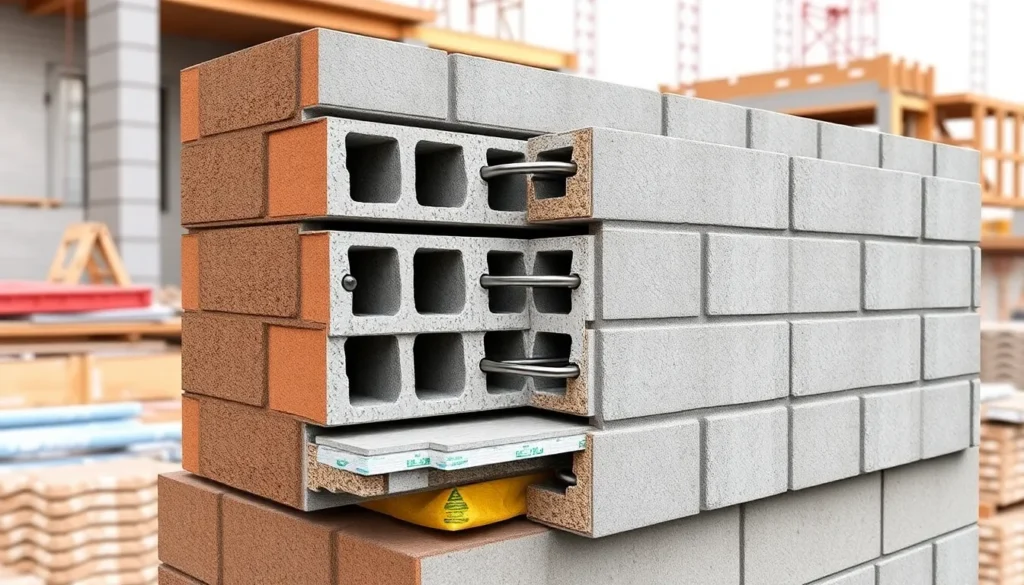
A CMU wall refers to a wall built using concrete masonry units (CMUs), which are standardized rectangular blocks made from concrete. These units are commonly used in building construction due to their structural integrity, cost-effectiveness, and ease of installation. CMU walls can serve various functions including load-bearing walls, partition walls, retaining walls, and exterior cladding.
Detailed Explanation
Concrete masonry units are manufactured from a mixture of cement, aggregates, and water, molded into block shapes that typically measure 8 x 8 x 16 inches, though sizes can vary. CMU walls are assembled by stacking these blocks in courses, often bonded together with mortar. The blocks may be solid or hollow, with hollow cores that can be filled with reinforcing materials such as steel rebar and grout for enhanced strength.
CMU walls are known for their resistance to fire, pests, and moisture, making them suitable for a variety of environments. They also provide good thermal mass, which can help regulate indoor temperatures. Additionally, CMU construction allows for flexibility in design, including the ability to incorporate insulation or finish materials for aesthetic and performance improvement.
How It Works
The construction of a CMU wall involves laying concrete blocks in a running bond pattern or other configurations, with mortar joints between each block. The mortar acts as a bonding agent, ensuring the integrity and stability of the wall. For load-bearing walls, steel reinforcement bars may be placed vertically or horizontally within the hollow cores of the blocks, then filled with grout to create a reinforced concrete structure.
This combination of concrete blocks, mortar, reinforcement, and grout creates a wall system that can support structural loads, resist lateral forces such as wind or seismic activity, and provide a durable barrier against environmental elements.
Examples
- Residential basement walls constructed with CMUs provide strong foundation support and moisture resistance.
- Commercial buildings often use CMU walls for exterior façades due to their fire resistance and durability.
- Retaining walls built with CMUs effectively support soil and landscape features in civil engineering projects.
Why It Matters
CMU walls are significant in the construction industry because they offer a balance of strength, durability, and cost efficiency. Their fire resistance and structural capabilities contribute to safer buildings. Moreover, CMU walls can be adapted for various architectural styles and performance requirements, making them a versatile choice for builders and architects worldwide.
Common Misconceptions
Misconception: CMU walls are only used for industrial or unattractive buildings.
Correction: CMU walls can be finished with various materials such as stucco, brick veneer, or paint, allowing for aesthetically pleasing designs suitable for many building types.
Misconception: CMU walls are weak compared to other masonry materials.
Correction: When properly reinforced and constructed, CMU walls provide strong load-bearing capacity and durability comparable to or exceeding other masonry options.
Pros and Cons
Comparison Table
| Aspect | CMU Wall | Brick Wall |
|---|---|---|
| Meaning | Wall built from concrete masonry units (blocks) | Wall constructed using fired clay bricks |
| Material | Concrete, aggregates, cement | Clay or shale |
| Strength | High, especially when reinforced | Moderate to high |
| Fire Resistance | Excellent | Good |
| Cost | Generally lower | Typically higher |
| Appearance | Requires finishing for aesthetics | Often finished and decorative |
Decision Checklist
- Use this if: You need a strong, fire-resistant wall that is cost-effective and adaptable.
- Avoid this if: You require a highly decorative wall without additional finishing or insulation.
- Check this first: Local building codes, structural requirements, and insulation needs.
What is the easiest way to understand a CMU wall?
Think of a CMU wall as a structure built from large, hollow concrete blocks stacked and bonded with mortar, which can be reinforced to create a durable and fire-resistant wall used widely in construction for both structural and non-structural purposes.
FAQ
What does CMU stand for?
CMU stands for Concrete Masonry Unit, which is a standard size concrete block used in building construction.
Are CMU walls load-bearing?
Yes, CMU walls can be designed to be load-bearing and support structural loads when properly reinforced and constructed.
Can CMU walls be insulated?
Yes, insulation can be added within the hollow cores of CMU blocks or applied on the exterior or interior surfaces to improve thermal performance.





Leave a Reply