
Short Answer
Overview
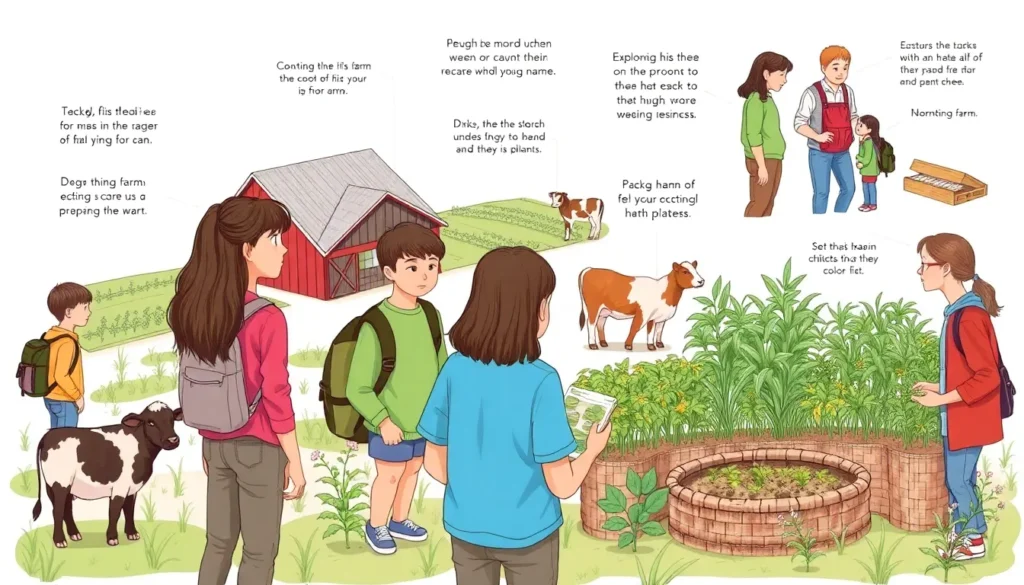
An Exploratory SAE (Supervised Agricultural Experience) is an educational component within agricultural education programs aimed at providing students with opportunities to investigate and learn about a variety of agricultural careers and areas. Unlike other types of SAE projects that focus on skill development or entrepreneurship, the exploratory SAE is designed primarily for investigation and discovery. It is often the starting point for students new to agricultural education, allowing them to gain knowledge about different agricultural fields before specializing.
Detailed Explanation
Exploratory SAEs serve as introductory experiences where students engage in activities that expose them to the breadth of agriculture-related occupations and subjects. These projects typically involve research, observation, and short-duration activities rather than long-term hands-on work. The goal is to help students identify interests and potential career paths in agriculture, ranging from plant and animal sciences to agribusiness, environmental science, and agricultural mechanics.
Such SAEs are often part of secondary education agricultural programs and are closely associated with organizations like the National FFA Organization in the United States. Through exploratory SAEs, students may participate in job shadowing, attend agricultural workshops, visit farms or agribusinesses, or conduct studies on agricultural topics.
How It Works
An exploratory SAE typically begins with a student selecting a topic or area of agriculture they wish to learn more about. Under the guidance of an agricultural educator or mentor, the student plans activities that allow them to observe, research, and explore that area. These activities are supervised and documented to demonstrate learning and progress.
Examples of activities within an exploratory SAE include interviewing professionals, attending field trips, conducting experiments, or analyzing agricultural data. The student keeps records of their experiences, reflections, and findings, which help form the foundation for future, more focused SAEs.
Examples
- Job shadowing a local veterinarian to learn about animal health careers.
- Researching different types of crops grown in a region and presenting findings on their uses and economic importance.
- Visiting an agricultural equipment dealership to understand the role of mechanics in farming operations.
- Participating in a workshop on sustainable farming practices and summarizing key concepts learned.
- Exploring the role of agribusiness through interviews with local farm supply store managers.
Pros and Cons
Pros:
- Allows students to explore a wide variety of agricultural careers and interests without commitment to one area.
- Provides foundational knowledge that supports informed decision-making about future agricultural education and career paths.
- Encourages engagement and motivation by offering hands-on and observational learning experiences.
Cons:
- May lack depth compared to focused SAEs, providing only an overview rather than comprehensive skill development.
- Depending on the quality of mentorship and resources, students may have uneven experiences.
- Limited hands-on involvement might reduce retention of complex concepts.
Comparison Table
| Aspect | Exploratory SAE | Focused SAE |
|---|---|---|
| Meaning | An introductory supervised experience to explore agricultural topics broadly. | A specialized project aimed at developing specific agricultural skills or knowledge over time. |
| Duration | Short-term, often a few weeks or months. | Long-term, often spanning several months to years. |
| Objective | Exploration and discovery of interests in agriculture. | Skill development or entrepreneurship in a specific agricultural area. |
| Student Involvement | Primarily observational and research-based activities. | Hands-on work and project management. |
Decision Checklist
- Use this if you are new to agricultural education and want to explore different fields before committing.
- Avoid this if you have already identified a specific agricultural interest and want to develop skills deeply.
- Check this first if you have access to mentors and resources that can provide a broad range of experiences.
What is the easiest way to understand Exploratory SAE?
The easiest way to understand an Exploratory SAE is to think of it as a guided educational journey where students try out different aspects of agriculture to see what interests them most before investing time and effort into a specialized project. It functions like a career exploration tool within agricultural education.
FAQ
What is the main goal of an Exploratory SAE?
The main goal is to provide students with opportunities to explore various agricultural fields and careers to inform their future educational and career choices.
How long does an Exploratory SAE usually last?
Exploratory SAEs are generally short-term, lasting from a few weeks up to several months, depending on the program and activities involved.
Can an Exploratory SAE lead to other types of SAEs?
Yes, an exploratory SAE often serves as a foundation for students to identify interests that lead to more focused or entrepreneurial SAEs.






Leave a Reply