
Short Answer
Overview
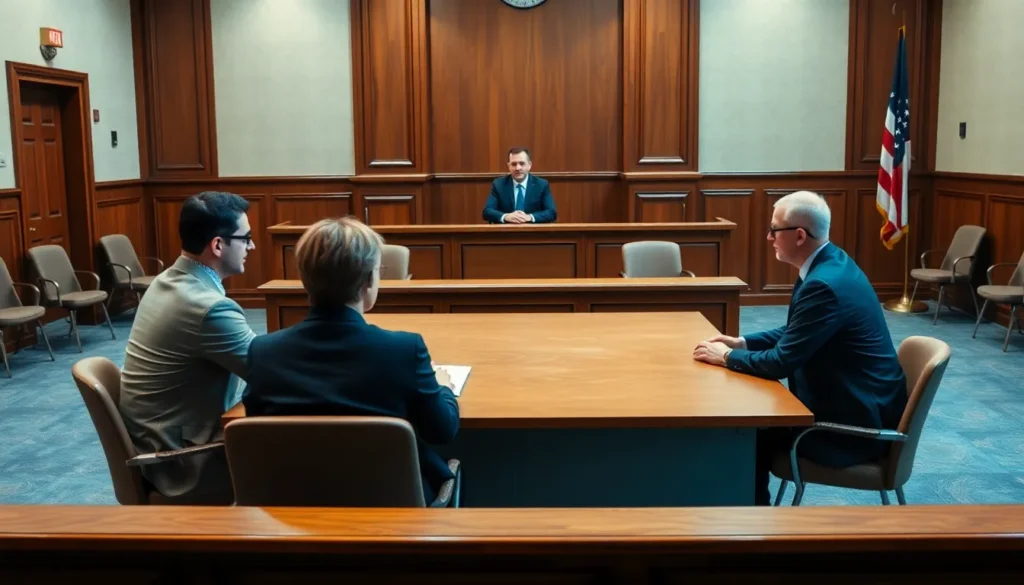
A conciliation hearing is a procedural meeting designed to assist parties in resolving disputes through negotiation and mutual agreement. It typically involves a neutral third party, known as a conciliator, who facilitates communication and encourages settlement without the need for formal litigation or trial. Conciliation hearings are commonly used in employment, consumer, family, and civil disputes to provide a less adversarial and more cost-effective resolution process.
Detailed Explanation
Conciliation hearings are part of alternative dispute resolution (ADR) mechanisms. Unlike arbitration or court trials, conciliation focuses on collaboration rather than adjudication. The conciliator does not impose a decision but helps parties understand each other’s positions, clarify issues, and explore possible compromises. This process is voluntary and confidential in most jurisdictions, fostering an environment where parties can speak openly and work towards an amicable settlement.
In many legal systems, conciliation hearings are a mandatory or encouraged step before certain disputes proceed to litigation. The objective is to reduce the burden on courts and provide faster, less formal resolution opportunities. Conciliation can occur at various stages, from pre-litigation to post-filing dispute management.
How It Works
The process of a conciliation hearing typically involves the following steps:
- Initiation: One or both parties request a conciliation hearing, or it is mandated by a court or tribunal.
- Appointment of Conciliator: A neutral conciliator is appointed to oversee the hearing.
- Preparation: Parties prepare their statements, evidence, and desired outcomes.
- Hearing: During the hearing, the conciliator facilitates dialogue, encourages understanding, and helps identify common ground.
- Negotiation: The parties negotiate terms of settlement, often with the conciliator proposing possible solutions or compromises.
- Agreement or Impasse: The hearing concludes with either a formal agreement or a decision to proceed to further legal action if no settlement is reached.
Conciliation hearings are usually less formal than court proceedings, and rules of evidence may be relaxed, allowing for greater flexibility in discussions.
Examples
- Employment Dispute: An employee alleges unfair dismissal. Before filing a lawsuit, the employer and employee attend a conciliation hearing to negotiate severance, references, or reinstatement.
- Consumer Complaint: A consumer claims a faulty product. The manufacturer and consumer meet with a conciliator to agree on a refund or replacement without court involvement.
- Family Law: Separating spouses use conciliation hearings to resolve child custody or property disputes amicably before court proceedings.
Pros and Cons
Pros:
- Cost-effective compared to litigation.
- Faster resolution of disputes.
- Confidential and less adversarial environment.
- Preserves relationships by encouraging cooperation.
- Flexible procedures tailored to parties’ needs.
Cons:
- No guaranteed resolution; parties may still proceed to trial.
- Success depends heavily on parties’ willingness to cooperate.
- Conciliator has no power to enforce agreements.
- May be seen as less formal or authoritative.
- Not suitable for all types of disputes (e.g., criminal cases).
Comparison Table
| Aspect | Conciliation Hearing | Mediation |
|---|---|---|
| Meaning | A facilitated meeting with a neutral conciliator to resolve disputes through negotiation. | A facilitated negotiation process with a neutral mediator helping parties reach agreement. |
| Role of Third Party | Conciliator may suggest solutions and provide advice. | Mediator facilitates discussion but does not suggest outcomes. |
| Formality | Less formal, sometimes mandated by courts. | Informal and voluntary. |
| Outcome | Settlement agreement or escalation to litigation. | Settlement agreement or no resolution. |
Decision Checklist
- Use this if: You want to resolve a dispute quickly and amicably without formal court procedures.
- Avoid this if: The dispute involves criminal matters or parties are unwilling to negotiate.
- Check this first: Whether conciliation is mandatory or recommended for your type of dispute and local jurisdiction rules.
What is the easiest way to understand a Conciliation Hearing?
Think of a conciliation hearing as a structured conversation guided by a neutral expert whose job is to help both sides talk openly, identify the real issues, and find a middle ground that avoids going to court.
FAQ
Is a conciliation hearing legally binding?
A conciliation hearing itself is not binding; however, if parties reach an agreement, they can formalize it into a legally binding contract.
How is a conciliator different from a judge?
A conciliator facilitates negotiation and helps parties reach a voluntary agreement, whereas a judge makes binding decisions based on legal rules.
Can a conciliation hearing be used in criminal cases?
Conciliation hearings are generally not used in criminal cases; they are primarily for civil and administrative disputes.





Leave a Reply