
Short Answer
Overview
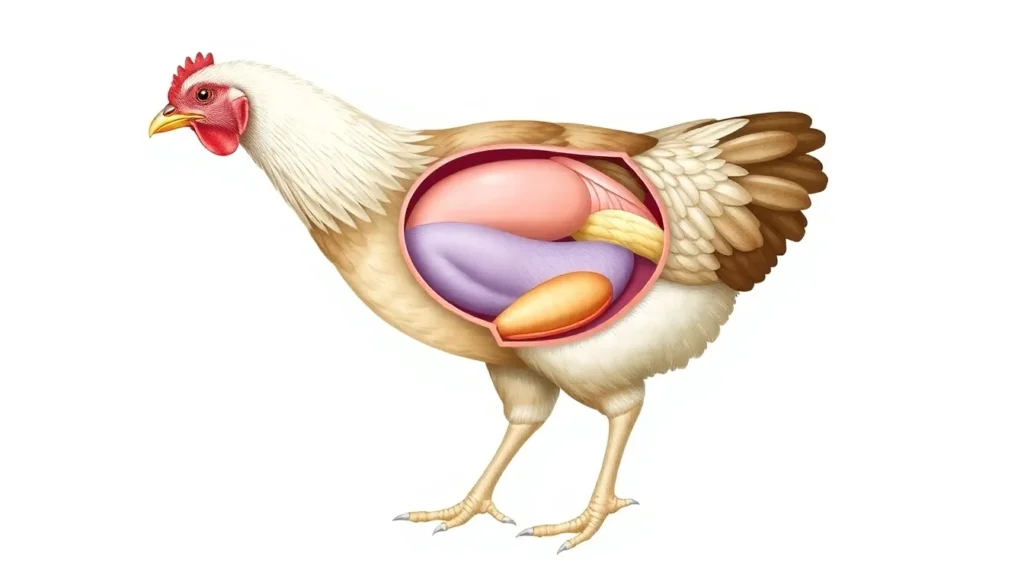
The chicken crop is a specialized anatomical structure found in the digestive system of chickens and many other bird species. Positioned as a muscular pouch located at the base of the bird’s neck, the crop serves primarily as a temporary storage site for ingested food. This unique organ allows birds to consume food rapidly and store it temporarily before passing it gradually through the digestive tract for processing. The crop’s function is essential for efficient digestion and for managing food intake during periods when birds may need to eat quickly, such as when foraging in risky environments.
Detailed Explanation
Structurally, the crop is an enlargement of the esophagus, which is the tube connecting the mouth to the stomach. Unlike mammals, birds have evolved this pouch to accommodate their specific feeding behaviors and digestive needs. The crop’s lining is moist and thin, facilitating the softening of food before it enters the stomach. In some bird species, the crop can also be involved in producing “crop milk,” a nutrient-rich secretion used to feed chicks, though this is not characteristic of chickens.
How It Works
When a chicken swallows food, it first passes down the esophagus and enters the crop, where it is stored temporarily. The crop expands to hold varying amounts of food. Once the bird is at rest or in a safe environment, the muscles of the crop contract to gradually move the food into the proventriculus, which is the glandular stomach, followed by the gizzard for further digestion. This staged process allows for controlled digestion and ensures that the bird does not need to continuously forage while digesting food.
Examples
- Rapid Feeding: Chickens often eat quickly when food is available and store it in the crop to digest later, especially in environments where they may be vulnerable to predators.
- Crop Milk Production in Pigeons: While not typical of chickens, pigeons produce a secretion known as crop milk from the lining of their crop to feed their young, illustrating the organ’s diverse potential functions among bird species.
- Crop Impaction: Occasionally, chickens may experience crop impaction, a condition where food becomes stuck in the crop, which can be detrimental if not treated promptly.
Why It Matters
The crop is vital for a chicken’s survival and overall health. By allowing temporary storage of food, it enables chickens to eat quickly and digest food efficiently, which can be critical in the wild or in free-range environments. Additionally, understanding the crop’s function is important for poultry management and veterinary care, as health issues related to the crop can impact the welfare and productivity of chickens.
Common Misconceptions
Misconception: The crop is a part of the chicken’s stomach.
Correction: The crop is an extension of the esophagus, not the stomach, and primarily serves as a storage pouch before food reaches the stomach.
Misconception: All birds produce crop milk.
Correction: Only certain bird species, such as pigeons and doves, produce crop milk. Chickens do not have this capability.
Pros and Cons
Pros: The crop allows chickens to quickly gather food and store it safely, facilitating digestion at opportune times and reducing vulnerability to predators during feeding.
Cons: The crop can be susceptible to health issues such as impaction or infections, which can impair digestion and overall health if not addressed.
Comparison Table
| Aspect | Chicken Crop | Alternative/Related Topic: Mammalian Stomach |
|---|---|---|
| Meaning | Muscular pouch in the esophagus used for temporary food storage before digestion. | Primary digestive organ where food is broken down using acids and enzymes. |
| Location | Base of the neck, part of the esophagus. | Abdominal cavity, part of the digestive tract. |
| Function | Temporary storage and softening of food. | Digestion and nutrient absorption. |
| Presence | Found in birds and some other animals. | Found in mammals. |
Decision Checklist
What is the easiest way to understand a Chicken Crop?
The easiest way to understand a chicken crop is to think of it as a food storage pouch that allows birds to quickly collect food and hold it temporarily before digestion. This adaptation helps them manage feeding efficiently and safely in their environment.
FAQ
What is the function of a chicken's crop?
The crop serves as a temporary storage pouch for food, allowing chickens to eat quickly and digest food gradually.
Do all birds have a crop?
No, not all birds have a crop, but many species, including chickens, have this specialized structure.
Can a chicken's crop cause health problems?
Yes, conditions such as crop impaction or infections can occur, which may require veterinary care.


Leave a Reply