

Short Answer
Overview
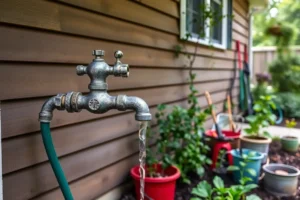
A hose bib, also known as a spigot or sillcock, is a type of outdoor faucet designed to provide water access outside residential or commercial buildings. It is typically installed on exterior walls and is used to connect garden hoses or other watering devices. Hose bibs allow users to conveniently control water flow for various outdoor activities such as gardening, car washing, or filling pools.
Detailed Explanation
Hose bibs are commonly constructed of durable materials such as brass, stainless steel, or plastic to withstand outdoor conditions. They feature a valve mechanism that can be turned on or off with a handle or lever, allowing the user to regulate water flow. The spout of a hose bib is threaded, usually with a standard garden hose thread (GHT), enabling secure attachment of hoses. Some hose bibs also include a vacuum breaker or backflow preventer to protect potable water supplies from contamination.
How It Works
The hose bib connects to the building’s internal plumbing system, typically supplying cold water. When the valve handle is turned, it opens the internal valve, allowing water to flow out of the spout. The threaded spout then permits a garden hose to be screwed on tightly, ensuring a leak-free connection. Closing the valve stops water flow, and many hose bibs are designed to be frost-resistant to prevent freezing in colder climates. Frost-proof hose bibs extend the valve mechanism further into the heated interior of the building to reduce the risk of pipe bursts.
Examples
- Standard hose bibs installed on residential homes for garden irrigation and outdoor cleaning.
- Frost-proof hose bibs used in regions with cold winters to prevent freezing and damage.
- Hose bibs with integrated backflow preventers to comply with local plumbing codes and safeguard water quality.
Pros and Cons
- Pros: Provides convenient outdoor water access; easy to connect and disconnect hoses; available in frost-proof designs; durable materials increase longevity.
- Cons: Vulnerable to freezing if not frost-proof; potential for leaks if connections are not tight; outdoor exposure may lead to wear or corrosion over time.
Comparison Table
| Aspect | Hose Bib | Indoor Faucet |
|---|---|---|
| Meaning | Outdoor faucet designed for hose attachment. | Indoor fixture for sink or basin water supply. |
| Location | Exterior walls or outdoor areas. | Inside buildings, kitchens, bathrooms. |
| Design | Often includes threaded spout for hoses, sometimes frost-proof. | Typically designed for direct use without hose connection. |
Decision Checklist
- Use this if you need reliable outdoor water access for garden hoses or irrigation.
- Avoid this if you require water access only indoors or in areas prone to freezing without proper frost-proofing.
- Check this first for frost-proof features if installed in cold climates and ensure compliance with local plumbing codes regarding backflow prevention.
What is the easiest way to understand a Hose Bib?
A hose bib is essentially an outdoor faucet with a threaded nozzle designed to attach a garden hose, allowing easy access to water outside a building for watering plants, washing, or other outdoor uses.
FAQ
What is the difference between a hose bib and an outdoor faucet?
The terms hose bib and outdoor faucet are often used interchangeably. Both refer to a valve installed on the exterior of a building to provide water access, typically featuring a threaded spout for hose attachment.
How does a frost-proof hose bib work?
A frost-proof hose bib has an extended valve mechanism that places the valve inside the heated interior of the building, preventing water from freezing in the exposed pipe section during cold weather.
Can I leave a hose connected to a hose bib during winter?
It is generally recommended to disconnect hoses during winter to prevent water from being trapped in the pipe, which can freeze and cause pipe damage, even if the hose bib is frost-proof.




Leave a Reply