
Short Answer
Overview
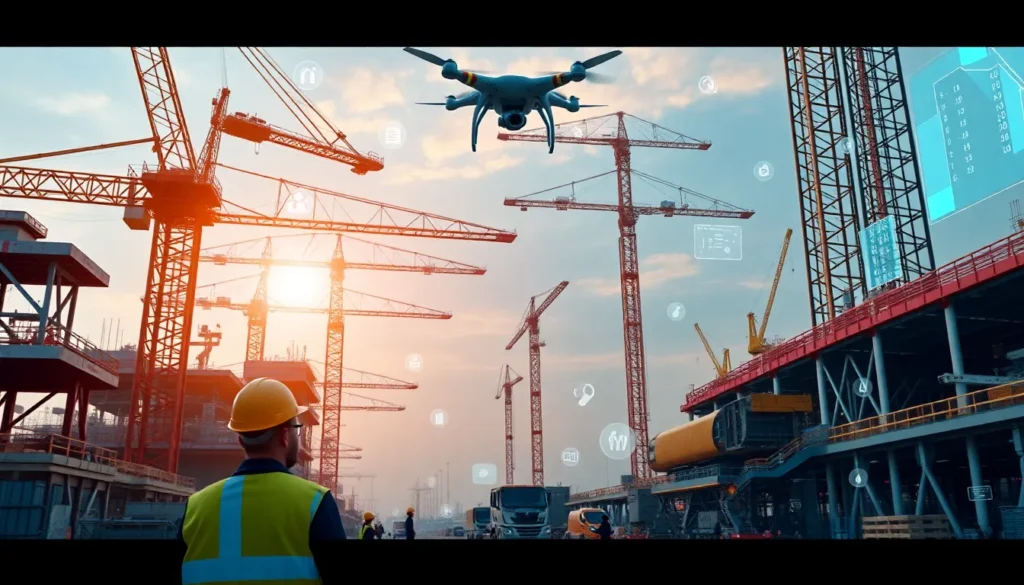
A smart construction site refers to a construction environment that incorporates digital technologies, sensors, automation, and data analytics to enhance the planning, execution, and monitoring of construction projects. Unlike traditional construction sites, smart sites leverage interconnected devices and software to improve operational efficiency, safety, communication, and resource management. The integration of technologies such as the Internet of Things (IoT), Building Information Modeling (BIM), drones, and artificial intelligence (AI) enables real-time data collection and informed decision-making throughout the construction process.
Detailed Explanation
Smart construction sites employ various technological innovations to transform traditional construction processes. Sensors can be embedded in machinery, materials, and workers’ equipment to track location, usage, and environmental conditions. Data collected from these sensors is transmitted to centralized platforms where it is analyzed to detect inefficiencies, predict maintenance needs, and enhance safety protocols. This approach facilitates better coordination among contractors, engineers, and project managers, reducing delays and cost overruns.
Key components often include wearable technology for worker safety, automated machinery for repetitive tasks, and cloud-based project management tools. These elements work together to provide a comprehensive view of site operations and help optimize resource allocation.
How It Works
Smart construction sites function through the integration of hardware and software systems that continuously collect and process data. IoT devices such as GPS trackers, RFID tags, and environmental sensors monitor equipment status, material inventory, weather conditions, and worker location. This data is transmitted wirelessly to a central management platform that uses analytics and AI to generate actionable insights.
For example, if sensors detect that a piece of equipment requires maintenance, the system can notify the maintenance team to prevent breakdowns. Similarly, real-time tracking of materials ensures timely delivery and reduces waste. Communication tools integrated into the platform allow stakeholders to collaborate efficiently, addressing issues promptly and maintaining project timelines.
Examples
- Drones: Used for aerial site surveys, progress monitoring, and safety inspections, drones provide high-resolution images and data without requiring manual site visits.
- Wearable Devices: Smart helmets and vests equipped with sensors monitor worker health metrics, detect hazardous conditions, and improve safety compliance.
- Automated Equipment: Robotics and autonomous machinery can perform tasks such as bricklaying or excavation with greater precision and consistency.
Why It Matters
The adoption of smart construction sites addresses several challenges inherent in traditional construction, including delays, cost overruns, and safety risks. By enabling real-time monitoring and predictive analytics, smart sites help reduce waste, improve resource management, and enhance worker safety. This leads to more sustainable construction practices and better project outcomes. Furthermore, smart construction technologies support compliance with regulatory requirements and facilitate transparent reporting, which is increasingly demanded by stakeholders and clients.
Common Misconceptions
Misconception: Smart construction sites are only for large-scale projects.
Correction: While large projects often benefit significantly, many smart construction technologies can be scaled and adapted for smaller projects as well.
Misconception: Implementing smart construction technologies is prohibitively expensive.
Correction: Although initial investments may be required, long-term savings in efficiency, safety, and resource management can offset costs.
Pros and Cons
Comparison Table
| Aspect | Smart Construction Site | Traditional Construction Site |
|---|---|---|
| Meaning | Construction site using integrated digital technologies for enhanced operations | Construction site relying on manual processes and limited technology |
| Data Usage | Real-time data collection and analytics | Minimal or delayed data collection |
| Safety Monitoring | Wearables and sensors for proactive safety management | Periodic manual safety checks |
| Communication | Cloud-based, instant communication among stakeholders | Face-to-face or phone-based communication with delays |
| Equipment | Automated and connected machinery | Manual or semi-automated machinery |
Decision Checklist
- Use this if: Your project requires enhanced efficiency, safety monitoring, and real-time data tracking.
- Avoid this if: Your project lacks technical infrastructure or personnel trained for smart technologies.
- Check this first: Assess the cost-benefit ratio and readiness of your workforce for adopting digital tools.
What is the easiest way to understand a Smart Construction Site?
The simplest way to understand a smart construction site is to think of it as a traditional construction site enhanced with digital tools and connected devices that communicate with each other to make construction safer, faster, and more efficient through real-time monitoring and automated processes.
FAQ
What technologies are commonly used on a smart construction site?
Common technologies include IoT sensors, drones, Building Information Modeling (BIM), wearable safety devices, automated machinery, and cloud-based project management software.
How does a smart construction site improve safety?
By using wearable devices and sensors to monitor worker health and environmental hazards in real-time, smart sites can proactively address risks and reduce accidents.
Are smart construction sites suitable for small projects?
Yes, many smart construction technologies can be scaled to fit smaller projects, although the benefits may be more pronounced in larger or more complex projects.






Leave a Reply