
Short Answer
Overview
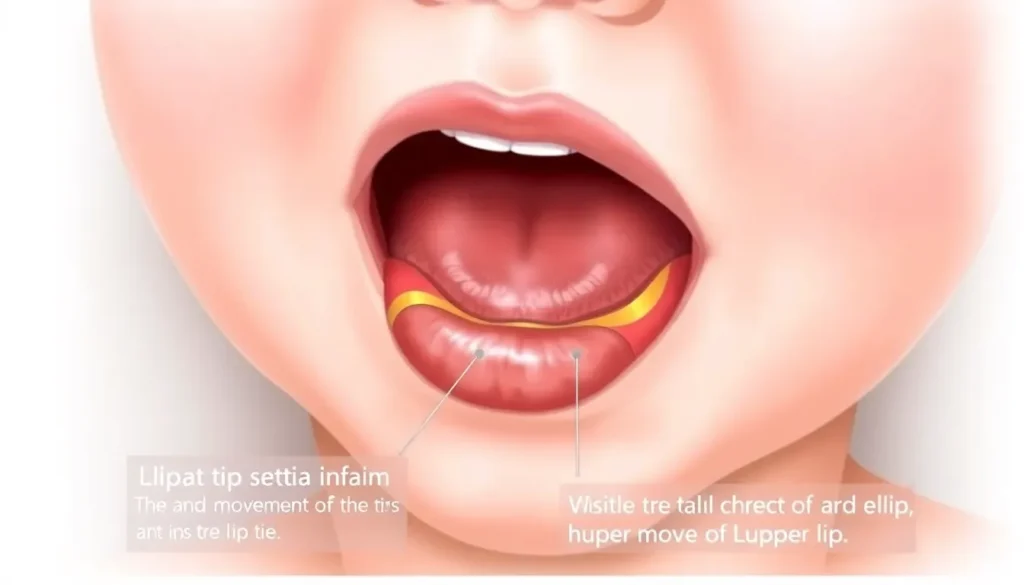
A lip tie is a condition characterized by an abnormally tight or thick labial frenulum, the small fold of tissue that connects the inside of the upper lip to the gum. This anatomical variation can restrict the movement of the upper lip to varying degrees. While lip ties are often identified in newborns and infants, the condition can persist into adulthood. The clinical significance of a lip tie varies widely, with some individuals experiencing no symptoms, while others may encounter difficulties related to breastfeeding, speech development, dental hygiene, or oral comfort.
Detailed Explanation
The labial frenulum is a normal anatomical structure present in all humans, serving to stabilize the position of the upper lip. However, when it is unusually thick, short, or tightly attached near the front of the gum line (specifically the maxillary alveolar ridge), it is referred to as a lip tie. This can lead to restricted lip elevation and movement. In infants, this restriction may interfere with the ability to latch effectively during breastfeeding, potentially causing feeding difficulties and maternal nipple pain.
The diagnosis of a lip tie is typically based on clinical examination, focusing on the frenulum’s size, thickness, and attachment point relative to the gum line. There is no universally accepted grading system, and the decision to treat depends on the presence and severity of symptoms rather than the anatomical appearance alone.
How It Works
The labial frenulum connects the inside of the upper lip to the gum above the front teeth. In a typical scenario, this tissue is thin and flexible, allowing free movement of the lip. In the case of a lip tie, the frenulum may be unusually dense, fibrous, or tightly adhered to the gum, limiting lip elevation. This restriction can affect the infant’s ability to form an adequate seal around the mother’s nipple during breastfeeding, reducing milk transfer efficiency.
Beyond infancy, a lip tie may affect oral hygiene by limiting lip movement needed to clear food debris from the teeth, potentially contributing to dental caries or gum irritation. In some cases, it may also influence speech articulation or contribute to gaps between the upper front teeth (diastema).
Examples
- Infant Breastfeeding Difficulty: A newborn struggles to maintain a proper latch, leading to poor weight gain and maternal nipple soreness. Examination reveals a thick frenulum restricting upper lip movement.
- Dental Concerns: A child presents with a noticeable gap between the upper front teeth. The dentist notices a prominent frenulum attachment contributing to the spacing.
- Adult Oral Function: An adult experiences discomfort during lip movement or speech. A lip tie is identified but does not significantly impair function, and no intervention is pursued.
Why It Matters
Understanding lip tie is important because it can impact early infant feeding, which is critical for growth and development. Breastfeeding difficulties related to lip tie may lead to inadequate nutrition or feeding-related stress for caregivers. Additionally, untreated lip ties might affect dental health, speech development, and oral hygiene later in life. However, it is also important to recognize that many individuals with a lip tie do not experience problems and may not require any treatment.
Common Misconceptions
Misconception: All lip ties must be surgically corrected.
Correction: Not all lip ties cause problems or need treatment; many are asymptomatic and do not interfere with oral function.
Misconception: Lip tie is the sole cause of breastfeeding problems.
Correction: While lip tie can contribute to breastfeeding difficulties, other factors such as tongue tie, infant positioning, and feeding technique also play significant roles.
Pros and Cons
Comparison Table
| Aspect | Lip Tie | Tongue Tie |
|---|---|---|
| Meaning | Restricted upper lip movement due to tight or thick labial frenulum. | Restricted tongue movement caused by tight or short lingual frenulum. |
| Primary Impact | May affect breastfeeding latch, dental spacing, lip mobility. | Often affects breastfeeding, speech articulation, tongue mobility. |
| Treatment | Frenotomy or frenectomy if symptomatic. | Frenotomy or frenectomy to release tongue restriction. |
Decision Checklist
- Use this if … the individual experiences feeding difficulties, speech issues, or dental problems clearly linked to the frenulum restriction.
- Avoid this if … the lip tie is asymptomatic and does not interfere with oral function.
- Check this first … whether other causes such as tongue tie or improper feeding techniques might be contributing to symptoms before considering treatment.
What is the easiest way to understand Lip Tie?
A lip tie is best understood as a variation in how tightly the upper lip is connected to the gums. When this connection is unusually strong or thick, it can limit lip movement, similar to how a tight string restricts movement of a door. This restriction may or may not cause problems depending on the individual’s age and specific oral functions.
FAQ
What causes a lip tie?
A lip tie is caused by an unusually tight, thick, or short labial frenulum that restricts the movement of the upper lip. It is a congenital condition present from birth.
How is a lip tie diagnosed?
Diagnosis is made through clinical examination by a healthcare professional who assesses the frenulum’s attachment, thickness, and impact on lip mobility and function.
Does every lip tie require surgery?
No. Many lip ties are asymptomatic and do not require treatment. Surgery is generally reserved for cases where the lip tie causes functional problems such as difficulty breastfeeding or dental issues.





Leave a Reply