
Short Answer
Overview
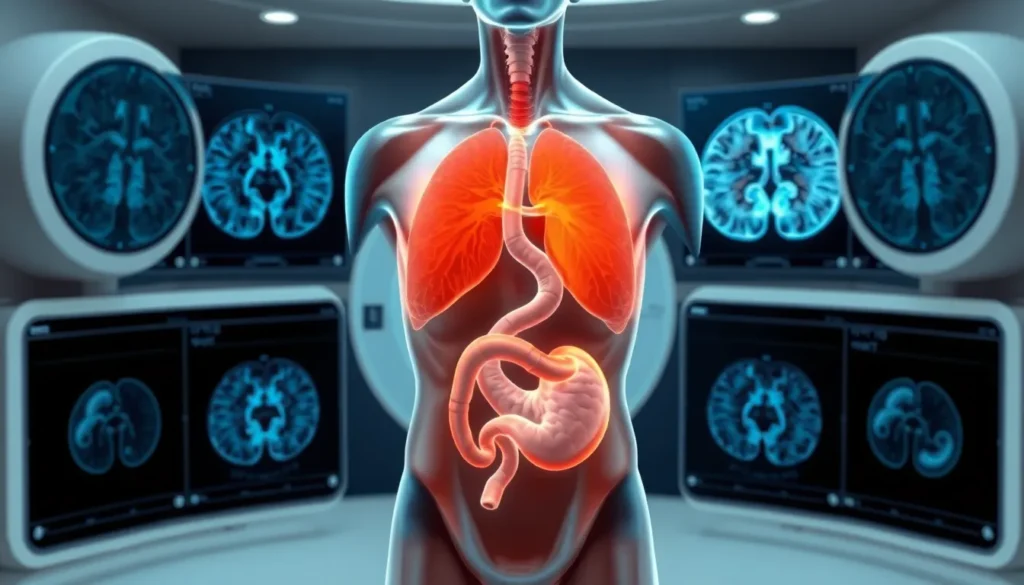
Magnetic Resonance Cholangiopancreatography (MRCP) is a specialized type of magnetic resonance imaging (MRI) used to obtain detailed images of the biliary and pancreatic ductal systems. It is a non-invasive diagnostic tool primarily utilized to evaluate conditions affecting the liver, gallbladder, bile ducts, and pancreas. Unlike traditional invasive procedures such as endoscopic retrograde cholangiopancreatography (ERCP), MRCP does not require the introduction of instruments into the body’s ducts, making it safer and more comfortable for patients.
Detailed Explanation
MRCP leverages the magnetic properties of hydrogen atoms in the body to generate high-resolution images of fluid-filled structures within and around the liver and pancreas. The technique is particularly useful for visualizing the biliary tree—the network of bile ducts that carry bile from the liver and gallbladder to the small intestine—and the pancreatic duct, which transports digestive enzymes from the pancreas.
Typically performed in a hospital or imaging center, MRCP is often ordered when patients present with symptoms such as jaundice, abdominal pain, or suspected blockages caused by gallstones, tumors, or inflammation. It can also assist in diagnosing congenital abnormalities, strictures, or leaks within the ductal systems.
How It Works
MRCP uses an MRI scanner that emits a strong magnetic field and radio waves to align hydrogen atoms in the body. When the radiofrequency pulse is turned off, the hydrogen atoms return to their original alignment, emitting signals that are detected by the scanner. These signals are processed by a computer to create detailed images of internal structures.
What distinguishes MRCP from standard MRI is its focus on fluid-filled structures. The imaging parameters are adjusted to make static or slow-moving fluids, such as bile and pancreatic secretions, appear bright on the scan, while surrounding tissues appear darker. This contrast enhancement allows clinicians to clearly visualize the bile and pancreatic ducts without the need for intravenous contrast agents or invasive catheterization.
The procedure typically takes about 30 to 60 minutes and requires the patient to remain still inside the scanner. Fasting for several hours before the scan is usually recommended to reduce fluid and gas in the digestive tract, which can interfere with image quality.
Examples
- Diagnosis of Gallstones: MRCP can detect gallstones obstructing the common bile duct, which may cause pain or jaundice.
- Assessment of Pancreatitis: It helps evaluate inflammation or damage to the pancreatic duct caused by acute or chronic pancreatitis.
- Detection of Tumors: MRCP can identify strictures or masses that may indicate benign or malignant tumors in the bile ducts or pancreas.
- Postoperative Evaluation: Used to assess bile duct integrity and function after surgical procedures involving the liver, gallbladder, or pancreas.
Why It Matters
MRCP provides a valuable diagnostic alternative to more invasive procedures, reducing patient risk while delivering crucial anatomical information. Early and accurate visualization of bile and pancreatic ducts aids in timely diagnosis and appropriate management of various hepatobiliary and pancreatic diseases. By minimizing the need for invasive interventions, MRCP also decreases potential complications such as infections, pancreatitis, or bleeding.
Common Misconceptions
Misconception: MRCP uses harmful radiation.
Correction: MRCP is based on magnetic resonance imaging, which does not use ionizing radiation, unlike X-rays or CT scans.
Misconception: MRCP requires injection of contrast dye.
Correction: MRCP typically does not require contrast agents because it relies on the natural fluid contrast within the bile and pancreatic ducts.
Pros and Cons
Comparison Table
| Aspect | MRCP | ERCP (Endoscopic Retrograde Cholangiopancreatography) |
|---|---|---|
| Meaning | Magnetic Resonance Cholangiopancreatography, a non-invasive MRI technique to image bile and pancreatic ducts. | An invasive endoscopic procedure that visualizes and treats biliary and pancreatic ductal conditions using contrast dye. |
| Invasiveness | Non-invasive | Invasive |
| Use of Radiation | No ionizing radiation | Uses X-ray radiation |
| Therapeutic Capability | No therapeutic intervention possible | Can perform treatments like stone removal and stenting |
| Risks | Minimal; mainly related to MRI environment | Higher risk of complications including pancreatitis and infection |
Decision Checklist
- Use this if: You need detailed, non-invasive imaging of the bile and pancreatic ducts for diagnostic purposes.
- Avoid this if: You require immediate therapeutic intervention such as stone removal or stenting.
- Check this first: Whether you have any contraindications to MRI, such as certain metal implants or severe claustrophobia.
What is the easiest way to understand MRCP?
Think of MRCP as a specialized MRI scan designed to capture clear pictures of your bile and pancreatic ducts by highlighting the fluid inside them, similar to how a photographer might use lighting to highlight specific features in a photo. It provides detailed images without needing to insert instruments or use radiation, making it a safer and less uncomfortable option for diagnosing problems in these ducts.
FAQ
Is a MRCP scan painful?
No, an MRCP scan is a painless procedure as it is non-invasive and does not involve injections or instruments entering the body.
Can MRCP detect gallstones?
Yes, MRCP is effective at detecting gallstones within the bile ducts and can help identify blockages causing symptoms.
Are there any risks associated with MRCP?
MRCP is generally safe; however, patients with certain metal implants, pacemakers, or severe claustrophobia may not be suitable candidates for the MRI environment.




Leave a Reply