
Short Answer
Overview
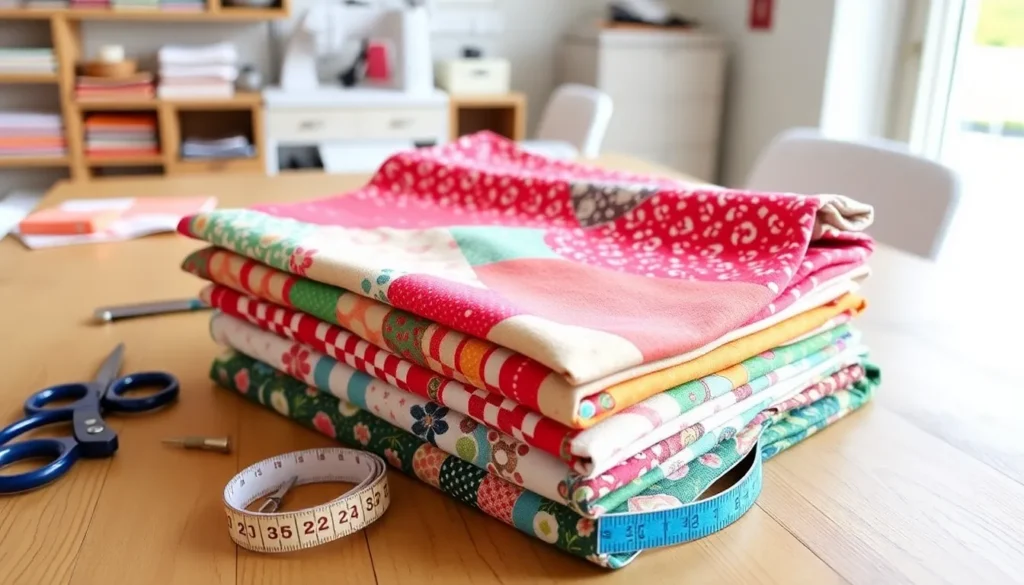
A fat quarter is a pre-cut piece of fabric commonly used in quilting, sewing, and crafting. Unlike a traditional quarter-yard cut, which is a long, narrow strip of fabric, a fat quarter is cut to provide a larger, more square-like piece. This cut typically measures approximately 18 inches by 22 inches, making it a popular choice for quilters and sewists who want more usable fabric area for their projects.
Detailed Explanation
In fabric retail, fabric is often sold by the yard or by pre-cut pieces. A standard quarter-yard of fabric is usually cut as a strip measuring 9 inches in length by the full width of the fabric, which is often 44 to 45 inches wide. This results in a long, narrow piece that may be less convenient for certain sewing projects.
A fat quarter is created by first cutting a half-yard of fabric (usually 18 inches by the full width), and then cutting this piece in half across the width, resulting in a piece roughly 18 inches by 22 inches. The exact dimensions can vary slightly depending on the fabric width but generally conform to this approximate size.
How It Works
The fat quarter is a strategic cut designed to maximize fabric usability. Because it is shorter and wider than a traditional quarter-yard strip, it provides larger sections of fabric that can be more easily cut into various shapes and sizes. This is particularly advantageous when working on patchwork quilting, applique, or smaller craft projects where larger fabric pieces are necessary but purchasing full yards is not practical.
Fat quarters are often sold individually or in bundles, allowing crafters to collect a variety of fabrics in manageable amounts. They are also economical for trying out new fabrics or colors without committing to large quantities.
Examples
- Quilt blocks: A fat quarter provides enough fabric to cut multiple pieces for a single quilt block, especially when the design requires larger shapes.
- Applique work: The wider dimension allows for cutting out intricate applique shapes without excessive seams.
- Small sewing projects: Items like pouches, pot holders, or fabric bookmarks often require only a fat quarter, making it a convenient fabric size.
Pros and Cons
- Pros: Offers more usable fabric area than a traditional quarter-yard cut; suitable for diverse project needs; economical for sampling fabrics; convenient size for storage and handling.
- Cons: May not be sufficient for larger projects requiring continuous fabric lengths; dimensions vary slightly by fabric width; some projects may require multiple fat quarters to achieve desired fabric quantity.
Comparison Table
| Aspect | Fat Quarter | Standard Quarter Yard |
|---|---|---|
| Meaning | A fabric cut approximately 18″ x 22″ from half a yard, split widthwise. | A strip cut 9″ x fabric width (usually 44-45″) representing one quarter yard lengthwise. |
| Shape | More square-like, wider and shorter. | Long and narrow strip. |
| Usability | More versatile for various cutting patterns and shapes. | Limited usability for larger pattern pieces due to narrow width. |
Decision Checklist
- Use this if you need a versatile piece of fabric with a larger surface area for patchwork, applique, or small projects.
- Avoid this if your project requires continuous or very long fabric pieces.
- Check this first if the fabric width and project dimensions match your needs; fat quarter sizes can vary slightly.
What is the easiest way to understand a Fat Quarter?
The easiest way to understand a fat quarter is to visualize it as a half-yard of fabric cut in half across its width, creating a piece that is roughly 18 inches by 22 inches. This shape offers more usable fabric than a traditional quarter-yard strip, making it a practical choice for many sewing and quilting projects.
FAQ
What are the exact dimensions of a fat quarter?
A fat quarter usually measures about 18 inches by 22 inches, which is half of a half-yard piece of fabric cut in half across the width. However, exact dimensions may vary slightly depending on the fabric width.
Why use a fat quarter instead of a regular quarter yard?
Fat quarters provide a larger, more square piece of fabric that is easier to cut into various shapes for quilting and sewing projects, offering more versatility than a narrow quarter-yard strip.
Can I use fat quarters for large sewing projects?
Fat quarters are generally better suited for smaller projects or parts of larger projects. Larger projects often require multiple fat quarters or full yardage for continuous fabric pieces.


Leave a Reply