
Short Answer
Overview
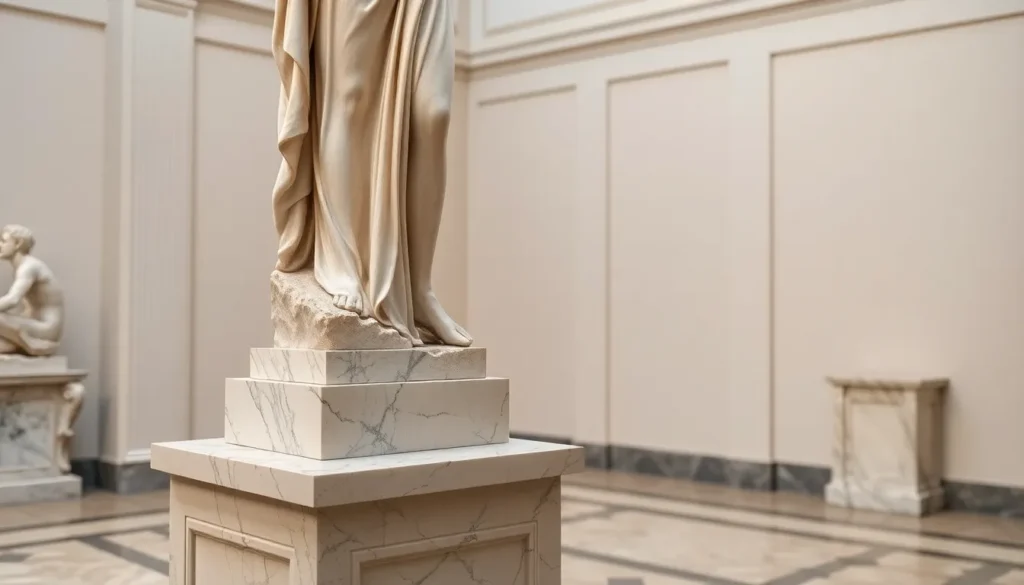
A sculpture pedestal is a structural base or stand used to support and elevate a sculpture. It serves both functional and aesthetic purposes, ensuring the sculpture is displayed prominently and securely. Pedestals are commonly found in galleries, museums, public spaces, and private collections, where they help to highlight the artwork and sometimes protect it from damage or interaction at ground level.
Detailed Explanation
Sculpture pedestals vary widely in design, size, material, and style depending on the nature of the sculpture and the intended display environment. Traditionally, pedestals are constructed from materials such as wood, stone, metal, or plaster. The choice of material often relates to the sculpture’s medium and the desired visual harmony between pedestal and artwork. Pedestals can be simple and understated or elaborate and decorative, sometimes reflecting the artistic period or style of the sculpture.
The height and dimensions of a pedestal are critical factors; they must provide adequate elevation to enhance visibility without overpowering the sculpture itself. Additionally, pedestals contribute to the stability of the sculpture, especially for larger or more fragile works. Some pedestals incorporate features such as mounting hardware or protective barriers to secure the sculpture safely.
How It Works
The primary function of a sculpture pedestal is to elevate the artwork to an optimal viewing height, which varies depending on the sculpture’s scale and the viewer’s perspective. By raising the sculpture, the pedestal allows for better appreciation of detail and form. It also physically separates the artwork from the floor, creating a clear boundary that can help prevent accidental contact or damage.
Pedestals often distribute the weight of the sculpture evenly and provide a stable platform, which is especially important for sculptures that might be top-heavy or irregularly shaped. In some cases, pedestals are integrated with lighting or display cases to enhance the presentation. The design and placement of the pedestal are carefully considered to complement the sculpture and the surrounding space.
Examples
- Classical Marble Pedestal: Often used for ancient statues, these pedestals are made of marble with simple, elegant designs that match the classical aesthetic of the sculpture.
- Modern Minimalist Pedestal: Made from materials like metal or acrylic, these pedestals emphasize clean lines and neutrality, allowing contemporary sculptures to stand out without distraction.
- Outdoor Stone Pedestal: Used in gardens or public parks, these pedestals are constructed from durable stone or concrete to withstand weather elements while providing a sturdy base for large sculptures.
Why It Matters
Sculpture pedestals play a significant role in the presentation and preservation of sculptural art. By elevating the artwork, they enhance viewer engagement, allowing observers to appreciate the sculpture from various angles and distances. Pedestals also protect sculptures from damage by creating a defined physical boundary and ensuring structural stability. Additionally, the design of a pedestal can contribute to the interpretive context of a sculpture, influencing how the artwork is perceived and experienced.
Common Misconceptions
Misconception: A sculpture pedestal is just a decorative stand.
Correction: While pedestals can be decorative, their primary purpose is functional—supporting and elevating the sculpture safely for optimal viewing.
Misconception: Any surface can serve as a sculpture pedestal.
Correction: Effective pedestals are specifically designed to match the sculpture’s size, weight, and style, ensuring stability and appropriate presentation.
Pros and Cons
Pros: Enhances sculpture visibility; provides structural support; protects artwork from accidental damage; contributes to aesthetic presentation.
Cons: Can be costly to produce or install; may require careful design to avoid overpowering the sculpture; bulky pedestals can limit placement options in certain spaces.
Comparison Table
| Aspect | Sculpture Pedestal | Alternative/Related Topic (Display Plinth) |
|---|---|---|
| Meaning | A base used to elevate and support sculptures. | A general flat surface or block to display various objects, not necessarily sculptures. |
| Primary Function | Support and enhance sculpture visibility. | Provide a display surface for objects. |
| Typical Materials | Wood, stone, metal, plaster. | Wood, acrylic, metal, stone. |
| Design Focus | Balance between aesthetics and structural stability for art. | Often focused on neutrality and versatility. |
Decision Checklist
What is the easiest way to understand a Sculpture Pedestal?
Think of a sculpture pedestal as a specially designed platform that lifts and supports a sculpture, much like a stage raises a performer to make them more visible to an audience. It is both a practical support and a visual enhancer that helps viewers appreciate the artwork more fully.
FAQ
Why are sculpture pedestals important?
Sculpture pedestals are important because they elevate the artwork to an appropriate viewing height, provide structural support, and protect the sculpture from damage or accidental contact.
What materials are typically used for sculpture pedestals?
Common materials include wood, stone, metal, and plaster, chosen based on the sculpture’s material, weight, and the desired aesthetic effect.
Can any sculpture be placed on a pedestal?
Not all sculptures can be placed on pedestals; factors such as size, weight, and stability must be considered. Some large or unusually shaped sculptures require custom mounts or supports.






Leave a Reply